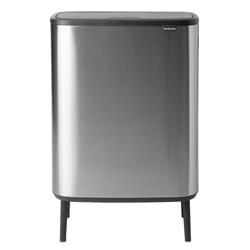
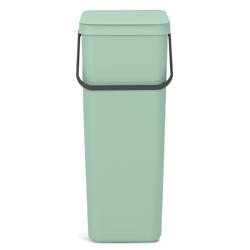
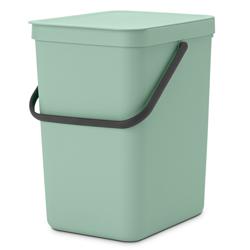
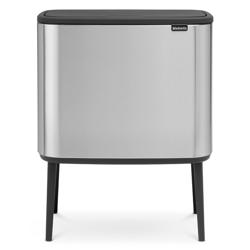
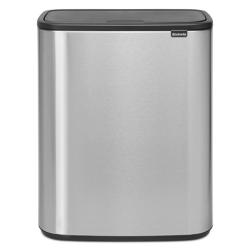
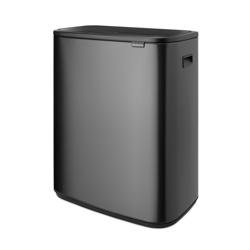
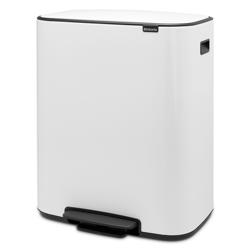
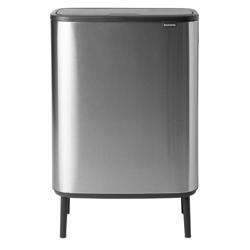
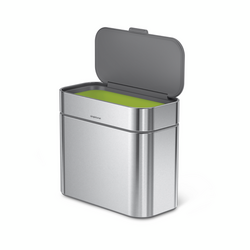
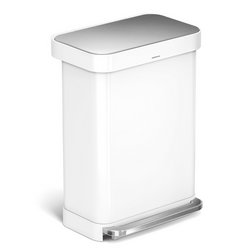
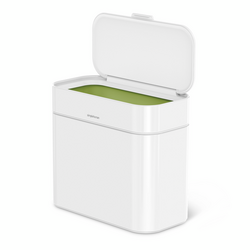
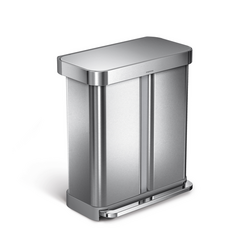
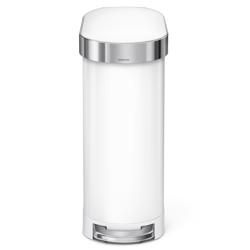
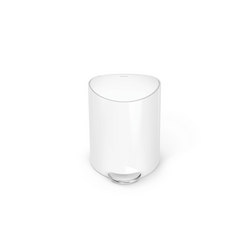
Wall-mounted trash bins for kitchens attach to a wall or mounting bracket to keep everyday waste within reach while leaving the floor clear. Related hanging styles fit over a cabinet door, offering a similar space-saving benefit with a different attachment method. Both can be useful near a prep counter, where vegetable peelings, empty food packaging and other small scraps tend to collect during cooking. Instead of carrying a handful of onion skins across the kitchen, you can drop them into a bin close to your cutting board and get back to dinner. That convenience is especially welcome in a narrow galley kitchen, an apartment or a busy cooking space where a freestanding garbage can would crowd the walkway. Raising the bin also makes it easier to sweep or mop beneath it, though its placement should still leave room for cabinet doors, drawers and appliances to open fully. A compact mounted bin often works best as a companion to a larger household trash can rather than a replacement for it. Keeping small prep scraps close by and taking bulky packaging elsewhere helps preserve that clear, comfortable workspace. For someone who cooks mostly for one or two, a small bin may handle routine prep waste comfortably; a household preparing several meals each day may prefer more capacity or more frequent emptying. The right size depends as much on what goes into the bin as on how many people use the kitchen. Coffee grounds and fruit trimmings occupy little space but benefit from prompt removal, while takeout containers can fill a compact receptacle quickly. During the cooler months, when roasting vegetables or simmering soup might mean more peeling and chopping, a conveniently placed bin helps keep the counter ready for the next task. The goal is a waste station that supports the way you cook without taking over the kitchen.
Fit starts with the mounting location, not just the dimensions of the container. A wall-mounted kitchen trash bin needs a suitable surface and hardware appropriate for both the wall construction and the filled weight of the bin. Follow the manufacturer’s installation directions and load limits, since an empty container is only part of the weight the attachment must support. Over-the-door hanging bins require a different check: the bracket must accommodate the cabinet door’s thickness without preventing it from closing or rubbing against nearby surfaces. A bin mounted inside a sink cabinet also has to share space with plumbing, shelves and cleaning supplies. Measure the usable area with the door both open and closed, allowing extra clearance for a lid to lift or slide and for the container to come off its bracket when needed. On an exposed wall or the outside of a cabinet, consider how far the bin projects into the room. A shallow profile can make a noticeable difference beside a narrow passage, but it still needs enough opening space to catch scraps without scattering them. Placement should feel comfortable for the people who use it, whether that means keeping the opening just below the prep surface or avoiding a low position that requires repeated bending. Materials influence everyday handling, too. Plastic is generally lightweight and easy to carry to a larger trash receptacle, while stainless steel offers a clean-looking surface that coordinates with many kitchen fixtures. Neither material is automatically maintenance-free: plastic can retain stains or odors, and metal finishes may show fingerprints or be affected by unsuitable cleaners. Look for smooth interior surfaces, accessible corners and a rim that is easy to wipe. Durability also depends on the less visible parts, including the bracket, lid hinge and any liner-retaining components. Those details see repeated use every time the bin is opened, emptied or removed for washing. A secure attachment and straightforward construction matter more in daily use than a feature that adds extra steps to cleanup.
The opening, lid and liner arrangement help determine how naturally a mounted trash bin fits into a cooking routine. An uncovered opening makes it easy to discard dry scraps during a prep session, while a covered design keeps waste out of sight and can help contain odors between emptyings. A lid should not be treated as a substitute for regular cleaning or as a guarantee against access by pets or children. Think about the motions involved: lifting a lid with one hand may be simple when tossing a tea bag, but less convenient while holding a cutting board covered with carrot peels. Enough room to approach the opening without bumping a handle or countertop edge helps keep that transfer tidy. Liners should fit the container without slipping down or leaving excessive material caught around the lid or bracket. If a bin uses a removable inner container, check that there is room to lift it out without tilting its contents. For care, follow the manufacturer’s instructions, empty wet food waste frequently and wipe spills before they dry around the rim or mounting points. Wash removable parts only as directed and let them dry thoroughly before reassembling; dishwasher safety should never be assumed. A small trash bin can also serve as a temporary collection point for compostable food scraps when lined and used appropriately, but accepted materials and liner requirements depend on the local composting program. Keeping that purpose separate from general trash helps prevent mix-ups during a busy meal. Appearance matters most when the bin sits in plain view, where its color, finish and proportions become part of the kitchen. For a coordinated look across prep and cleanup areas,
Decorative Kitchen Garbage Bins offer another way to think about waste storage alongside cabinetry and other everyday essentials. A mounted bin is ultimately most useful when it is easy to reach, simple to empty and unobtrusive enough to leave your attention on the food.