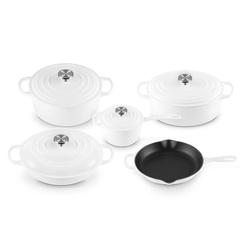
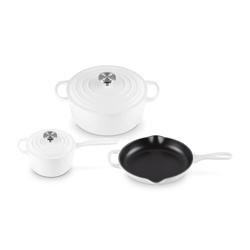
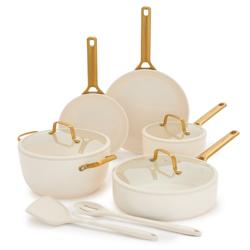
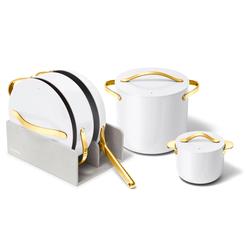
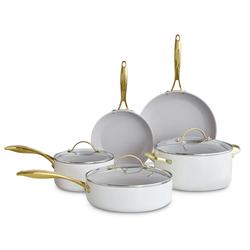
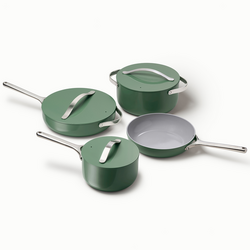
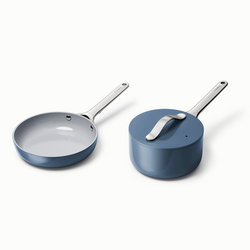
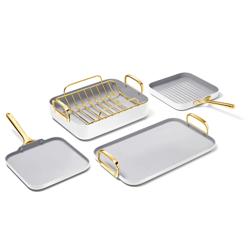
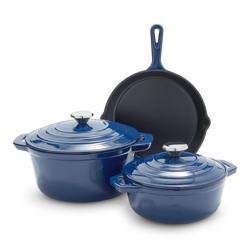
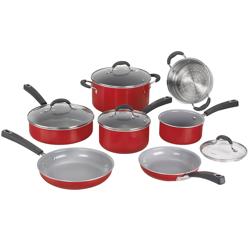
A white cookware set brings together coordinating pots and pans with white or off-white finishes. Depending on its construction, a set may feature ceramic nonstick cooking surfaces, stainless steel interiors or enameled cast iron bodies. The color describes its appearance, not its performance: materials, stovetop compatibility, included sizes and care requirements determine how it fits your kitchen. White finishes create a cohesive look on open shelving, hanging racks and the stovetop, whether the surrounding space features warm wood, colorful tile or stainless steel appliances. Bright white feels crisp, while ivory and cream offer a softer contrast; the cooking surface may be a different color from the exterior. Beyond appearance, the most useful assortment reflects the meals you actually make. A smaller skillet handles a morning egg or toasted sandwich, while a wider pan gives mushrooms and chicken room to brown without crowding. Saucepans are useful for oatmeal, rice and pan sauces, and a larger pot makes space for pasta, beans or a generous batch of soup. For someone cooking mostly for one or two, a compact collection of frequently used shapes can be more practical than a larger set with overlapping sizes. Households that prepare several dishes at once may appreciate additional capacities and lids that allow vegetables to simmer while the main course cooks nearby. Piece counts deserve a closer look because lids and accessories may count toward the total, so the number of cooking vessels matters more than the number on the box. A balanced set should support everyday habits without leaving the same oversized pot untouched at the back of a cabinet. Think about the portions served most often, the burners used together and whether a favorite recipe moves from stovetop to oven. Those details help turn a coordinated collection into cookware that earns its place through regular use, from quick lunches to dinners shared around a full table.
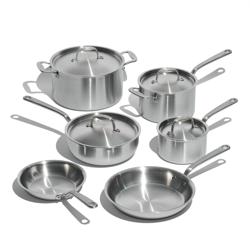
Construction makes the biggest difference in how a white cookware set heats, handles and cleans. Aluminum bodies are relatively lightweight and conduct heat well, making them practical for cooks who lift and move pans frequently. When paired with a ceramic nonstick coating, they can offer easy food release for eggs, delicate fish and other foods prone to sticking. Ceramic nonstick cookware is generally a metal pan with a ceramic-based coating, rather than a pot made entirely from ceramic. Its coating benefits from moderate heat, suitable utensils and care that follows the manufacturer’s directions. Stainless steel cooking surfaces offer a different experience, particularly for cooks who enjoy browning meat and building a sauce from the flavorful browned bits left in the pan. An aluminum core or base can help distribute heat, though construction varies between sets. For a metallic alternative to a white finish, explore the
Steel Cookware Set collection. Enameled cast iron brings substantial weight and heat retention to slow-simmered sauces, braises and dishes that go from cooking to serving. Its enamel finish does not require the seasoning routine associated with bare cast iron, but it still needs protection from impact and sudden temperature changes. Across materials, a comfortable handle and manageable filled weight matter as much as appearance. A pan that feels easy to lift when empty can be considerably heavier when filled with water or stew. Helper handles can make larger vessels easier to steady, while well-fitting lids help control moisture during simmering. Compatibility also deserves attention: a white exterior does not indicate whether a pan works on induction, and aluminum cookware needs a suitable magnetic base for an induction cooktop. Oven limits can differ for the pan, handles and lid, so the lowest applicable limit governs the assembled piece. Flat bases, suitable burner sizes and handles that leave enough room between neighboring pans all contribute to a better fit at the stove.
Keeping white cookware looking good starts with matching its care routine to its materials. Light finishes make splashes and cooked-on residue easy to see, which can be helpful when cleaning but also means stains are more noticeable. Let pans cool before washing, then use the cleaning method recommended for both the interior and exterior. A soft sponge and mild dish soap are often appropriate for routine cleanup, while stubborn residue may need soaking or a material-specific cleaner approved by the manufacturer. Abrasive pads and harsh cleaners can scratch coatings or dull finishes, and an approach suitable for stainless steel may not suit ceramic nonstick or enamel. Even when cookware is labeled dishwasher safe, hand-washing may be recommended to help preserve its finish over time. Nonstick surfaces generally benefit from wood or silicone utensils, and cookware should not be heated empty unless the manufacturer specifically permits it. Durability also depends on storage: pan protectors or a soft layer between stacked pieces help prevent neighboring rims and bases from rubbing against one another. Available cabinet height, lid storage and the width of shelves can influence which set feels easiest to live with. White cookware is particularly appealing when some pieces stay in view, but a beautiful finish should complement a workable routine rather than add chores that feel out of step with daily cooking. For a wedding, housewarming or first kitchen, a coordinated set can be a thoughtful gift when its weight, cooking surfaces and maintenance needs suit the recipient. Someone who loves making omelets may value easy release, while an enthusiastic braiser may prefer the steady heat of enameled cast iron. A white cookware set works best when its appearance and everyday function feel equally considered, with useful shapes, comfortable handling and a care routine that helps each piece remain part of the kitchen for years to come.