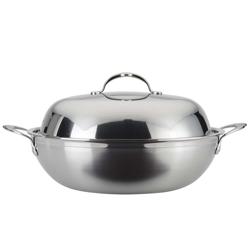
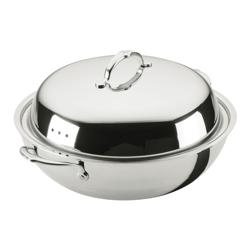
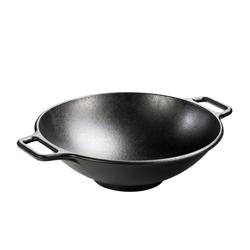
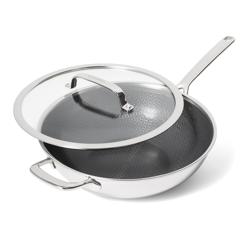
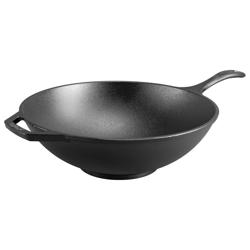
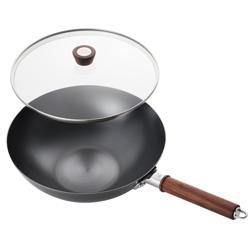
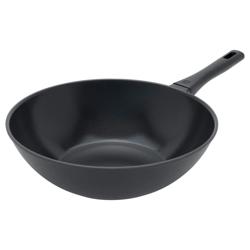
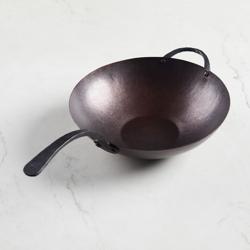
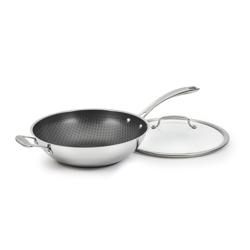
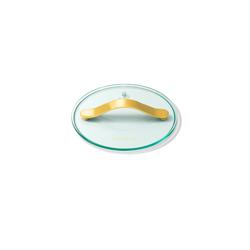
Woks with lids bring together the high-heat versatility of a wok and the gentle, enclosed cooking of a covered pan. Their wide cooking surface and sloped sides make it easy to toss vegetables, sear strips of meat or seafood, stir noodles and move ingredients between hotter and cooler areas as they cook. A lid adds another layer of usefulness by trapping steam and heat, helping food cook through without drying out. Use it to steam dumplings and greens, braise chicken, simmer a fragrant curry or finish a stir-fry until the sauce clings to every ingredient. Many wok lids are domed to provide extra room for bulky vegetables and taller foods, while tempered glass lids make it possible to monitor cooking without releasing heat. Flat lids are simple to store and can be especially convenient in smaller kitchens. When choosing a wok with a lid, consider the cooking surface, the lid design, the size of your stovetop and the amount of food you typically prepare. A smaller wok suits one or two servings and takes up less cabinet space, while a larger one is helpful for family meals, batch cooking and dishes that need plenty of room to move. A flat bottom offers stability on most household stovetops, including electric and induction models when the cookware is labeled compatible. Round-bottom woks are well suited to traditional wok rings and certain gas ranges, where the curved base can sit securely over the flame. Check the manufacturer’s guidance before using a wok on induction or in the oven, since compatibility and maximum temperatures vary by material and construction.
The material of a wok affects how it heats, how it cooks and how much care it needs. Carbon steel is a traditional choice prized for its relatively light weight, quick response and ability to develop a naturally seasoned surface over time. With regular seasoning and proper drying, it can become increasingly smooth and release food more easily, making it a favorite for cooks who enjoy building a relationship with their cookware. Carbon steel may need a little more attention than other materials—avoid leaving it wet, and follow the care instructions for washing, drying and oiling. Nonstick woks are a practical option for delicate foods, lower-fat cooking and easy cleanup. They are particularly useful for cooks who prepare eggs, fish, tender vegetables or quick weeknight meals and prefer not to spend time maintaining a seasoned surface. Use nonstick-safe utensils and avoid overheating an empty pan. Stainless steel woks offer durability, a polished appearance and dependable performance, while multi-ply construction can help distribute heat and hold it steadily as ingredients are added. They are useful for browning, sautéing and recipes that move from the stovetop to a covered simmer, provided the cookware is oven safe. Some woks combine a durable exterior with a treated or layered interior to balance responsiveness, food release and ease of care. Whatever the material, preheating should be gradual and appropriate to the cookware, and ingredients should be prepared before cooking begins. Wok cooking moves quickly: sliced vegetables, aromatics, sauces and proteins should be close at hand so you can add them in sequence without leaving the pan unattended. A lid also helps with cleanup by limiting splatter during simmering and steaming, though it should be lifted carefully because escaping steam can cause burns. Wash according to the care instructions, dry thoroughly and store the lid where it will not chip, scratch or trap moisture inside the wok.
Woks with lids suit a wide range of cooks, from someone preparing a first stir-fry in a compact apartment kitchen to an experienced home chef who wants one pan for searing, steaming and braising. They are especially helpful for households that like meals built around crisp vegetables, rice, noodles, tofu, chicken, shrimp or thinly sliced beef. During the warmer part of the year, a wok can turn fresh produce into a fast dinner without requiring a long time in the oven, and during cooler months the lid makes it convenient to simmer hearty dishes that fill the kitchen with the aroma of ginger, garlic, chile and toasted sesame. It is also a thoughtful gift for a new homeowner, a college graduate setting up a kitchen or anyone interested in exploring Asian-inspired cooking. Pairing a wok with a lid with a bamboo steamer, spatula, chopsticks or a selection of pantry staples can create a useful cooking gift, though the wok itself is a lasting foundation for many meals. For cooks who prefer a different configuration,
Woks With Handle can offer an alternative that feels familiar to anyone used to lifting and tilting a skillet. Before purchasing, measure the available storage space and confirm that the lid handle will fit beneath your cabinets. Think about weight as well: a wok should feel substantial enough to remain stable yet comfortable to lift when full. Look for sturdy handles, a secure-fitting lid and a cooking surface sized for your usual portions. The best wok is one that matches your stovetop, cooking habits and willingness to maintain it, giving you a dependable way to bring food together quickly while making room for slower, covered cooking when the recipe calls for it.