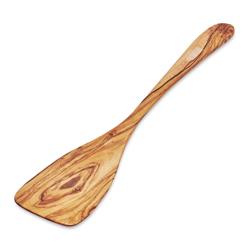
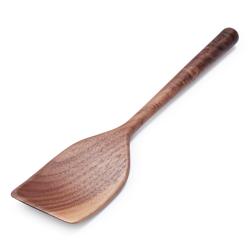
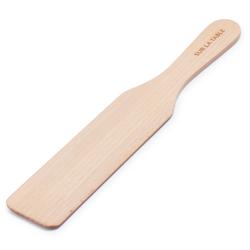
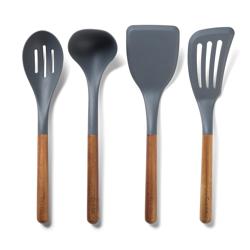
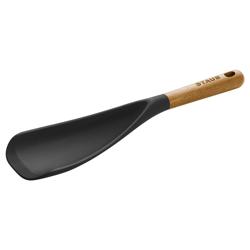
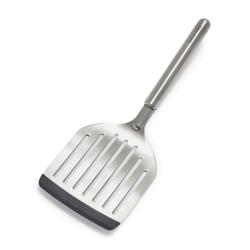
Wooden kitchen turners are flat-headed utensils used to lift, flip, stir and move food in a pan. Their broad working surface supports food from underneath, while a smooth wooden edge is generally gentle on nonstick coatings, seasoned cast iron and stainless steel cookware when used according to the cookware manufacturer’s instructions. For everyday cooking, that combination makes a wooden turner useful for turning pancakes, folding scrambled eggs, stirring sautéed vegetables and lifting a grilled cheese sandwich onto a plate. The shape of the head makes a noticeable difference in how a turner handles each task. A wide, solid head offers support beneath a sandwich or pancake, while a narrower head gives you more room to maneuver around several pieces of food in a smaller skillet. Slotted heads allow some cooking liquid or fat to drain away as food is lifted. A tapered edge can slip beneath food more easily than a thick, blunt edge, although wood is usually more rigid than a thin metal or silicone utensil. Very delicate fish or eggs may need a thinner, more flexible tool, depending on the turner’s design. An angled head can help reach along the sides of a pan, and a gently curved profile can make it easier to fold vegetables or move rice without pushing everything over the rim. Handle length matters, too: a longer handle offers more distance from the cooking surface, while a shorter one can feel easier to control in compact cookware. A comfortable grip should let the head sit against the pan without forcing your wrist into an awkward position. For a cook who switches between a small breakfast skillet and a roomy sauté pan, the relationship between head size, handle length and pan depth is worth considering. Wooden spatulas and turners are sometimes described interchangeably, so the working shape is more useful than the name alone when choosing a utensil for flipping rather than simply stirring.
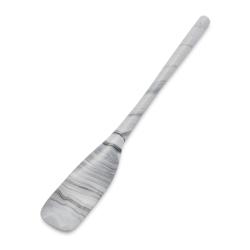
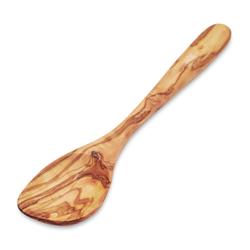
The wood itself contributes to a turner’s weight, appearance and feel in the hand. Common woods used for kitchen utensils include beech, maple, walnut, olivewood, acacia and teak, each with variations in color and grain. Beech and maple often have a lighter appearance, while walnut tends to have deeper brown tones. Olivewood can show distinctive swirls and contrasting grain, and acacia and teak often bring varied coloring to the utensil drawer or countertop crock. Those differences are appealing, but a smooth surface, sound construction and a comfortable shape matter more than color alone. Density varies by species and by the individual piece of wood, so a darker turner is not necessarily heavier or more durable than a lighter one. Look for a working edge without splinters, cracks or rough spots that could catch food or damage a delicate cooking surface. A finish intended for food contact should feel smooth rather than sticky, with care instructions that explain how to maintain it. Wood is not waterproof, even when the material is relatively dense or the surface has been oiled. Repeated soaking, dishwasher cycles and prolonged exposure to heat can cause swelling, warping or splitting. Hand-washing with mild dish soap and warm water, followed by prompt drying, helps protect the utensil between meals. Allow it to finish air-drying before putting it in a closed drawer, and avoid leaving it submerged in the sink beneath other dishes. If the manufacturer recommends conditioning, a small amount of food-grade mineral oil or an appropriate wooden utensil conditioner can help maintain the surface when it begins to look dry. Cooking oils are not always a suitable substitute because some can become rancid. Wood conducts heat more slowly than metal, but a wooden handle should still be kept away from burners, open flames and hot oven surfaces. A turner with a split head, deep cracks or persistent splintering should be replaced rather than kept in use. With appropriate care, a well-made wooden turner can remain a dependable everyday tool.
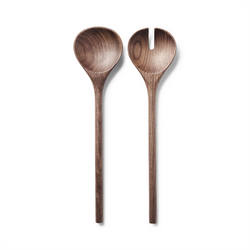
In a busy kitchen, a wooden turner earns its place through the small tasks that come between preparing ingredients and serving a meal. It can move diced potatoes around a skillet so another side reaches the cooking surface, fold onions into peppers or lift a toasted sandwich without cutting it apart. For browning food, letting the underside cook before attempting a flip often matters as much as the utensil itself; a wooden edge is not a substitute for food releasing properly from the pan. Gentle pressure is especially important with coated cookware, and stubborn residue is better handled through the pan’s recommended cleaning method than by forceful scraping. A solid turner is useful when you want to keep smaller ingredients together, while a slotted design can be helpful when lifting food away from excess liquid. Households that cook several dishes at once may appreciate having more than one shape, particularly when separate utensils are needed for raw ingredients and ready-to-eat food. Pairing a turner with
Wooden Kitchen Spoons adds rounded tools for stirring sauces, mixing beans or serving a thicker soup, without asking a flat utensil to do every job. Storage is another practical consideration: a hanging hole can keep a frequently used turner within reach, while a utensil crock needs enough room for the head and handle without crowding other tools. Keep wooden utensils somewhere they can dry fully rather than pressed against a damp dishcloth or tucked away while wet. For someone setting up a first kitchen, replacing a rough-edged utensil or cooking regularly with nonstick pans, a wooden turner is a useful addition with an uncomplicated purpose. It can also make a thoughtful housewarming gift for a home cook who enjoys tools with natural grain and a comfortable feel. The most useful choice is one that suits the recipient’s pans and habits, whether that means a broad head for weekend breakfasts or a narrower shape for everyday sautéing.