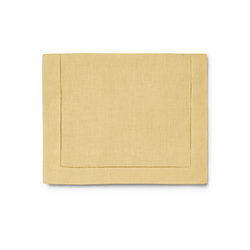
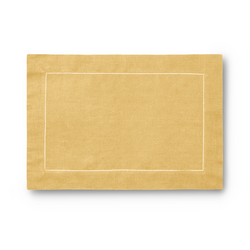
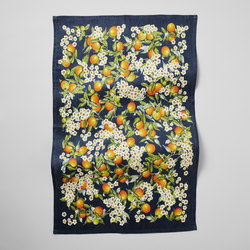
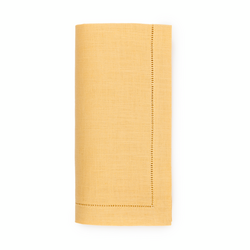
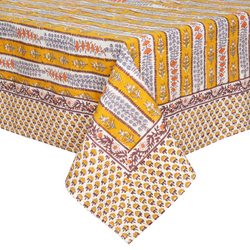
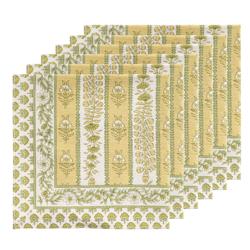
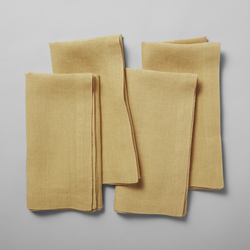
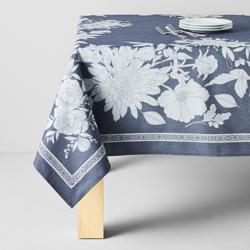
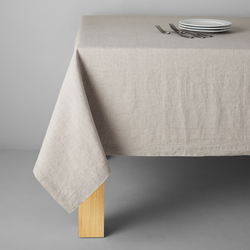
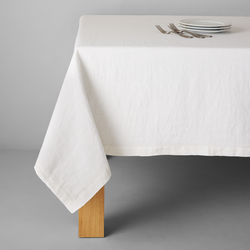
Yellow linens are kitchen and table textiles in shades ranging from pale butter and clear lemon to deeper gold and mustard. Cloth napkins, tablecloths, table runners, placemats and kitchen towels bring the color into everyday cooking and dining, whether the goal is a small accent or a coordinated table. Here, “linens” describes the broader category of household textiles, not just fabric woven from flax; cotton and blended fabrics can serve many of the same purposes. A yellow towel hung near the sink adds color without taking up counter space, while yellow napkins give plain white dinnerware a more personal feel. A tablecloth makes a larger impression, covering the surface with color and creating a backdrop for shared dishes, glasses and flowers. The shade matters as much as the amount of fabric. Butter yellow sits comfortably beside cream, natural wood and stoneware, while a clear lemon shade provides a sharper contrast with blue or gray. Mustard has more depth and works well with dark wood, olive green and earthy ceramics. Texture changes the effect, too: a softly rumpled weave feels relaxed, while a smoother finish gives the table a more polished appearance. Solid colors leave room for patterned plates, and stripes or small checks can add interest when the rest of the setting is simple. A yellow runner across a bare wooden table keeps the grain visible; yellow placemats create individual settings without covering the whole surface. There is no need for every textile to match exactly. Repeating a similar undertone can connect different patterns, and a mix of yellow with
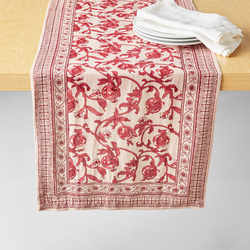
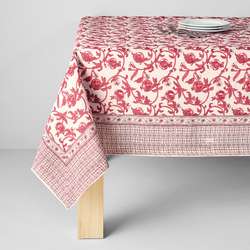
pink linens creates a gentle contrast that works especially well with white dishes and clear glassware. For a quieter combination, let yellow be the only strong color against a background of natural fabric and neutral dinnerware.
Materials and construction help determine how yellow kitchen linens feel, perform and hold up to repeated use. Cotton is a familiar choice for its softness and absorbency, making it useful for napkins and towels that see frequent washing. Linen, made from flax, has a distinctive texture and a relaxed drape that often softens with use. Its natural creases are part of its character, though pressing can create a crisper finish when that suits the setting. Blends may combine different qualities, such as softness, strength or easier wrinkle care, so fiber content and care instructions are more useful than appearance alone. Weave also affects performance. A textured towel can feel substantial in the hand, while a smooth, low-lint weave is often useful for drying glassware. A loosely woven decorative textile may not absorb or withstand frequent laundering as well as one designed for daily kitchen work. Even stitching, secure hems and neatly finished corners are practical details worth considering, particularly for pieces that will be washed after most uses. Fit deserves the same attention as fabric. Tablecloth dimensions should account for both the tabletop and the desired overhang, with enough clearance for chairs and comfortable seating. Adding the planned drop twice to each tabletop measurement helps establish the appropriate rectangular size; for a round table, the same principle applies to the diameter. Any table leaves used for larger meals also affect the fit. A runner can extend beyond the ends or sit within the tabletop, depending on the look and how the table is used. Placemats need room for a plate and flatware without crowding neighboring settings. Napkins should feel comfortable on the lap and fold without becoming bulky beneath a fork. These details matter most at a busy table, where serving bowls, elbows and water glasses all need space. Fabric protects against some everyday contact, but ordinary table linens are not a substitute for trivets beneath hot cookware.
The most useful yellow linens suit the way a household actually cooks, eats and cleans up. For someone who makes dinner most nights, absorbent kitchen towels and washable cloth napkins may earn their place through frequent use. For a host who enjoys setting the table, a runner or tablecloth offers a base that can look different with a change of plates, napkin folds or centerpiece. A casual breakfast might need only placemats and a small vase, while a birthday dinner can feel more considered with a full table covering and neatly folded napkins. Keeping enough napkins for the usual number of guests, plus a few extras for spills or laundry, makes cloth easier to use regularly. Kitchen towels also benefit from a clear division of jobs: one for drying clean dishes, another for hands and a separate cleaning cloth for counters. Care habits help preserve both the fabric and its yellow color. Follow the sewn-in care label, wash with compatible colors and treat food marks promptly using a method appropriate for the fiber. Blotting a spill rather than rubbing it can help keep the mark from spreading, and checking before drying gives lingering stains another chance at treatment before heat sets them. Fabric softener can reduce towel absorbency, while bleach may damage fibers or alter color unless the care instructions specifically allow it. Some fabrics shrink, making the stated care method especially important when fit matters. A brief smoothing or pressing can tidy napkins and table coverings, but a naturally creased finish is just as appropriate for an informal meal. Yellow table linens can also make a thoughtful housewarming, wedding or host gift when the recipient’s style is known. Napkins and kitchen towels require less knowledge of table dimensions than a tablecloth, and a familiar shade is easier to work into an existing kitchen. The best choice is one that feels at home beside the dishes already in use and is easy enough to care for that it gets used often.