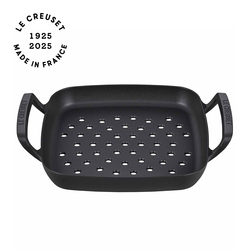
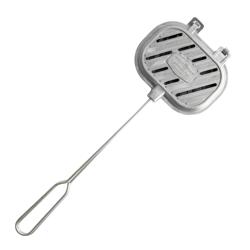
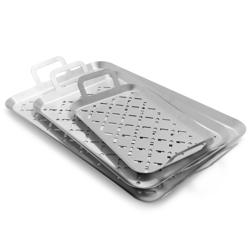
Backyard cooking baskets are perforated or mesh grilling tools that keep smaller foods from falling through grill grates while allowing heat and smoke to reach the ingredients. They make room for the parts of a backyard meal that can be awkward to cook directly on the grill: sliced zucchini, mushrooms, shrimp and tender pieces of fish. Instead of turning each bite separately or threading everything onto skewers, a basket keeps a portion together for easier handling. That can mean a colorful vegetable side alongside a main course or a batch of peppers and onions ready to tuck into sandwiches. The right shape depends on what usually goes on the menu. Open-top baskets give vegetables room to tumble and make it easy to reach ingredients with tongs. Hinged designs hold food between two panels, helping keep a fish fillet or a layer of sliced vegetables together when turned. Mesh cylinders contain loose pieces within an enclosed shape, though their openings, closures and handling requirements deserve a close look. Each style serves a different purpose, so the most useful choice is less about having the largest basket and more about matching its construction to the food. Broad, relatively shallow surfaces suit ingredients that benefit from contact with hot metal and enough space to brown. Taller sides help contain food that needs stirring or tossing. Smaller openings are useful for narrow pieces, but ingredients still need to be large enough to stay inside. A basket also does not make foods with very different cooking times finish together. Dense pieces of potato and quick-cooking shrimp, for example, are easier to manage separately. For cooks who enjoy building a meal around the grill, these practical differences can turn an occasional accessory into something that earns a regular place beside the tongs. The appeal is simple: fewer small pieces to chase across the grates and more flexibility in what becomes part of dinner.
Materials, construction and grill fit all influence how a cooking basket feels in use. Stainless steel is a common choice because it offers corrosion resistance and a sturdy cooking surface without a coating, although food can still stick and repeated heat can cause discoloration. Uncoated steel may require seasoning and more attention to drying, depending on its finish. Nonstick-coated designs can make delicate foods easier to release, but their heat limits and utensil requirements matter, particularly around the intense heat of a grill. No material should be assumed suitable for direct flame or every grill setting; the manufacturer’s directions should establish those limits. Look beyond the basket’s overall size to its usable cooking area, the height of its sides and the room its handles require. A basket that fits on the grate may still prevent the lid from closing, crowd the main course or leave little space to move food away from stronger heat. Handles that extend beyond the cooking surface can be convenient, but their position should not interfere with nearby burners, walkways or the grill lid. Metal handles can become hot, including those described as comfortable or easy to grip. Secure attachment points, smooth edges and a closure that stays fastened are useful details for an accessory that will be lifted and turned while holding food. Depth deserves equal attention. For vegetables that need containment while being stirred,
Deep Grill Baskets offer a shape worth considering, with sidewalls that help keep loose pieces together. Extra depth does not replace surface area, however. A tightly packed basket tends to trap moisture, while a looser layer gives ingredients more opportunity to brown. For a smaller household, a compact footprint may leave welcome space for the rest of dinner. Someone cooking generous sides for a group may value a broader surface, provided the grill can accommodate it comfortably. Useful capacity comes from the relationship between the basket, the menu and the available cooking space—not dimensions alone.
Care and everyday handling are just as important as shape when choosing backyard grilling baskets. Perforations, mesh intersections and hinged edges can collect bits of food, so accessible surfaces and straightforward construction can make cleanup less demanding. Dishwasher suitability varies by material and finish; a basket should only go in the dishwasher when its care instructions permit it. Coated surfaces generally need nonabrasive cleaning tools, while uncoated metals may have different requirements for removing cooked-on residue. Thorough drying helps protect vulnerable seams and surfaces, and storing a clean basket in a dry place is preferable to leaving it exposed beside the grill. For seasoned steel, maintaining the finish is part of ownership rather than a one-time task. Those small care habits help a well-made basket remain useful through repeated meals. Cooking habits matter, too. Ingredients with similar sizes and cooking times are easier to manage together, and draining excess marinade limits dripping. A light coating of oil on food may help with release when appropriate for the basket’s material and directions. Preheating requirements vary, especially with coated designs, so there is no single approach that suits every construction. These considerations are particularly helpful when choosing a gift. A backyard cooking basket can be a thoughtful housewarming, wedding or birthday gift for someone who enjoys cooking outdoors, whether that person is learning to use a grill or already prepares much of dinner on one. For the vegetable enthusiast, usable surface area and easy stirring may matter most. For someone who often grills fish, secure support and gentle handling may take priority. A frequent host may appreciate capacity, while a cook with limited storage may prefer a simpler shape that nests neatly with other equipment. Matching the basket to those real routines makes the gift more personal and gives its recipient another practical way to bring favorite ingredients to the grill.