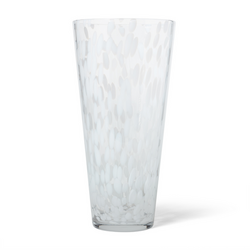
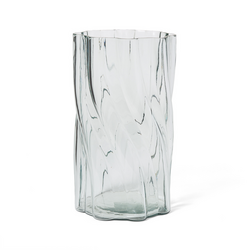
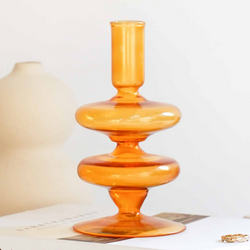
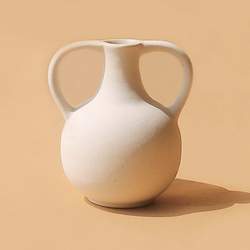
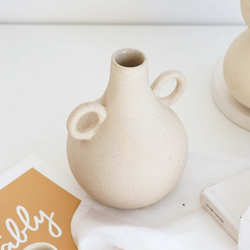
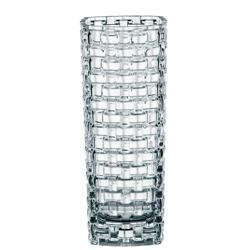
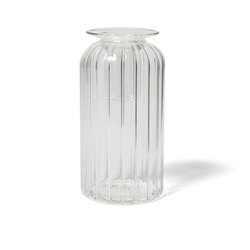
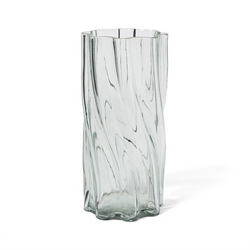
Bedroom vases bring flowers, texture and decorative detail to nightstands, dressers and other bedroom surfaces. Glass, ceramic, metal and wood each offer a different look, from a clear vessel that keeps stems visible to an opaque shape that looks complete without flowers. The right choice fits both the room and the way the surface is used. A compact bud vase leaves space beside the bed for a reading lamp, a book and a glass of water, while a broader vessel can give a long dresser a clear focal point. Height matters as much as width: a vase and its arrangement should sit comfortably beneath wall art or a mirror without covering the details that make the room feel personal. On a bedside table, a low arrangement is less likely to interfere with reaching for a phone or switching off a lamp. A taller silhouette can work well on a chest positioned away from daily activity, provided the base is stable and the stems do not make it top-heavy. Color and finish help connect a vase to the rest of the bedroom without requiring an exact match. Soft white ceramic can sit easily alongside patterned bedding, while colored glass can pick up a small accent from a pillow or framed print. A matte finish adds a quieter texture beside polished furniture; a glossy surface introduces a little reflected light. Rounded forms can soften the straight lines of a dresser, while simple cylindrical shapes suit rooms with clean, understated furnishings. For smaller bedrooms, one thoughtfully proportioned vase often feels more comfortable than several pieces competing for limited space. A pair of different heights can also work on a generous surface, especially when the shapes share a color or finish. The goal is a bedroom accessory that feels at home among the things already used and enjoyed every day, rather than an arrangement that makes the room harder to live in.
Material affects not only the appearance of a bedroom vase but also what it can hold and how it should be cared for. Clear glass suits fresh flowers when the stems and water are part of the display, and its transparency makes it easy to see when the water needs changing. Tinted or textured glass offers a little more visual depth while retaining some of that lightness. Glass can chip or break if knocked against a hard surface, so a secure position away from the edge of a nightstand is important. Ceramic offers a wide range of shapes and surface details, including smooth glazes, subtle ridges and more pronounced texture. An opaque ceramic body hides stems and makes a modest bunch of flowers feel visually contained. Not every ceramic vase is watertight, however; glazing, construction and the maker’s intended use all matter. A decorative vessel intended only for dried arrangements should not be treated as a container for fresh flowers unless it can safely accommodate a suitable waterproof liner. Metal vases introduce another kind of contrast, whether their finish is softly brushed or more reflective. Their suitability for water depends on the metal, lining and finish, so care directions are worth checking before filling. Wood brings visible grain and natural variation to a bedside or dresser display, but unlined wooden vessels are generally better suited to dry stems or use as decorative objects. Across materials, durability depends on more than weight alone. A broad, level base helps with stability, while delicate rims, handles and applied details need gentler handling. Cleaning should suit the construction: mild soap and a soft cloth may be appropriate for washable surfaces, while porous materials and decorative finishes can require dry dusting or other specific care. Abrasive pads can scratch glass or damage finishes, and dishwasher cleaning should be reserved for vessels explicitly identified as dishwasher safe. A discreet protective coaster can help shield furniture from moisture, but it does not replace checking that a water-filled vase has a sound, watertight base.
The opening of a vase helps determine how an arrangement will look. A narrow neck can support a few stems without making a small bouquet appear sparse, while a wider mouth gives fuller bunches room to spread. For the bedroom, that difference can be especially useful: a single stem beside the bed offers a small decorative detail, while a loose arrangement on a dresser has room to make more of an impression. Shorter stems and balanced proportions help keep flowers from leaning into a lampshade or across a frequently used surface. Fresh flowers bring color and a changing focal point, but their fragrance deserves consideration in a room used for sleeping. Lightly scented or unscented choices may be more comfortable for anyone sensitive to perfume, and any flowers brought into a home with pets should be checked for safety. Dried stems offer a different look without standing water, though they can shed and benefit from a position where they will not be brushed against repeatedly. A sculptural vase can also stand empty, letting its shape, glaze or grain provide the detail. For fresh arrangements, an opening that allows comfortable cleaning makes regular use easier; narrow interiors may need a soft bottle brush, if the material permits. Changing the water regularly and washing the vessel between arrangements helps prevent residue from building up. These everyday considerations also make bedroom vases thoughtful gifts for a housewarming, a wedding or someone furnishing a first apartment. A recipient who often brings home flowers may appreciate a practical shape that supports a modest bouquet, while someone who prefers uncluttered surfaces may enjoy a smaller vessel with enough character to display on its own. For a coordinated look beyond the bedroom,
Interior Vases offer a broader decorating direction, with shapes and materials that can connect bedside accents to living areas without making every room look identical.