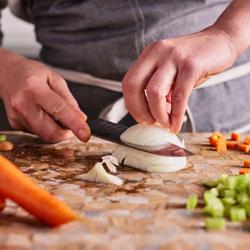
Beginner cooking classes for couples offer a chance to get comfortable in the kitchen together, whether both partners are starting from scratch or one usually handles dinner. The focus is on approachable skills that make cooking feel less like guesswork: holding a knife securely, cutting ingredients into similar sizes, understanding heat, and recognizing when food is ready. An instructor can explain not just what to do, but why it matters, connecting each technique to something you can see, hear, or smell. The steady sizzle of vegetables in a pan, the aroma of garlic before it browns, or the change in a sauce as it thickens can become useful cues rather than unfamiliar details. For couples who tend to rely on the same few meals, that kind of hands-on practice can open up new possibilities without requiring an ambitious cooking background. For those who rarely cook at all, preparing a complete dish offers a satisfying place to begin. Working through a recipe together also makes room for questions that are easy to overlook when cooking alone, such as how finely an onion needs to be chopped or why ingredients are added in a particular order. Neither partner needs to arrive with matching skills. One person might enjoy careful measuring while the other feels more comfortable stirring, tasting, and adjusting seasoning. A beginner-friendly setting gives both people a reason to try unfamiliar tasks instead of automatically falling into their usual roles. The appeal is as much about participating as it is about the finished meal: learning to steady a cutting board, getting a more even dice, or understanding why a crowded pan makes browning difficult. Those small discoveries are practical enough to carry into everyday dinners, yet engaging enough to make a class feel different from another evening spent deciding what to eat. Sharing that learning curve can make even a slightly uneven first attempt feel worthwhile, especially when both partners understand what to try differently next time.
The menu gives those foundational skills a purpose, turning individual techniques into a meal with flavors and textures that belong together. Depending on the class, couples might practice sautéing vegetables, preparing a sauce, shaping fresh pasta, or mixing a simple dough. A pasta-focused experience, for example, can show how texture changes as dough is worked and how the finished pasta interacts with its sauce. A class centered on a complete dinner may spend more time on coordinating several components so that the main dish and its accompaniments are ready together. These are different experiences, but both can help beginners understand the connections between preparation, cooking, and serving. Knife work becomes more meaningful when evenly cut vegetables cook at the same rate. Heat control makes more sense when a browned surface brings flavor to the finished dish. Seasoning becomes easier to understand when tasting reveals the difference a little salt or acidity can make. Rather than memorizing a collection of rules, couples get context for decisions they will encounter again at home. That context is especially useful when a recipe says to cook until golden, simmer until reduced, or stir until smooth. Seeing those stages with an instructor nearby can help translate vague directions into recognizable results. Menu descriptions can also help couples find a comfortable starting point, whether that means familiar flavors prepared with more care or an unfamiliar dish built around manageable techniques. An elaborate-sounding meal is not necessarily beyond a beginner when its steps are broken down clearly, just as a simple dish can offer plenty to learn about timing and seasoning. Dietary needs and ingredient preferences deserve attention, too, since participation and substitutions depend on the particular class. The most useful outcome is not necessarily a flawless plate. It is a clearer sense of how ingredients behave, how a method affects the result, and how to approach the next meal with less hesitation. Even a single technique, practiced carefully and understood well, can change how confidently two people cook together.
For a date night, a beginner cooking class offers something to do together rather than simply somewhere to sit. There is a shared task, plenty to notice, and a natural reason to put distractions aside while chopping, stirring, or checking on a dish. Couples celebrating an anniversary or birthday may enjoy an experience that combines learning with time together, while newlyweds or partners setting up a shared kitchen can build habits they will use long after the class. It can also be a thoughtful experience gift for two people who enjoy food but have not had much opportunity to cook side by side. No special occasion is necessary, though; getting out of a dinner routine is reason enough to explore a different way of spending time together. The format shapes that experience. An in-person class can provide a change of setting and opportunities to learn by watching an instructor demonstrate techniques, with participation details depending on the session. For couples who prefer practicing in their own kitchen,
Online Cooking Classes for Couples offer another way to make cooking a shared activity. Learning at home brings familiar counter space, appliances, and tools into the experience, so the techniques have an immediate connection to everyday meals. Either setting can reveal useful things about how two people work together: who likes to organize ingredients, who watches the timing, and when an extra pair of hands makes a task easier. Taking turns matters, especially when one partner is more confident, because both people benefit from actually practicing rather than only observing. The experience can continue with a later attempt at a similar meal, using the same method with a different vegetable or repeating a sauce until its texture feels familiar. Over time, those manageable successes can turn dinner from one person’s responsibility into a more comfortable collaboration. A beginner class provides a starting point: something good to make together, a few techniques worth remembering, and a shared experience to draw on the next time cooking feels unfamiliar.