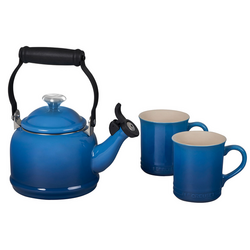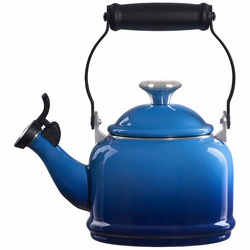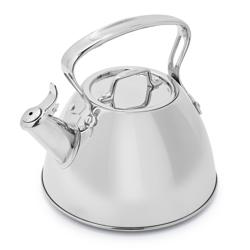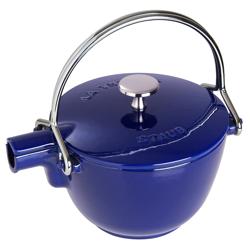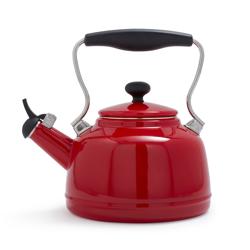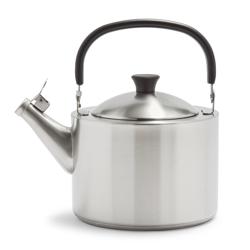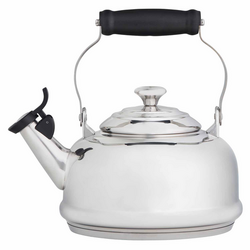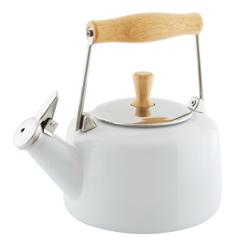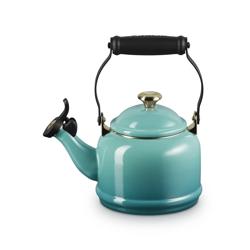
Blue whistling tea kettles heat water on the stovetop and announce a boil with a steam-powered whistle, combining everyday usefulness with a colorful finish. Common constructions include enamel-coated steel and stainless steel with a blue exterior, while differences in capacity, base design and handle shape affect how each kettle fits into a kitchen routine. The blue finish is primarily a design choice; heating performance depends more on the underlying metal, base construction and compatibility with the cooktop. Enamel is a glass-based coating that gives steel a smooth, colorful surface, often with a glossy appearance that looks at home beside ceramic canisters or a favorite mug. It needs protection from hard knocks, which can chip the finish, particularly around edges. Stainless steel brings strength and resistance to corrosion, although a colored exterior still needs care appropriate to its coating. Neither construction should be assumed to be scratchproof or maintenance-free. Visually, blue offers plenty of range without demanding a complete kitchen refresh. A deep navy can sit comfortably beside white tile and wood cabinetry, while a brighter blue creates a more noticeable accent against neutral counters. Rounded bodies and arched handles have a familiar stovetop presence; straighter sides and simpler profiles feel more streamlined. For another approach to clean-lined kitchen essentials, explore
Modern Whistling Tea Kettles. Beyond appearance, the details that matter most are easy to picture in use: a lid that stays secure during pouring, a handle with enough clearance for a comfortable grip and a spout that directs water into a cup without awkward tilting. A blue kettle can remain a useful part of the kitchen between tea breaks, but its shape should leave enough room for neighboring cookware when several burners are in use. A kettle that looks balanced on the stove should also feel manageable when filled, lifted and tipped toward a mug.
Capacity is best matched to the amount of water usually needed rather than the largest kettle that will fit on the stove. A smaller household making a mug or two at a time may prefer a lighter, more compact kettle, while shared breakfasts and a full teapot call for more usable capacity. As a reference, 2 quarts equals eight standard measuring cups, but a kettle’s stated capacity is not necessarily its recommended boiling capacity. The maximum fill line takes priority, and room above the water allows steam to collect without forcing hot water through the spout. Mug sizes vary, too, so a household that uses generous mugs may get fewer servings than a cup count suggests. Weight deserves equal attention: water adds a little more than 2 pounds per quart, making a full kettle noticeably heavier than an empty one. A well-positioned handle and a controlled pouring angle can make that difference easier to manage. Handle materials vary, and a heat-resistant grip does not guarantee that every part will stay cool. Keep an oven mitt nearby and follow the care instructions for lifting and opening the spout. Trigger-operated and flip-top whistle caps offer different ways to pour, with the most comfortable choice depending on grip and reach. Cooktop compatibility is another practical distinction. Induction requires a compatible magnetic base, and a blue finish alone says nothing about whether a kettle will work on that surface. Gas, electric and glass cooktops also have requirements worth checking before use. A base that sits securely within the heating area supports stable placement; on a gas stove, flames should remain beneath the base rather than climb the sides toward the finish or handle. The whistle is a reminder to turn off the heat, not an automatic shutoff feature. Stay nearby while water heats, and never leave a kettle boiling unattended or allow it to boil dry.
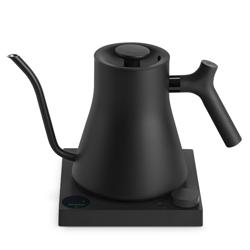
A whistling tea kettle is intended to heat water, while a teapot or infuser is used for steeping tea. Keeping loose leaves, tea bags, milk and sweeteners out of the kettle helps protect the interior and prevents residue from collecting around the spout or whistle. Once the water is ready, it can be poured over black tea, used for a French press or allowed to cool to the temperature recommended for a more delicate green tea. For pour-over coffee, consider the spout as well as the capacity: a standard kettle can deliver hot water, but it will not necessarily provide the fine stream control of a dedicated gooseneck design. These distinctions help a kettle earn its place through daily use rather than appearance alone. Regular care also makes a difference to its longevity. Let the kettle cool before cleaning, empty leftover water after use and allow the interior to dry according to the manufacturer’s instructions. Hard water can leave mineral deposits inside, including around areas that are difficult to reach with a cloth. Use a descaling method approved for the kettle’s materials rather than assuming that an acidic cleaner is suitable for every finish. A soft cloth and a gentle cleaning approach help preserve a blue exterior; abrasive pads can dull or scratch decorative coatings. Dishwasher suitability varies, so hand-washing should not be replaced with machine cleaning unless the instructions permit it. Avoid sudden temperature changes, such as adding cold water to a kettle that has just boiled dry. With thoughtful use, a well-made kettle can become a familiar part of breakfast, an afternoon tea break or a quiet moment after dinner. Blue whistling tea kettles also make thoughtful housewarming or wedding gifts for people who enjoy stovetop preparation. Matching the recipient’s cooktop, preferred capacity and kitchen colors makes the gift feel personal while keeping its everyday purpose at the center.