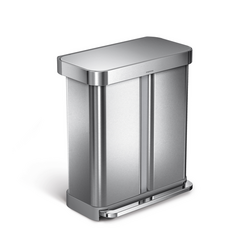
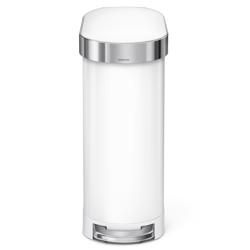
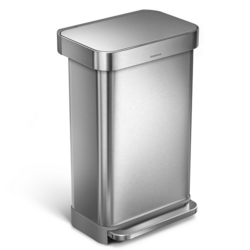
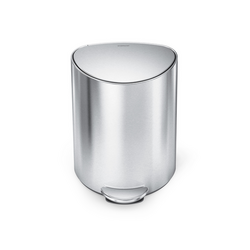
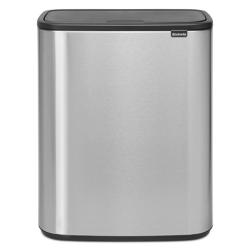
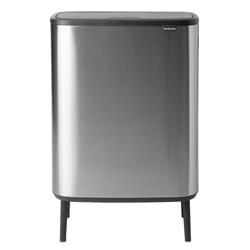
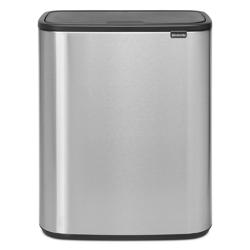
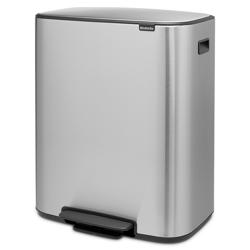
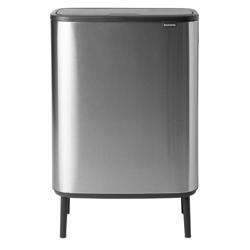
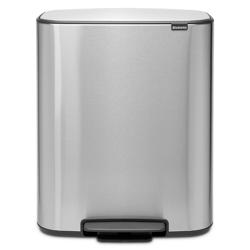
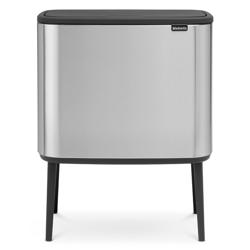
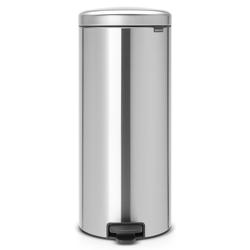
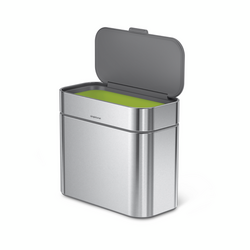
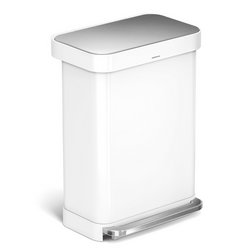
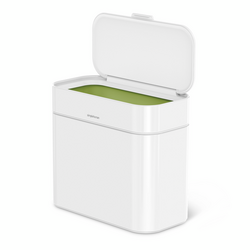
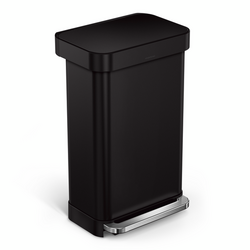
Brushed stainless steel waste bins combine a durable metal exterior with a muted, finely textured finish that fits comfortably alongside kitchen appliances, cabinet hardware and everyday cooking tools. They provide a practical place for household waste without adding a bright, mirrorlike surface to the room. The brushed finish helps make some light marks less noticeable, but it is not inherently fingerprint-proof; resistance to fingerprints and smudges depends on whether a bin has a separate protective coating. That distinction matters in a busy kitchen, where flour-dusted fingers, splashes from the sink and frequent bag changes can leave traces on the exterior. Stainless steel resists corrosion under ordinary indoor conditions, making it well suited to daily use, though it still benefits from regular cleaning and drying. Its neutral silver-gray color works with white cabinetry, warm wood, stone countertops and painted finishes, so a waste bin can feel like part of the kitchen rather than an afterthought. Shape influences that fit as much as color. Rectangular bins can sit neatly alongside cabinets, narrow profiles can make use of a gap near a pantry and round bins can work well in an open corner. Smaller waste bins serve bathrooms, home offices and other spaces where the contents tend to be lighter and less bulky. Larger kitchen trash cans accommodate the packaging, paper towels and other waste that come with preparing meals and cleaning up afterward. For someone who cooks most days, a well-placed bin keeps discarded packaging close at hand without interrupting the path between the refrigerator, sink and stove. In a shared home, an easy-to-use opening and a clearly defined place for waste can make everyday cleanup simpler for everyone. The appeal is straightforward: a useful household essential with a finish that coordinates easily and a surface that can stand up to repeated wiping.
Capacity, footprint and lid movement determine how comfortably a brushed stainless steel trash can fits into a room. Compact bins of roughly 1 to 3 gallons are often suitable for a bathroom or beside a desk, while kitchen bins around 12 to 14.5 gallons offer more room for everyday household waste. Those ranges are useful points of comparison, but gallon capacity alone does not describe how a bin will work in a particular space. Two bins with similar capacities may have very different widths, depths and heights, and a wide lid may need more clearance than its closed dimensions suggest. A location beneath a counter overhang calls for attention to the lid’s full opening height; a spot beside a dishwasher needs enough space for the appliance door to lower without blocking access. Bag removal also takes room, especially when a full liner must lift straight up. Opening styles suit different routines. A step pedal allows hands-free use when both hands are occupied with a mixing bowl or cutting board, while a sensor-operated lid can provide touch-free access without pressing a pedal. Sensor designs may require batteries or another power source, and their placement matters because nearby movement can sometimes trigger the lid. Open-top bins make disposal quick and unobstructed, particularly for dry office waste, but leave the contents exposed. Lidded bins conceal discarded food packaging and may help limit escaping odors, though a lid does not replace timely emptying or guarantee an airtight seal. Soft-close mechanisms reduce the abrupt sound of a lid dropping shut, a welcome detail in kitchens connected to living or dining areas. Removable inner buckets, bag-retaining rims and accessible liner storage can make maintenance easier when included. For households separating trash from recycling, divided compartments may keep both streams in one footprint, although each compartment holds less than the total stated capacity. The most useful arrangement is one that matches the amount and type of waste a household produces, with room to open, empty and clean the bin comfortably.
Care and construction have a lasting effect on how a brushed stainless steel waste bin looks and performs. A soft cloth with mild soap and water is generally a good starting point for routine cleaning, followed by drying to reduce water spots; the manufacturer’s instructions take priority, particularly for coated finishes. Wiping in the direction of the visible grain helps preserve the brushed appearance. Abrasive pads, steel wool and harsh cleaners can scratch the surface or damage protective treatments, while chlorine bleach can harm stainless steel. A stainless steel cleaner is not automatically suitable for every fingerprint-resistant coating, so compatibility matters more than the cleaner’s name. The inside deserves equal attention: a small leak beneath a liner can leave residue that remains after the bag is removed. Removable buckets can make spills easier to reach, but their washing instructions vary, and parts should not be assumed to be dishwasher safe. Letting cleaned components dry before fitting a fresh bag helps avoid trapped moisture. Liners should fit securely around the rim without stretching so tightly that removal becomes difficult, and stated bin capacity does not always guarantee compatibility with every bag of the same nominal size. Everyday durability also depends on the parts that move. A steady base, a pedal that feels comfortable underfoot and a lid that opens without wobbling contribute as much to daily satisfaction as the exterior material. Stainless steel can still dent or scratch, so positioning a bin away from swinging cabinet doors and frequent collisions helps protect its appearance. For homes with pets or young children, a standard lid should not be treated as a lock; secure-closure features need to be evaluated separately. Brushed steel is a versatile choice when the goal is coordination with appliances, while
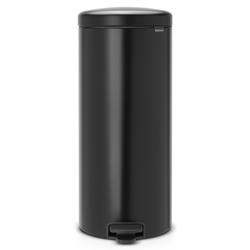
black steel waste bins offer a darker alternative for spaces with black fixtures or contrasting cabinetry. Whether furnishing a first apartment, updating a family kitchen or organizing a home office, a thoughtfully proportioned waste bin supports the small, repeated tasks that keep a room comfortable to use. Easy access, manageable cleaning and a finish that belongs in the space make it a practical part of everyday life.