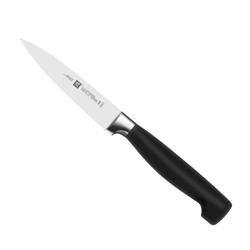
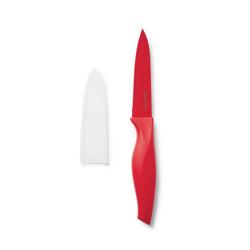
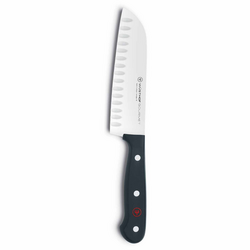
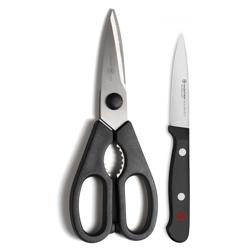
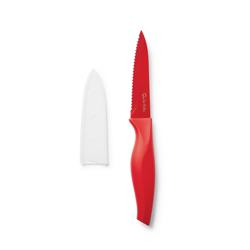
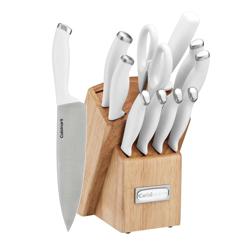
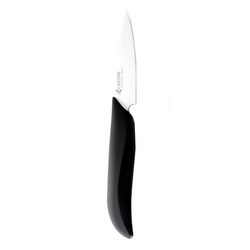
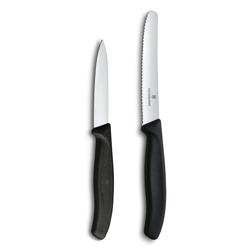
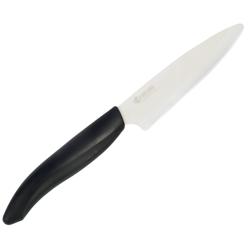
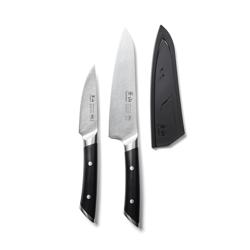
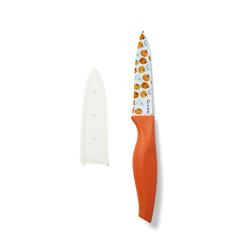
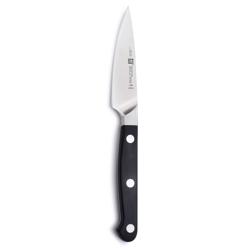
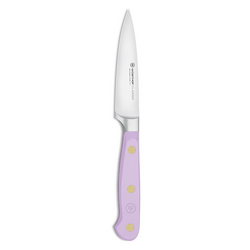
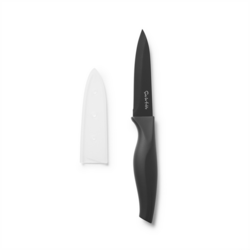
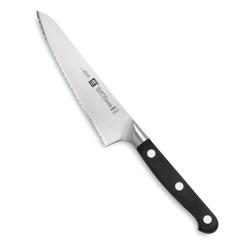
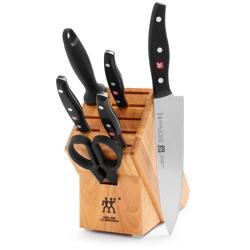
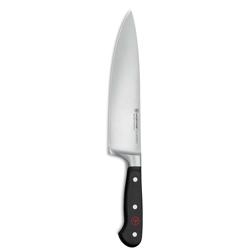
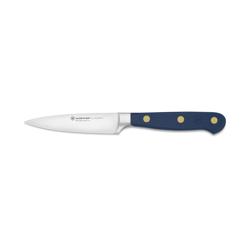
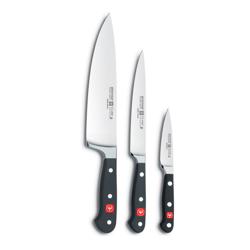
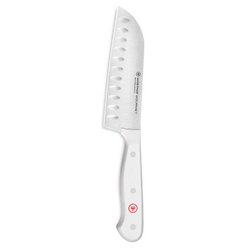
Budget kitchen knives bring everyday food preparation into focus: a blade suited to the task, a comfortable handle and an edge that can be maintained over time. For a home cook, those qualities matter when chopping an onion for dinner, slicing a sandwich tomato or turning a pile of vegetables into a pot of soup. A useful assortment starts with the work that happens most often in the kitchen rather than a long list of specialized blade shapes. Chef’s knives handle a broad range of chopping, slicing and mincing, with curved edges that accommodate a gentle rocking motion. Santoku knives generally have a flatter cutting profile that suits up-and-down chopping and tidy slices of vegetables or boneless proteins. Smaller paring knives offer control for trimming strawberries, removing blemishes from potatoes and working around the core of an apple. Utility knives fill the space between a small trimming blade and a larger prep knife, especially for shallots, citrus and smaller sandwiches. Serrated knives have toothed edges that help catch a bread crust or tomato skin before moving through the softer interior. These different shapes serve distinct purposes; a large collection is not necessary for every kitchen. Someone cooking mostly vegetables may reach for a broad chopping blade every day, while a household that frequently slices crusty loaves has a clear use for a bread knife. Blade length matters, too. A longer edge gives more room for slicing a cabbage or melon, but a compact blade may feel easier to manage on a small cutting board. The best budget kitchen knives for an individual cook are the ones that match their usual ingredients, feel secure in their hand and fit the space where meals come together. That makes this category relevant to first kitchens, shared apartments and experienced cooks who want a straightforward selection for daily prep. A few complementary shapes can cover a satisfying range of meals, from scrambled eggs with chopped herbs to a roast served alongside thinly sliced vegetables.
Materials and construction influence how a kitchen knife feels during use and how much attention it needs afterward. Stainless steel is a practical choice for everyday blades because it resists corrosion, although it still benefits from prompt cleaning and drying. Some knife steels contain more carbon to support hardness and edge performance, but the phrase “high-carbon stainless steel” alone does not establish how long a blade will stay sharp. Heat treatment, blade geometry and cutting habits all affect performance. Non-stainless carbon steel needs more careful drying and can develop a patina with use, a change in appearance that is different from active rust. For most everyday cooks, the useful distinction is how readily a blade cuts, how easily it can be sharpened and whether its care requirements fit the household routine. A thin blade can move through an onion with less resistance, while a thicker blade may feel more substantial; neither characteristic makes a knife suitable for twisting through frozen food or chopping bones. Stamped knives are cut from sheets of steel and are often relatively light. Forged knives are shaped from heated steel and may have a heavier feel or a bolster where the blade meets the handle. Either construction can perform well, so weight alone is not a measure of quality. Handle shape deserves just as much attention as the blade. Smooth transitions, enough clearance for the knuckles and a grip that does not create pressure points can make repeated chopping more comfortable. Synthetic handles are often low-maintenance, while wood handles generally need extra protection from prolonged moisture. A full tang means the blade’s steel extends through the length of the handle, but secure construction and comfortable balance matter more than that feature in isolation. For a broader look at knife styles,
Top Kitchen Knives offers another place to explore the category. The most useful comparison remains personal: how the blade’s size, handle proportions and weight suit the cook who will use it.
Lasting performance depends on what happens between meals as much as on the knife itself. A wood or knife-friendly plastic cutting board provides a more forgiving surface than glass, stone or a bare countertop, which can quickly damage a cutting edge. Enough board space also leaves room to work without crowding chopped ingredients against the blade. After slicing or dicing, moving food with a bench scraper rather than dragging the knife’s edge sideways across the board helps protect that edge. Hand-washing with mild soap and drying promptly is a dependable care routine for most kitchen knives, subject to the manufacturer’s instructions. Leaving a knife soaking in the sink can expose its handle and blade to unnecessary moisture and create a hidden hazard beneath the water. Dishwashers can expose knives to heat, strong detergents and contact with other utensils, so hand-washing is generally preferable even when a knife is labeled dishwasher safe. Protected storage matters for the same reason: a blade guard, suitable knife block or secure rack helps keep edges from knocking against other tools. Any storage method should keep blades dry and safely out of children’s reach. Regular maintenance also includes recognizing when an edge needs attention. Honing can help realign an edge on compatible steel knives, while sharpening removes metal to restore the cutting edge; not every blade works with every honing rod or sharpener. Serrated knives need an approach suited to their teeth, and professional sharpening may be the simplest option. These habits help a practical knife assortment remain useful through repeated dinners, packed lunches and weekend meal preparation. They also make budget kitchen knives a thoughtful choice for a housewarming gift, a newly independent cook or someone returning to cooking more meals at home. A recipient who prefers uncomplicated tools may appreciate a small, purposeful assortment more than numerous specialized shapes. With comfortable handling, appropriate blade choices and manageable care, everyday knives support the parts of cooking that happen before the pan is hot: cleanly cut ingredients, organized prep and the pleasure of making a meal from scratch.