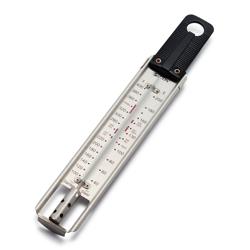
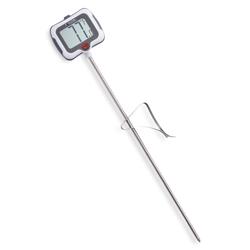
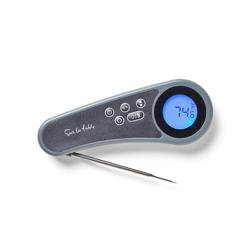
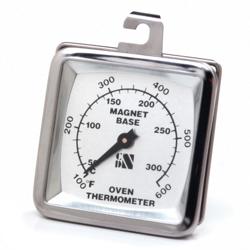
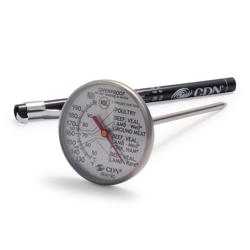
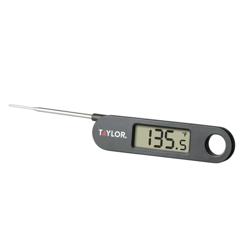
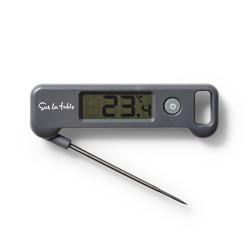
Candy thermometers measure the temperature of cooking sugar, helping homemade holiday fudge, caramel, brittle and toffee reach the stage needed for the right texture. A few degrees can make a noticeable difference between a caramel that holds its shape in a paper wrapper and one that stays too soft to share. For gift makers, a clear temperature reading takes some of the guesswork out of that moment when a bubbling mixture is nearly ready. Sugar changes as water evaporates, and its temperature provides a useful indication of how firm the finished candy will become after cooling. That makes a candy thermometer especially helpful for treats that need to slice neatly, snap cleanly or tuck into a gift box without losing their shape. Soft-ball, firm-ball and hard-crack markings can make traditional recipes easier to follow, while a clearly numbered Fahrenheit scale supports recipes that specify an exact temperature. The best choice depends on the sweets being made, the cookware being used and how the cook prefers to check progress. Someone preparing several batches of peanut brittle for neighbors may appreciate a thermometer that stays clipped to the pan, keeping the reading visible as the syrup cooks. A baker making an occasional batch of caramel for a holiday dessert may prefer a compact design that stores easily with other baking tools. Either way, a thermometer is there to support good technique, not replace attention at the stove. Pan thickness, burner heat and stirring requirements still matter, especially with mixtures containing dairy or nuts that can scorch. A dependable reading helps connect those details to the finished result: buttery toffee with a crisp bite, chewy caramel with a clean cut or fudge that is ready for its next step. For homemade holiday gifts, that consistency matters just as much as a pretty ribbon or a handwritten label.
Materials, readability and fit deserve a close look when choosing a candy thermometer. Stainless steel probes and frames offer durability for repeated kitchen use, while glass-tube designs often pair a liquid-filled temperature column with a marked scale. A protective frame can help shield glass from bumps, though any glass component still needs careful handling. Digital designs provide a numerical display that some cooks find easier to read at a glance; analog styles can offer a straightforward view of both temperature and candy stages without batteries. Neither format is automatically the better choice. What matters is a suitable temperature range, dependable performance and a display that can be read comfortably beside a steaming saucepan. Candy mixtures can reach temperatures above 300°F, so a thermometer intended only for lower-temperature tasks may not suit brittle or hard candy. Chocolate work introduces a different consideration: the lower temperatures and small changes involved in tempering call for a thermometer with appropriate range and precision. Fit is equally practical. A pan clip should hold securely on the cookware being used, with enough adjustment to position the sensing area in the mixture without touching the bottom. A probe resting against hot metal can give a misleading reading, while a shallow batch may not cover the required sensing area at all. The manufacturer’s minimum immersion depth is worth checking, particularly for someone who usually makes small batches. Long probes can provide useful reach in deeper pots, but length alone does not determine whether a thermometer will work well in a favorite saucepan. For digital models, check whether the probe is designed for continuous monitoring or only brief readings; not every instant-read thermometer can remain in hot syrup. Care requirements also vary. Some parts may tolerate immersion, while electronic displays and certain housings need to stay dry. Following the cleaning instructions, removing sticky sugar residue and storing the thermometer where its probe or glass cannot be knocked around all support longer use. A way to check accuracy according to the manufacturer’s directions is helpful, too, particularly before a larger round of holiday candy making.
Homemade candy has a place in many holiday traditions, from tins of nut brittle shared with coworkers to little bundles of caramels set beside each place at a family dinner. A candy thermometer suits the person who enjoys those projects, whether they are trying a family fudge recipe for the first time or returning to a familiar toffee recipe every year. It can also be a thoughtful gift for a baker who already measures ingredients carefully but has not yet explored cooked-sugar sweets. The most useful choice reflects that person’s habits rather than the longest list of features. A large, legible scale may matter more than extra settings, and a secure clip may be more welcome than a display crowded with functions. Easy cleaning is especially valuable when several flavors or batches are part of the plan. Alongside
Unique Candy Gifts, a candy thermometer offers another way to celebrate someone’s interest in sweets: with a tool they can put to work in their own kitchen. For the person making edible gifts, temperature control supports presentation as well as texture. Caramel that sets as intended is easier to wrap individually, and properly cooked brittle breaks into pieces that fit comfortably inside a tin. Fudge still depends on the recipe’s cooling and beating instructions, but reaching the specified cooking temperature gives those later steps a sound starting point. Recipes developed for the cook’s elevation are important, since boiling temperatures change with altitude. Beyond the thermometer itself, gift planning benefits from attention to the people receiving the treats. Nut and dairy ingredients should be clearly identified, and storage directions should match the recipe rather than assume every candy keeps the same way. Heat-safe handling matters throughout the process because hot sugar sticks to skin and can cause serious burns; children can help with cooled treats and packaging away from the stove. With a suitable thermometer and a well-tested recipe, candy making becomes a project built on useful details, from the first clear reading to the last neatly wrapped piece.