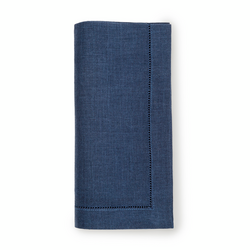
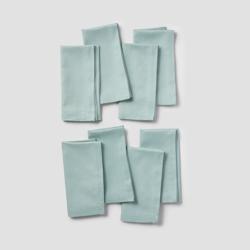
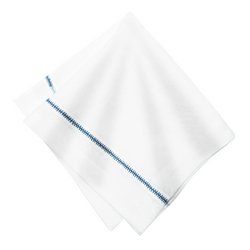
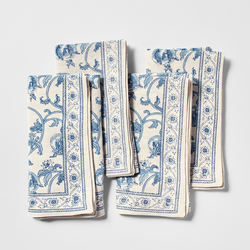
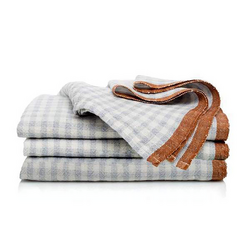
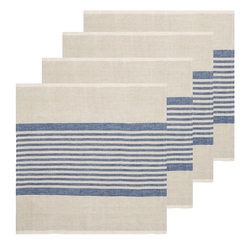
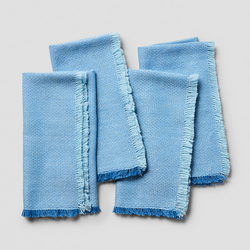
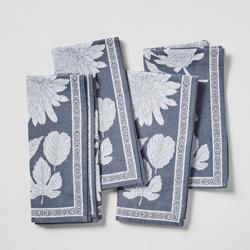
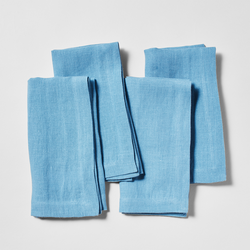
Classic blue linen napkins are reusable table linens woven from flax fibers in a versatile blue shade, suited to everyday meals and more formal place settings. Their appeal comes from the balance of color and texture: blue gives the table definition, while linen’s naturally irregular weave keeps the setting from feeling overly polished. Against white dinnerware, a blue napkin creates a crisp contrast; beside cream-colored stoneware or a wooden table, it feels softer and more relaxed. Clear glassware lets the color stand on its own, while patterned plates can pick up the same blue in a border or painted detail. The result can be simple enough for a bowl of pasta at the kitchen table or considered enough for a dinner shared with friends. Material is an important distinction when comparing napkins. Pure linen is made from flax and is known for its absorbency, strength and characteristic texture. A linen blend combines flax with another fiber, which can change the fabric’s softness, drape and care requirements. Fiber content is worth checking rather than judging by appearance alone, especially when a smooth finish or a particular feel matters to you. Fabric weight also shapes the experience. A lighter napkin tends to fold with less bulk, while a more substantial weave can give a place setting greater structure. Neither is automatically better; the right choice depends on how the napkin feels in the hand and how you like your table to look. Finishing details make a difference, too. A plain hem gives the color and weave room to stand out, while hemstitching adds an openwork border without relying on a printed pattern. Even stitching and neatly finished corners are useful signs of careful construction. Blue can also look different across fabrics, with a textured weave scattering light differently from a smooth surface, so color, material and finish are best considered together.
The best fit for your table involves more than matching a shade of blue. Napkin dimensions affect lap coverage, the finished fold and the amount of space left around each plate. A generously sized dinner napkin offers comfortable coverage for a full meal, but a thick fabric folded several times can feel bulky beneath flatware. A smaller napkin may suit a compact breakfast setting or a table where serving dishes need plenty of room. Comparing the listed dimensions with a napkin you already enjoy using can make those differences easier to picture. For a straightforward place setting, a loosely folded rectangle beside the plate shows off the fabric without adding much height. A fold across the center of a plate gives blue a larger role, while a napkin ring gathers the fabric into a softer shape. The surrounding textiles do not need to match exactly. Blue linen can sit comfortably with a natural-colored runner, a white tablecloth or woven placemats, provided the textures and patterns leave enough visual breathing room. When plates already carry a detailed design, a solid napkin can give the eye a place to rest. On a mostly neutral table, that same napkin becomes a clear accent. This flexibility makes classic blue useful for households that want cloth napkins to serve more than one occasion, from a weekday dinner to an anniversary meal. For frequent hosts, having enough napkins for the usual guest count plus a few extras helps accommodate spills or an additional place setting without requiring every piece to be washed immediately. Blue linen napkins can also make a thoughtful housewarming, wedding or host gift, particularly for someone who enjoys cooking and gathering people around a table. A useful quantity, a shade that complements the recipient’s dishes and manageable care requirements matter more than an elaborate presentation. For someone building a first collection of table linens, a versatile solid color leaves room to add patterned pieces later.
Care and durability are central to choosing linen napkins that will become part of daily life rather than stay folded in a drawer. Linen generally softens with repeated laundering, developing a more relaxed feel while retaining its recognizable texture. That lived-in character is part of its appeal, though it differs from the smooth, pressed appearance some diners prefer. A little natural wrinkling suits an informal table; a flatter finish takes more attention after washing. For households that reach for cloth napkins regularly,
Washable Blue Linen Napkins offer a useful starting point, with the care label remaining the best source for washing and drying instructions. Fiber blends, dyes and decorative finishes can all affect those instructions. Many linen napkins can be machine washed, but the recommended water temperature, cycle and drying method should be checked before the first wash. Blue fabrics also deserve attention to color care: washing with similar colors and avoiding chlorine bleach unless specifically permitted can help protect their appearance. Excessive dryer heat may contribute to shrinkage or set wrinkles, so drying directions matter as much as washing directions. If a pressed finish is preferred, linen is often easier to iron while slightly damp, using the setting recommended for the fabric. Everyday use brings ordinary spills, whether that means tomato sauce at dinner or a little coffee after dessert. Prompt attention with a treatment suitable for the fabric and dye can help, and checking a mark before applying dryer heat may prevent it from becoming harder to remove. No blue shade makes a napkin stainproof, and careful laundering remains important even when a darker color makes small marks less noticeable. Fully dry napkins stored in a clean, dry space are ready for the next meal. With suitable care and sound construction, linen can reward repeated use with a softer hand and an easy drape. That combination of useful fabric, adaptable color and tactile detail gives classic blue linen napkins a lasting place at the table.