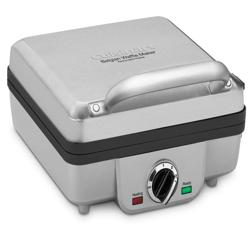
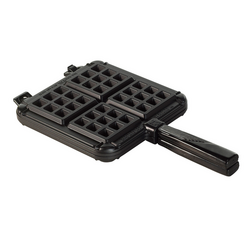
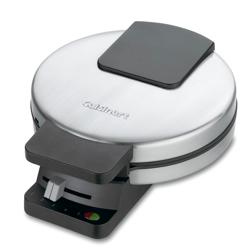
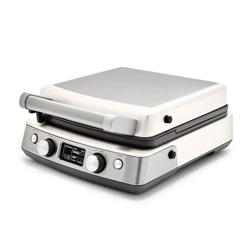
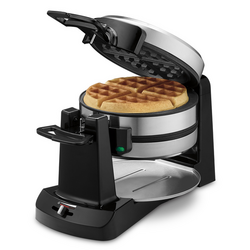
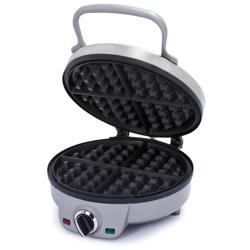
Classic breakfast waffle irons are made for the familiar waffles many of us remember from weekend breakfasts: thin, evenly browned and lightly crisp at the edges with shallow pockets that hold just enough butter, syrup or fruit. Compared with Belgian-style waffle makers, which produce thicker waffles with deep wells, classic irons create a more delicate result that cooks quickly and fits easily on a breakfast plate. They are a practical choice for everyday kitchens, smaller households and anyone who prefers a traditional waffle with a balanced bite rather than a tall, airy center. The thinner profile also makes these waffles easy to stack, serve alongside eggs or bacon and cut into strips for dipping. A classic waffle iron can turn a simple bowl of batter into a warm breakfast with very little effort, whether you are cooking for one on a quiet morning or preparing several rounds for a full table. Look for a cooking surface sized to match your household and storage space. A compact iron is convenient for apartments, guest kitchens and occasional use, while a larger model or one with multiple sections can help move breakfast along when several people are hungry. A wide rim around the plates is useful, too, since it catches a small amount of batter that spreads beyond the grid and helps keep the counter cleaner. Indicator lights or audible signals can make the cooking process more straightforward, especially when the iron is heating while you are whisking batter, brewing coffee or setting out toppings.
For the most classic result, choose thin grids with a consistent pattern and enough depth to create crisp ridges without producing thick, cake-like waffles. Adjustable browning or temperature controls give you more say over the finish. A lower setting can leave the waffle pale and tender, while a higher setting brings out deeper golden color and a firmer crust. Keep in mind that cooking time depends on the recipe, the amount of batter and how cold the ingredients are, so the first waffle is often best treated as a test. It gives you a chance to see how quickly the iron browns and whether you prefer a softer or crisper texture before cooking the rest of the batch. Nonstick plates help waffles release cleanly and make cleanup less of a chore, particularly when a little batter reaches the edges. Even with a nonstick surface, it is best to use wooden, silicone or other utensils recommended for the appliance rather than metal tools that can scratch the coating. Let the iron cool fully before wiping away crumbs and oil with a soft, damp cloth, and follow the care instructions for the model you choose. Most waffle irons should not be submerged in water. Removable plates, if included, can make cleanup and storage simpler, while a hinged design that stands upright can save valuable cabinet space. Cord storage and a secure latch are small details that become surprisingly helpful when the appliance lives on a shelf between uses. For reliable waffles, start with a smooth batter and avoid overfilling the grids. Too much batter can spill into the hinge or around the base, while too little may leave the waffle uneven. A light coating of cooking spray may be appropriate for some recipes, but many nonstick surfaces need little or no added fat once properly heated.
Classic breakfast waffle irons make thoughtful gifts for newlyweds, first-home cooks, college students with a kitchen and anyone who enjoys making familiar foods from scratch. They are approachable appliances that do not require much equipment beyond a mixing bowl, whisk and a few pantry staples, yet they can make an ordinary breakfast feel celebratory. A waffle iron can be especially welcome during the cooler months, when a warm kitchen and the scent of browning batter make slow mornings more inviting. It also earns its place during busy seasons because waffles can be cooked in batches and kept warm briefly while the rest of the meal comes together. Serve them with maple syrup, powdered sugar, berries, sliced bananas or whipped cream, or use the shallow pockets for a small spoonful of jam or nut butter. For a savory breakfast, try a less-sweet batter with shredded cheese, herbs or cooked vegetables, then pair the waffles with fried eggs or roasted tomatoes. Leftover waffles can be cooled on a rack to preserve their texture and reheated in a toaster or oven for a quick weekday breakfast. When choosing among the classic breakfast waffle irons on this page, consider whether you value compact storage, faster multi-waffle cooking, precise shade control or the simplest possible setup. A straightforward model suits cooks who want dependable results without a long learning curve, while more adjustable options are helpful for households with different preferences. If your serving style leans toward thicker waffles with generous wells for fruit and syrup, explore
Spring Brunch Waffle Makers for another assortment. For traditional thin waffles, however, a classic iron remains a useful, welcoming addition to the kitchen—one that can bring people to the table with a crisp stack, a warm pot of coffee and very little fuss.