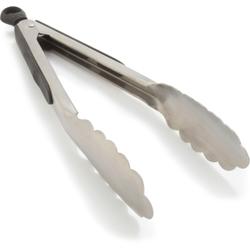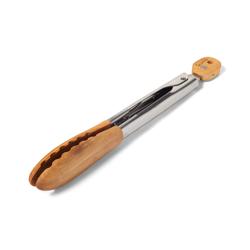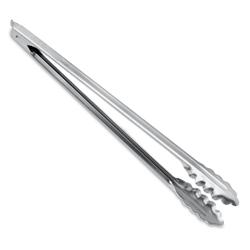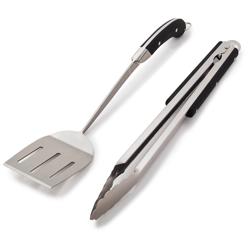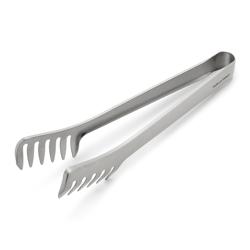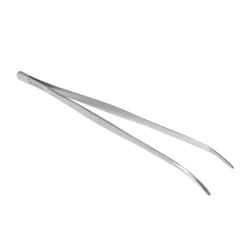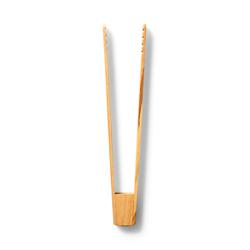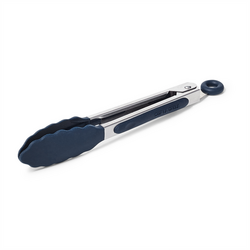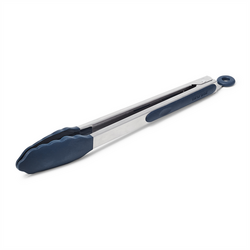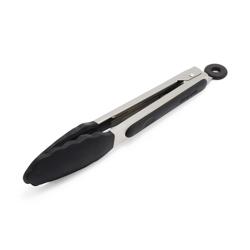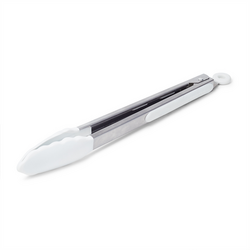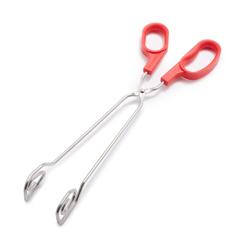
Compact locking kitchen tongs are short, spring-loaded utensils with a mechanism that holds the arms closed for storage. Often measuring 6 to 8 inches long, they offer close control for everyday cooking, serving and plating without taking up the drawer space of a longer pair. A pull ring, sliding tab or similar lock keeps the tips together when the tongs are not in use; some designs also include a loop for hanging. That combination makes them especially useful in smaller kitchens, crowded utensil drawers and prep areas where counter space is limited. Their shorter reach suits tasks such as turning zucchini slices in a skillet, transferring roasted carrots to a plate or lifting a few pickles from a jar. At the table, a compact pair can serve sliced fruit, cheese cubes or small pastries without a long handle extending across the serving dish. If a smaller serving utensil is the priority,
Mini Kitchen Tongs offer another size category to consider alongside the convenience of a locking design. Size alone does not determine how comfortable tongs will feel, though. Handle shape, spring resistance and the distance between the open tips all affect how naturally they work in your hand. A lighter spring may feel easier during repeated squeezing, while a secure grip helps keep a slippery mushroom or piece of pasta from falling back into the pan. Look for tips that meet evenly and a locking mechanism that moves deliberately without sticking. Scalloped edges can help hold rounded foods, while broader tips provide more support beneath tender pieces. For precise serving, the goal is enough pressure to lift food securely without crushing it. A compact pair should feel like an extension of your grip, whether you are placing asparagus beside a piece of fish or moving warm rolls into a breadbasket. Checking both the overall length and the closed width also helps you judge whether the tongs will fit the drawer compartment or utensil holder you have in mind.
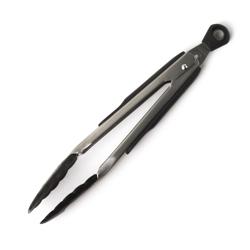
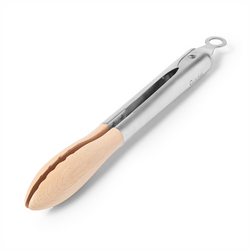
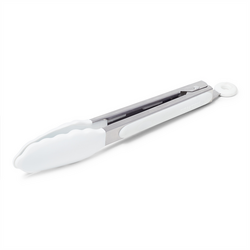
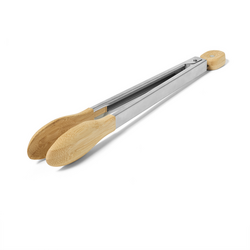
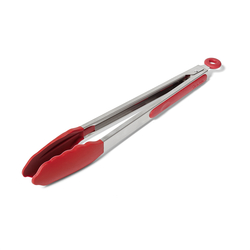
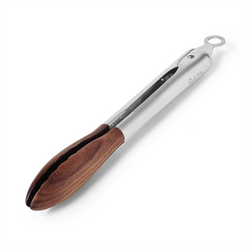
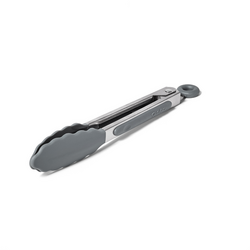
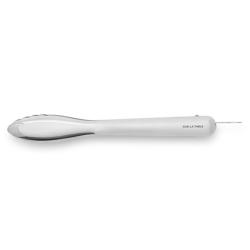
Materials make a meaningful difference in where compact locking tongs work best. Stainless steel tips provide a firm grip for turning browned pieces of meat, tossing sturdy vegetables or lifting food from stainless steel cookware. Their thin edges can slip beneath food readily, but exposed metal may scratch nonstick coatings and other delicate finishes. Silicone-tipped tongs are generally a gentler choice for those surfaces, provided the cookware and utensil care instructions allow their use together. Silicone can also offer a little cushioning around tender foods, although tip thickness and flexibility vary by design. Nylon-tipped options can be useful for similar everyday tasks, but heat limits differ, so check the stated temperature rating rather than assuming all nonmetal tips perform alike. A heat-resistant tip does not necessarily mean the handle, lock or entire utensil can tolerate the same conditions. Handle coverings may improve comfort, while smooth metal handles can offer fewer seams to clean. Think about the foods you prepare most often: narrow tips help retrieve individual pieces from a container, while wider ends can support sliced chicken or a small bundle of green beans. Compact tongs can also be convenient for turning food in an air fryer basket once it has been opened or removed according to the appliance instructions. Take care around the hot basket and surrounding surfaces, since a short handle provides less distance from heat. The same trade-off applies at the stovetop. Close control is helpful for arranging food in a shallow pan, but longer tongs are better suited to deep pots, splattering oil and cooking over an open flame. Compact models are a useful complement to longer cooking utensils rather than a replacement for every task. Use them to move food, not to lift hot cookware, and keep them out of an operating oven or air fryer unless the manufacturer specifically permits that use. When handling raw meat, wash the tongs thoroughly before touching cooked food or switch to a clean pair for serving.
Easy care helps compact locking kitchen tongs remain pleasant to use long after their first trip through the kitchen. Check whether the complete utensil is dishwasher safe, including any soft grips or removable components, and follow the manufacturer’s cleaning instructions. For hand-washing, release the lock so warm, soapy water can reach the inside faces of the arms, the hinge and the area around the locking mechanism. Sauce, oil and small food particles can collect in these less visible spots. Rinse thoroughly and allow the tongs to dry before closing them for storage, particularly around joints and handle seams. Avoid forcing a stiff lock or bending the arms to change their tension; smooth movement and aligned tips are important to reliable handling. Over time, inspect silicone or nylon ends for splitting, loosening or other damage, and check metal edges for rough spots. Durability depends on more than the main material: a secure hinge, well-attached tips and a dependable spring all contribute to everyday performance. Storage deserves a little attention, too. Locking the arms closed helps prevent the tongs from spreading across neighboring tools, but leave enough room that the mechanism is not wedged beneath a heavy utensil. A hanging loop can be useful when it fits the hooks already in your kitchen. For someone setting up a first apartment, refreshing a prep drawer or putting together a practical cooking gift, compact locking tongs offer usefulness without requiring much storage space. Match the choice to the recipient’s habits, whether that means gentle tips for nonstick cookware or a small serving pair for shared appetizers. They can also be helpful when preparing modest portions, where a full-size utensil feels cumbersome beside a small pan or bowl. The best fit balances comfortable handling, appropriate materials and straightforward care. With those details in place, a compact pair earns its spot through ordinary tasks: turning a few shrimp, serving a crisp salad or placing the finishing bite neatly on a plate.