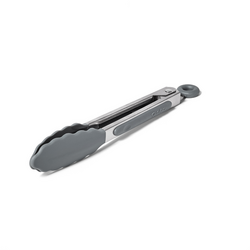
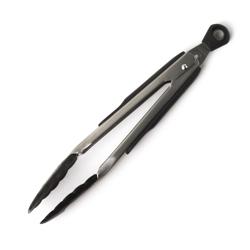
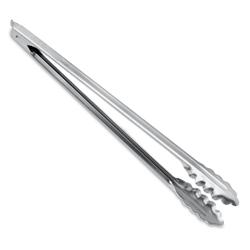
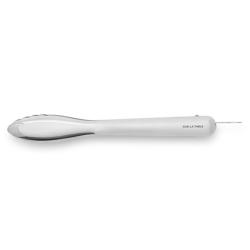
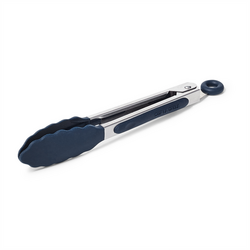
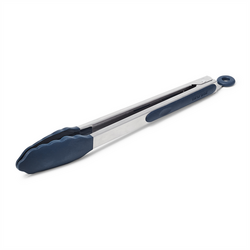
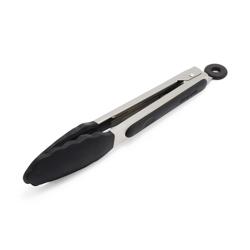
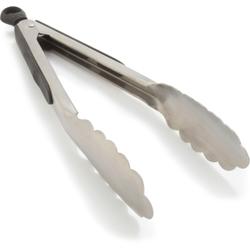
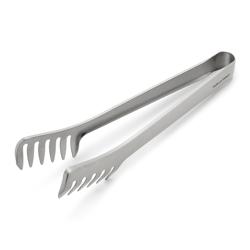
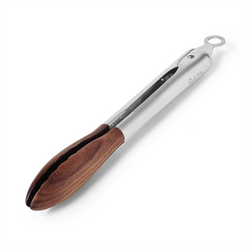
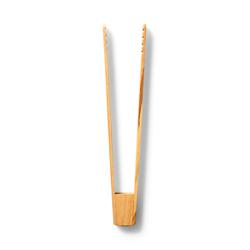
Locking silicone kitchen tongs combine a gentle gripping surface with arms that close for compact storage. They are useful for turning food in nonstick cookware, tossing pasta and moving vegetables from pan to plate. The main considerations are length, grip, heat resistance and how comfortably the locking mechanism works in your hand. Many designs pair stainless steel arms with silicone tips, giving the tool a supportive frame and a softer surface where it touches food and cookware. Silicone tips help reduce the risk of scratching nonstick coatings and enameled surfaces, though light pressure and careful handling still matter. For everyday stovetop cooking, 9-inch tongs offer close control when turning mushrooms, lifting asparagus or arranging pieces of chicken in a skillet. A 12-inch length provides more reach around deeper cookware and wider pans, keeping hands farther from hot food and rising steam. Longer does not always mean easier to use: a shorter pair can feel more precise when turning individual shrimp or transferring small portions to a plate. The right length depends on the cookware, the task and the space around the cooking surface. Heat resistance also varies by design, so the stated temperature limit matters more than the appearance or thickness of the silicone. Tips, handles and other components may have different limits. Even heat-resistant tips should not be left resting against a hot pan or exposed to direct flame, and silicone-tipped tongs are not automatically suitable for every grilling task. At the stove, their appeal is the combination of reach and control: a firm enough hold to turn a browned piece of food without piercing it, with enough flexibility to gather slippery noodles. For cooks who regularly move between stainless steel, nonstick and enameled cookware, that versatility makes locking silicone kitchen tongs a practical tool to keep within reach.
Comfort becomes especially noticeable when a recipe calls for repeated turning, tossing or serving. Handle shape, arm spacing and spring tension all affect how a pair of tongs feels through a full pan of vegetables rather than a single squeeze. Arms that open too widely can be awkward for smaller hands, while a stiff spring may require more effort than expected. A secure grip should not depend on squeezing as hard as possible. Textured handle areas can help with control, but hands and handles should still be kept dry and free of grease. At the working end, scalloped edges can help cradle rounded or uneven pieces of food, while broader tips provide more surface contact beneath sliced vegetables or a portion of pasta. Softer silicone can be gentle on delicate ingredients, although ripe fruit, tender fish and other fragile foods still need a light touch. Tongs work well for many tasks, but a wide turner may offer better support for a delicate fillet, and a heavy roast needs a tool designed for its weight. The locking feature earns its place once cooking is finished. Pull-ring, sliding and push-button mechanisms are common approaches, each intended to hold the arms together rather than let them spread across a drawer. A useful lock engages securely for storage and releases without an awkward struggle. Its position also matters if the tongs will hang from a rail or sit beside other utensils. Closed arms take up less room, but the overall length still needs to fit the drawer or utensil container. For smaller prep jobs and tighter storage spaces,
Compact Locking Kitchen Tongs offer another size category to consider. Compact proportions can also suit serving bowls and small pans, where extra-long handles may feel cumbersome. Matching the tool to familiar meals and kitchen storage is more useful than choosing by length alone.
Care and construction help determine how well locking silicone kitchen tongs hold up to daily use. Smoothly finished arms, securely attached tips and a lock that moves consistently are worth attention, along with the condition of the silicone itself. The tips should remain intact, without tears, splitting or sections pulling away from the frame. Silicone is flexible, but it is not cutproof; contact with sharp blades or damaged cookware edges can shorten its useful life. Cleaning requirements vary, so dishwasher use should follow the care instructions rather than an assumption that every silicone utensil is dishwasher safe. When hand-washing, warm water, dish soap and a soft brush can help remove sauce and cooking oils from scalloped edges and the areas where the tips meet the arms. The hinge and locking mechanism deserve attention, too, since food residue can collect in small spaces. Allow the tool to dry thoroughly before closing it for storage, and avoid forcing a sticky lock. If the tips are removable, follow the maker’s directions for taking them apart and putting them back securely. Food safety is another everyday consideration: tongs used to handle raw meat should be washed before touching cooked food, or replaced with a separate clean pair for serving. At the table, silicone-tipped tongs can portion salad, lift roasted vegetables or serve bread without the sharp points of a fork. For a first apartment, a housewarming gift or someone building a more useful collection of kitchen tools, they make sense as a practical addition rather than a specialty utensil that needs its own recipe. They can also complement a gift of nonstick cookware, especially when the recipient values tools that are gentle on cooking surfaces. The most useful pair is one that fits the cook’s hand, handles regular meals comfortably and stores neatly after cleanup—ready for the next skillet of vegetables, bowl of noodles or shared dinner.