Cooking classes for making Latin rice dishes give you a chance to learn what goes into a particular dish and how to tell when it’s turning out the way it should. If you’ve ever tried to recreate the Mexican rice you had alongside enchiladas and wondered why yours tasted more like plain rice with tomato stirred in, a class that covers arroz rojo can show you where that difference starts. The rice is often toasted before it simmers with tomato, onion, garlic, and broth, so the grains take up the flavor as they cook. Puerto Rican arroz con gandules starts from a different set of ingredients: pigeon peas and a fragrant sofrito that often includes peppers, onion, garlic, and herbs. Arroz con pollo, made in many parts of Latin America, is a good choice if you want to learn how cooks build a meal around rice. One version might get its color from annatto, while another might use a generous amount of cilantro. The important distinction is that these aren’t interchangeable recipes with a different seasoning added at the end. Where the flavor comes from, when the liquid goes in, and what texture you’re aiming for all depend on the dish. Even within a region, the rice may look and taste a little different from one household to the next. When comparing classes, start with what you’d like to put on the table. A class that includes Mexican red rice makes sense if you want a side you can serve with beans, grilled meat, or roasted vegetables. If you’d rather make a dish that can anchor a family meal, look for a menu that includes arroz con pollo. And if arroz con gandules is the dish you’ve been missing from family gatherings, seeing how someone makes the sofrito and manages the pot may be more useful than taking a broader class that only touches on rice.
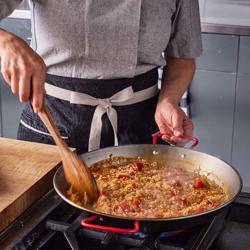
A hands-on cooking class gives you a chance to notice the details that are easy to miss when reading a recipe. “Toast the rice” might take up three words on the page, but at the stove you can watch the grains turn a light gold and smell the change before they get too dark. When a tomato mixture goes into the pan, the sizzle can tell you as much as the clock, and an instructor can show you what the mixture looks like once it has cooked down enough for the next step. You might practice keeping the rice at a gentle simmer, recognizing when the liquid has been absorbed, or letting the pot sit for a few minutes before fluffing the grains. Those cues come in handy when you make the dish again and your stove runs a little hotter or your lid doesn’t fit quite as snugly as the one you used in class. There’s also value in seeing how a cook responds when the rice doesn’t go exactly to plan. Grains that are still firm after the liquid is gone need a different fix from grains that are nearly tender with broth still pooling at the bottom. If you’re comparing an in-person cooking class with a live virtual lesson, think about where those details will be easiest for you to pick up. In person, it can help to see the instructor’s pan up close and taste the finished rice alongside the version you made. In a live online class, you can cook on your own stove and ask about what you’re seeing in your own pan. If you’re considering a recorded lesson, being able to pause or replay a step can be helpful when the rice and the rest of the meal need your attention at the same time.
A Latin American cooking class with a rice dish on the menu can be a comfortable starting point for a beginner and still give a practiced home cook something new to try. If you’re just getting used to cooking without a rice cooker, it helps to see how the liquid level changes and how much the rice continues to soften while it rests. If you already turn out a reliable pot of plain rice, learning to build flavor in the pan first can give you more ways to make rice part of dinner rather than something you tack on at the end. The class is also an easy outing to share with a friend who likes trying new recipes, a partner who usually handles the other half of dinner, or a family member who can tell you how the dish compares with the version they grew up eating. For a birthday or anniversary, it makes a thoughtful gift for someone who would rather spend time cooking together than unwrap something for the kitchen. It can also be useful before a gathering where you’ll be making several dishes at once. Knowing which prep you can finish before the rice goes on, and what you can get done while it rests, makes it easier to bring everything to the table without forgetting the pot on the stove. If the whole meal is what interests you,
Cooking Classes For Classic Latin Recipes is a place to explore menus beyond rice, from dishes you’d serve alongside it to others you might want to make on their own. Whether you take a class to get one favorite dish right or to pick up ideas for several dinners, look for a menu you’ll want to cook again. A pot of arroz rojo tastes especially satisfying when you know how it got that color and can make it again without second-guessing every step.