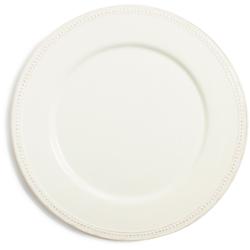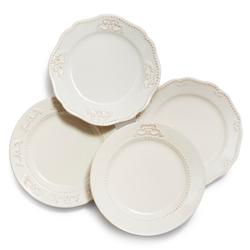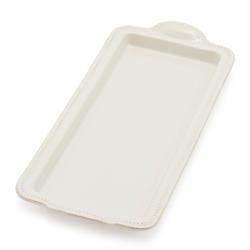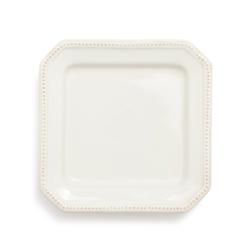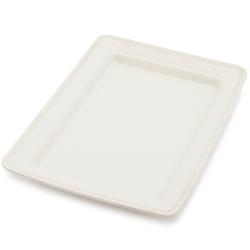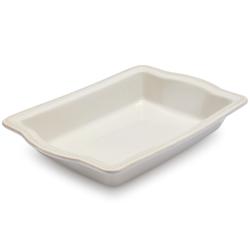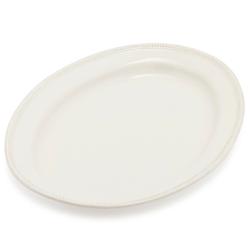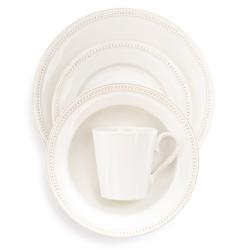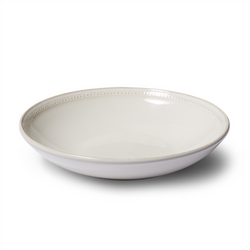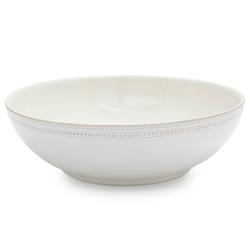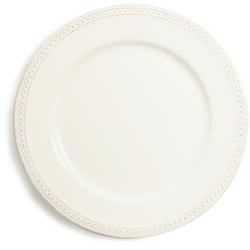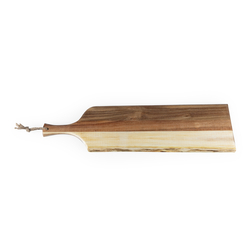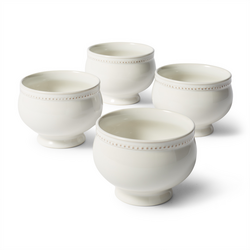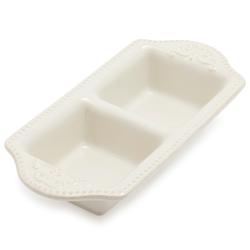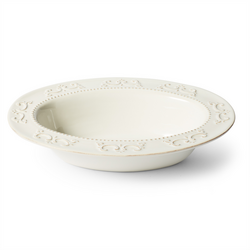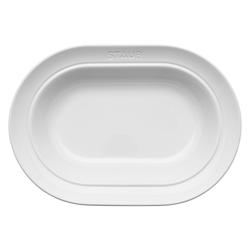
Distressed edge platters are serving dishes with intentionally weathered-looking borders that bring a rustic, vintage-inspired touch to the table. Their appeal comes from the contrast between a practical serving surface and a rim that looks gently worn, whether the effect is created through variations in glaze, softly irregular contours or a contrasting color along the edge. On a modern food-safe platter, that aged appearance is a decorative finish, not a reason to accept actual chips, cracks or rough spots where food is served. The result is a relaxed alternative to a perfectly uniform border, with enough character to frame a meal without competing with it. A pale center makes roasted carrots, sliced pears or a colorful salad stand out, while a darker rim adds definition against a white tablecloth or a natural wood table. Distressed finishes work comfortably with farmhouse and cottage settings, but they also soften a more streamlined arrangement of simple dinner plates, clear glasses and plain linen napkins. There is no need to match every piece exactly; repeating a similar background color or warm undertone can make a mixed table feel cohesive. These platters suit the kind of serving that brings people together, from sandwiches at a casual lunch to roasted vegetables passed around a family dinner. During the cooler months, their weathered details feel at home beside woven linens, baked bread and generous bowls of soup. They can look equally appropriate with fresh fruit at brunch or cookies served with coffee. The decorative border remains visible around a modest arrangement of appetizers, while a larger spread lets the food take the lead. For someone who prefers a welcoming table over a formal matched setting, a distressed edge serving platter offers visual interest without requiring elaborate styling. Its strongest role is still a useful one: giving food a shared place at the center of the meal.
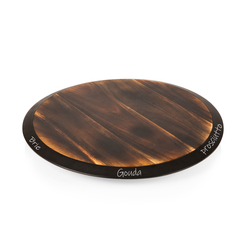
Material makes a meaningful difference in how a distressed edge platter feels, performs and fits into everyday meals. Ceramic is a broad category that includes stoneware and earthenware, and the body, glaze and construction all influence weight and durability. Stoneware can have a substantial feel that suits frequent family-style serving, though no ceramic platter is immune to chipping if it knocks against a faucet or another dish. Earthenware often brings an appealing pottery-like character, but its suitability for soaking, dishwasher cleaning or warming depends on the individual piece and its finish. Glazed surfaces generally make moist foods easier to serve and clean up, provided the platter is intended for food contact and the glaze is intact. A weathered appearance alone does not establish that a dish is safe for serving, especially with older decorative pieces whose history is unknown. Wood offers a different texture and is often well suited to bread, cheese and other relatively dry foods when the surface is food safe. For a lighter-colored complement to weathered ceramic,
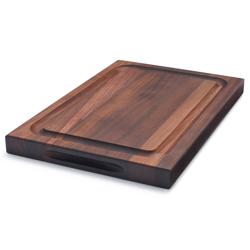
White Wooden Platters can carry a similar relaxed look across a serving table; suitability for direct food contact depends on the finish. Melamine is another material used for rustic-looking serveware and can be easier to carry than a similarly sized ceramic piece. It resists breakage better than many ceramics, but it is not unbreakable and should not go in an oven or microwave. Across materials, a distressed finish says more about appearance than performance. Oven, microwave and dishwasher suitability should come from the care instructions, not from the platter’s thickness or resemblance to bakeware. That distinction matters when dinner involves hot food: transferring roasted vegetables to a serving dish is different from putting that dish under a broiler. For everyday use, the most comfortable choice balances the look you enjoy with a manageable weight, a smooth food-contact surface and care requirements that fit your routine.
Shape, usable space and storage deserve as much attention as the finish, particularly with a platter that will move regularly between kitchen and table. An oval shape leaves room for sliced meat with vegetables arranged alongside, while a rectangular platter can make efficient use of a narrow buffet or hold tidy rows of small sandwiches. Round platters suit a central arrangement of fruit, pastries or appetizers that guests can reach from several sides. Overall dimensions do not always tell the full story: a broad decorative rim takes up space that cannot hold food, so the flat serving area matters when planning portions. A slightly raised edge helps contain dressing or juices, while a flatter profile makes it easier to lift cookies or slices of cake with a server. Neither replaces a deep serving bowl for foods with plenty of liquid. Weight also becomes more noticeable once the platter is full. A substantial ceramic piece may sit securely on the table but feel awkward to pass across it, especially if the edge offers little room for fingers. Two smaller platters can be more comfortable for a crowded dinner table, leaving space for glasses and allowing guests at either end to serve themselves. Before choosing a size, consider the cabinet shelf, dishwasher rack and sink where the piece will need to fit. Careful handling helps preserve both the serving surface and the decorative border: avoid tapping utensils against the rim, protect ceramic pieces from abrupt temperature changes and use a soft separator when stacking if the care instructions recommend it. Hand-wash wood without prolonged soaking and dry it promptly; follow finish-specific directions before applying any conditioner. Actual chips, spreading cracks or damaged coatings should not be mistaken for intentional distressing. These practical considerations also make a platter a thoughtful housewarming, wedding or host gift. Someone who enjoys casual entertaining may appreciate a versatile shape that works for a breakfast spread as readily as a dinner side dish. A finish that complements their existing dinnerware gives the gift a natural place in the cupboard—and plenty of reasons to come out of it.