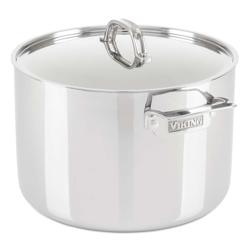
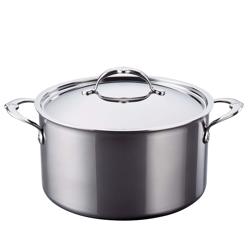
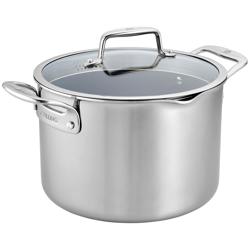
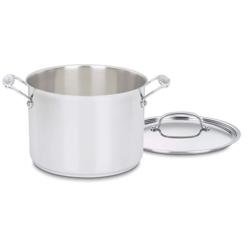
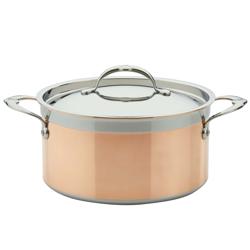
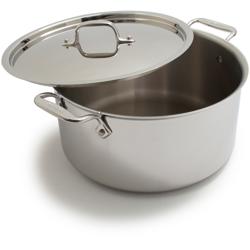
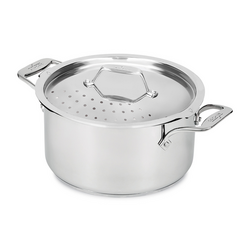
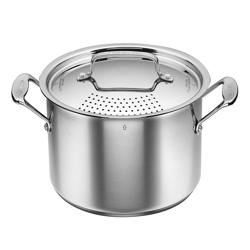
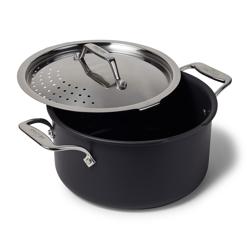
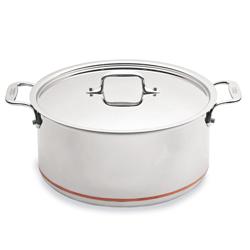
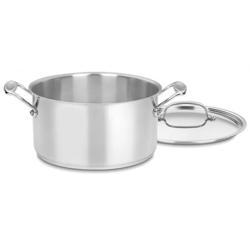
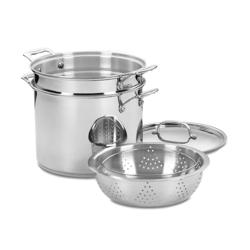
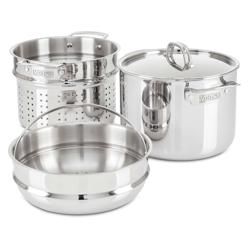
Easter brunch stockpots are deep, roomy cooking pots for preparing larger batches of food, from potatoes for a brunch casserole to broth for a light vegetable soup. Their tall sides hold plenty of liquid while leaving room for ingredients to move during boiling or simmering. For a holiday table with deviled eggs, tender asparagus and a generous bowl of mashed potatoes, a stockpot handles the behind-the-scenes cooking that brings the menu together. It can also make a smaller gathering easier, particularly when preparing ingredients ahead or cooking enough to send leftovers home with family. The right capacity depends on the menu as much as the guest count. A 6- or 8-quart pot may suit everyday cooking and a modest brunch, while a 10- or 12-quart pot provides more room for larger batches. Usable space matters more than filling a pot to its rim: boiling water, bulky vegetables and stirring all require extra room. Eggs also need enough space for gentle handling rather than crowded layers that are difficult to lift out. For potatoes destined for a salad or casserole, a broad opening makes it easier to check tenderness and drain the batch carefully. With a compatible steamer insert, a stockpot can support vegetables above simmering water, keeping them out of the liquid below. A pot chosen for Easter can remain useful long after the table is cleared, whether it is simmering beans, cooking pasta for a family dinner or turning vegetable trimmings into homemade broth. That everyday usefulness makes capacity worth considering alongside the holiday menu. An oversized pot can be awkward for a small batch, while one that is too small may mean cooking in several rounds. For households that regularly gather around a crowded table, a comfortable middle ground often earns its cabinet space through both special occasions and ordinary meals.
Material and construction shape how a stockpot feels in daily use. Stainless steel is a durable, nonreactive choice for everything from salted pasta water to broth with tomatoes or lemon. Because stainless steel alone does not distribute heat especially well, many pots pair it with an aluminum core or a heat-distributing base. That construction can help reduce uneven heating, an important consideration for creamy grits or a thick soup that needs steady attention at the bottom of the pot. Enamel-on-steel cookware offers a smooth cooking surface and can bring color to the kitchen, though its finish benefits from careful handling to help prevent chips. Weight deserves attention, too. A pot that feels manageable when empty becomes considerably heavier once filled with water and potatoes. Securely attached side handles with enough clearance for oven mitts make a meaningful difference when moving cookware from the stove to a nearby heat-safe surface. A well-fitting lid helps contain steam during covered cooking, while its shape and handle affect how easily it can be lifted and set aside. Stovetop fit is another practical detail: the base should sit securely on the burner without crowding neighboring pans, and induction cooking requires compatible cookware. Oven use, dishwasher care and utensil recommendations vary by construction, so the manufacturer’s instructions should determine how a pot is used and cleaned. Gentle washing with a nonabrasive sponge is often a sensible approach, especially for an enamel or nonstick surface. Allowing cookware to cool before cleaning helps avoid abrupt temperature changes, and drying it thoroughly keeps it ready for its next use. Storage can be just as important as cooking performance in a busy kitchen. Tall sides and wide handles need adequate cabinet clearance, and a lid needs a secure resting place rather than balancing loosely on other cookware. These details may seem small beside a holiday menu, but they influence how often a stockpot comes out for everyday cooking. Durable construction is most valuable when the pot is also comfortable to lift, straightforward to clean and easy to put away.
For Easter hosts, a stockpot’s appeal is often the breathing room it creates around the rest of the meal. Potatoes can be cooked before the oven fills with baked French toast and pastries, while a batch of vegetable broth can become the base for a soup served in small bowls alongside the main spread. A deep pot also provides space for cooking pasta when brunch stretches into an afternoon gathering. These uses suit experienced home cooks planning several dishes as well as newer hosts building a dependable cookware collection. The goal is not necessarily the largest pot, but one that fits the way the household cooks and the space where the meal comes together. A comfortable pouring position, a clear route to the sink and a stable place to set down a hot pot matter more than decorative details when guests are arriving. Color and finish can still play a part, particularly in an open kitchen where cookware stays visible during the gathering. Any move from cooking to serving should account for the pot’s weight, hot handles and the need for a protective trivet. Once dishes are ready for the table,
Easter Brunch Warmers can complement the cooking setup when keeping suitable foods warm for serving; cookware alone should not be relied on to maintain safe holding temperatures. A stockpot can also make a thoughtful gift for someone who loves hosting, a couple establishing a kitchen or a family cook whose gatherings have grown. Matching the recipient’s stovetop, storage space and usual batch size makes the gift more personal than choosing by appearance alone. Whether its first task is preparing eggs for a platter of deviled eggs or simmering broth for a holiday starter, a well-chosen stockpot supports the generous cooking that makes Easter brunch feel welcoming, with practical value that carries into meals throughout the year.