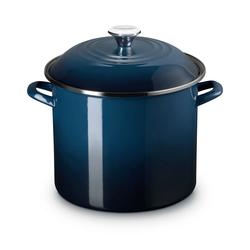
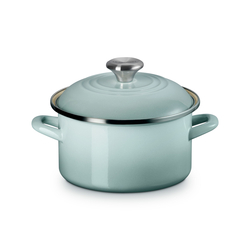
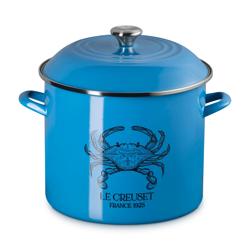
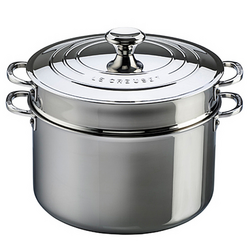
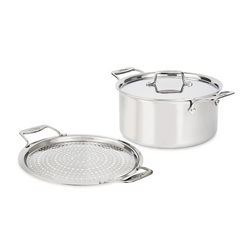
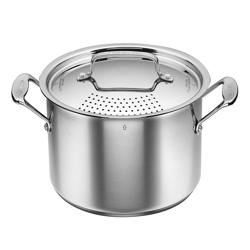
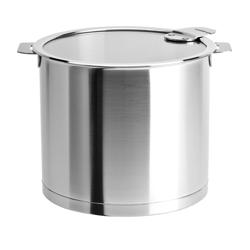
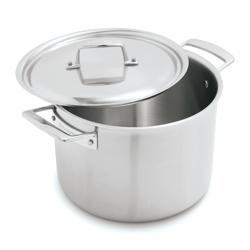
Enameled steel shrimp stockpots combine a steel body with a porcelain enamel coating for seafood boils, shellfish stocks and large batches of soup. The steel construction heats readily and is generally lighter than similarly sized cast iron, while the intact enamel surface is nonreactive, making it suitable for broths flavored with tomatoes, wine or lemon. A shrimp motif adds a decorative touch that feels at home alongside seafood platters, bowls of drawn butter and a basket of crusty bread. These pots are practical choices for cooks who enjoy gathering people around a shared meal, whether that means a shrimp boil with corn and potatoes or a pot of fragrant seafood broth for a family dinner. Their usefulness extends beyond shellfish, too. A tall stockpot can accommodate vegetable stock, chicken soup, pasta water and other recipes that benefit from generous depth. The shape provides room for bulky ingredients such as corn cobs, shrimp shells, celery stalks and bunches of herbs without requiring an unusually wide cooking surface. For seafood cooking, that depth also allows ingredients to stay submerged in seasoned liquid, provided the pot is not overcrowded. Potatoes and corn need more cooking time than shrimp, so a spacious vessel makes it easier to add ingredients in stages rather than crowding everything in at once. Shrimp shells can also become the foundation of a flavorful stock instead of going straight into the trash. After straining, that broth can bring depth to rice dishes, seafood soups or sauces. For households that cook this way regularly, an enameled steel stockpot serves as more than a themed kitchen accent. It is a useful vessel for water- and broth-based cooking, with a finish that brings color and personality to a hardworking piece of cookware. Creamy chowders and thicker soups call for gentler heat and regular stirring, since a relatively light steel body does not provide the same buffer against scorching as a heavy, layered base.
Choosing an enameled steel shrimp stockpot starts with the meals it needs to hold and the kitchen where it will be used. Capacity should account for both the ingredients and enough liquid to surround them, with space left below the rim for bubbling and stirring. A pot filled nearly to the top before cooking begins leaves little room for potatoes, corn or other additions that displace water. For smaller households, a manageable size may be more useful than the largest possible vessel, especially when storage space is limited. For frequent hosts, extra capacity can make a shared seafood meal easier to prepare without dividing it between several pots. Overall dimensions matter as much as the stated capacity: a tall pot needs clearance beneath a range hood, a secure position on the burner and enough room in the sink for washing. Its footprint should suit the cooking zone rather than extending far beyond it. Cooktop compatibility also deserves a close look. Enameled steel cookware may work with several heat sources, but the manufacturer's specifications should confirm suitability for gas, electric, glass or induction cooking. On a smooth cooktop, a clean, flat base helps support stable contact, and lifting rather than sliding the pot helps protect the cooking surface. Handles are another important consideration because a stockpot that feels light when empty becomes substantially heavier when filled with water and food. Look for a comfortable grip and enough clearance to hold the handles securely with dry oven mitts. A well-fitting lid helps limit evaporation during stock making, while a lid that is easy to lift makes checking the contents less awkward. Neither handles nor lid knobs should be assumed to stay cool. If oven use is part of the plan, check the stated limits for the entire pot, including its lid and hardware. The best fit is a vessel that is comfortable to use, not simply one that holds the most.
Porcelain enamel gives steel a smooth, glasslike cooking surface, but that finish benefits from thoughtful handling. It resists many food stains and keeps ingredients from contacting the underlying steel when the coating is intact, though it is not the same as a nonstick coating. Moderate heat, sufficient cooking liquid and utensils that will not chip or scratch the interior help preserve its condition. Long, empty preheating and abrupt temperature changes can damage enamel, so a hot stockpot should cool before washing rather than going directly under cold running water. Hand-washing with mild dish soap and a soft sponge is a gentle approach; follow the manufacturer's care directions if dishwasher use is being considered. For stubborn residue, soaking after the pot has cooled is preferable to aggressive scraping or abrasive cleaners. The rim, handle attachments and lid edges deserve attention during cleanup, especially after salty seafood boils. Thorough drying before storage helps protect any exposed metal edges, and a soft separator can prevent contact damage if cookware must be nested. Significant chips or cracks on the interior warrant checking the manufacturer's guidance before further cooking. With sensible care, an enameled steel shrimp stockpot can remain a dependable part of a kitchen that regularly turns simple ingredients into meals worth sharing. Its decorative character also makes it a thoughtful housewarming or wedding gift for a seafood enthusiast, particularly someone who enjoys casual entertaining more than elaborate individual plating. Consider the recipient's stove, storage space and usual number of guests rather than choosing by appearance alone. For another decorative direction, explore
Enameled Steel Celebration Stockpots. A shrimp-inspired design is especially fitting for a cook whose favorite meals involve a generous pot of seasoned broth, seafood served family-style and plenty of room around the table. Practical proportions, comfortable handling and a finish that suits the kitchen are what make that personality useful day after day.