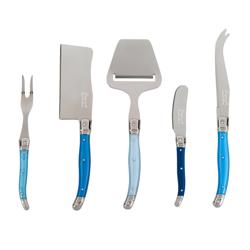
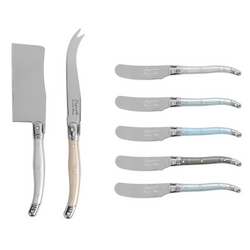
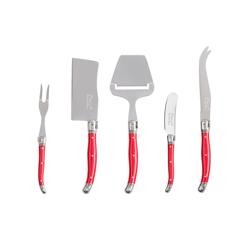
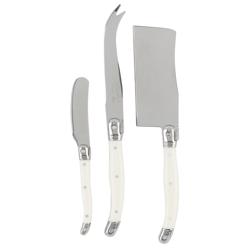
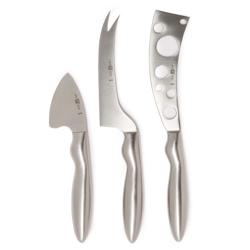
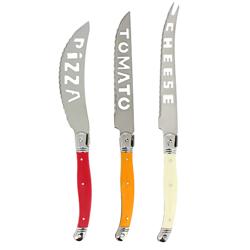
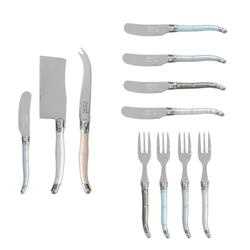
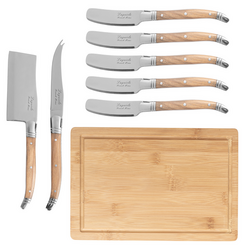
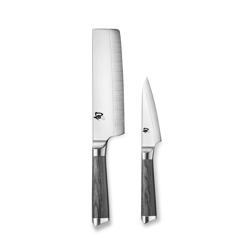
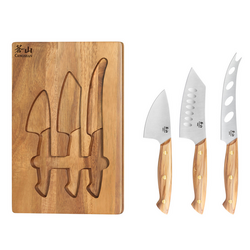
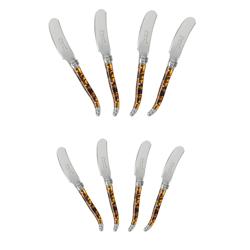
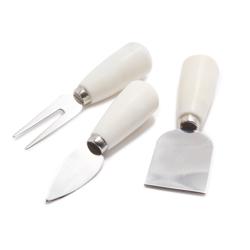
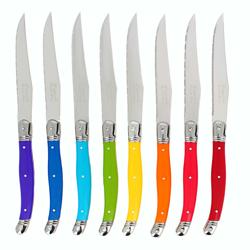
Ergonomic handle cheese knife sets pair blades shaped for different cheese textures with handles designed for a comfortable, controlled grip. A well-matched set helps you slice a wedge of Brie, portion a firm cheddar and break off small pieces of aged Parmesan without relying on one blade for every task. The handle matters as much as the cutting edge: its shape, thickness and balance influence how naturally the knife sits in your hand and how easily you can direct pressure through the cheese. Rounded contours can soften contact against the palm, while a gently shaped grip can give your fingers a more secure place to rest. Ergonomic design is not a single shape or a guarantee of comfort for everyone, though. Someone with larger hands may prefer a fuller handle, while another person may find a lighter, narrower design easier to maneuver around a small serving board. Enough clearance between your knuckles and the board is useful, particularly when cutting rather than simply spreading. Weight also deserves attention. A substantial handle can feel steady, but extra heft is not automatically more comfortable during repeated use. Consider whether the set will mainly serve guests at the table or help prepare portions before everyone arrives. For a relaxed cheese plate shared by two people, a few complementary tools may cover the cheeses you enjoy most. For a larger spread with soft, firm and crumbly varieties, more distinct blade shapes help keep each task manageable. Separate utensils also reduce the transfer of a strong blue cheese into a mild goat cheese. The most useful ergonomic cheese knife set is one that suits both the person holding it and the food being served, with a comfortable fit that remains practical beyond its appearance on the board. That combination makes these sets useful for everyday snacking, dinner parties and anyone who enjoys building a cheese plate with a little more variety.
Blade design gives each piece in a cheese knife set its purpose. Soft cheeses tend to cling to broad surfaces, so a narrow blade or one with openings can reduce contact and help release a slice more easily. These designs are useful when serving a creamy wedge that would otherwise smear along the side of a larger knife, although no blade eliminates sticking in every cheese. A spreader has a different role: its broad surface makes it easier to scoop fresh cheese and smooth it onto bread or a cracker. For firmer cheeses, a blade with enough rigidity offers better support as you make slices or portions. A short, pointed Parmesan-style knife is intended to work into hard, aged cheese and separate irregular chunks, preserving the crumbly texture rather than forcing neat, thin slices. Forked tips on some cheese knives help lift a cut portion onto a plate, but they are serving features rather than substitutes for choosing an appropriate cutting edge. Looking at the mix of tools is more helpful than choosing by piece count alone. A set centered on spreaders will serve a different purpose from one with several cutting blades, even if both contain the same number of pieces. Stainless steel is a common blade material because it resists corrosion and is generally straightforward to maintain. Blade thickness, edge geometry and the strength of the connection to the handle also affect everyday performance. Wood handles can provide a warm feel and visible grain, while molded synthetic handles may offer textured or softer gripping surfaces. All-metal designs have a different feel and may minimize seams where food can collect. Smoothness, texture and contour should work together: an attractive finish is less useful if the handle feels slippery or requires you to squeeze harder than feels natural. For customers considering comfortable grips across other food-preparation tasks,
Ergonomic Handle Kitchen Knife Sets serve a broader role in chopping, slicing and everyday prep, while cheese knife sets remain focused on the textures and serving needs of cheese.
Care and storage help preserve both the finish and the function of ergonomic handle cheese knives. Follow the care instructions for the entire utensil, not just the blade, since a stainless steel cutting surface does not necessarily mean the handle or its attachment is dishwasher safe. Hand-wash when directed, using mild dish soap and a nonabrasive sponge, then dry promptly rather than leaving the knives in a wet sink. Cheese residue is easier to remove before it dries into blade openings or around the handle connection. Wood handles generally need protection from prolonged soaking, and any conditioning treatment should follow the manufacturer's recommendations. Coated blades and soft-touch grips may have their own cleaning requirements, so gentle care is a sensible starting point. Store cutting edges where they will not knock against other utensils, using a fitted case, protective covers or a suitable compartment when provided or recommended. A loose utensil drawer can dull edges, damage finishes and make reaching for a small knife less safe. During use, a stable, food-safe board gives you a dependable surface; leave enough space around each cheese for the blade and your hand to move without bumping a bowl of olives or a stack of crackers. A handle that fits well supports control, but it does not replace careful cutting or a blade suited to the task. Over time, check for loose handles, cracks or damaged gripping surfaces that could affect comfort and stability. These practical details also make cheese knife sets thoughtful gifts for hosts, newlyweds, housewarming recipients and home cooks who prefer a shared board to a formally plated appetizer. Consider the recipient's habits: someone who regularly serves fresh chèvre needs different tools from someone who loves dense, aged cheeses. Coordinated handles can bring a cohesive look to the table, but the lasting value lies in pieces that feel good to hold, are manageable to clean and earn a place beside the cheeses people actually enjoy.