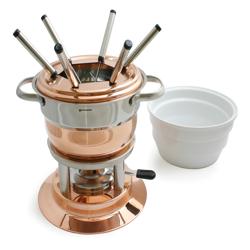
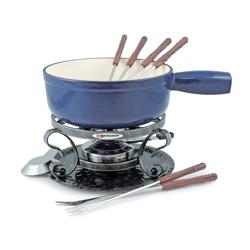
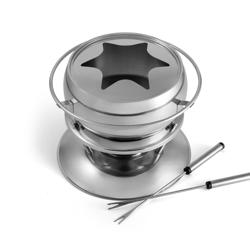
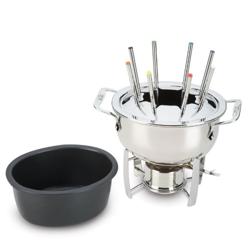
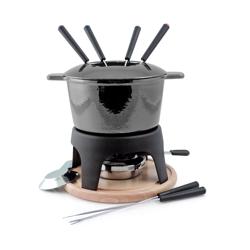
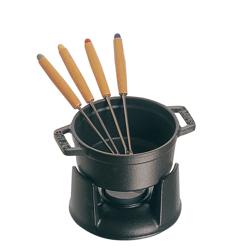
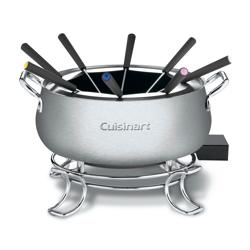
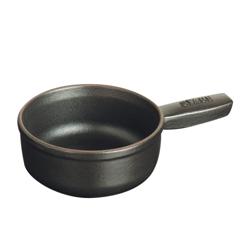
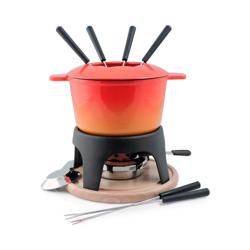
Fondue sets for winter keep cheese, chocolate or broth warm at the table, making them a natural fit for relaxed meals built around sharing. A warming pot becomes the center of dinner, with bread cubes, roasted potatoes and crisp apple slices ready for a dip into melted cheese. For dessert, strawberries, marshmallows and pieces of pound cake turn a pot of chocolate into something guests can enjoy at their own pace. The right fondue set depends on what goes into the pot, how many people are gathering and how the heat is maintained. Enameled cast iron is valued for its heat retention, which helps keep cheese warm between dips, though it takes time to respond when the heat is lowered. Stainless steel offers durability and is often used for broth or hot oil fondue when the set is specifically rated for those preparations. Ceramic pots and inserts are commonly intended for gentler warming, making them worth considering for chocolate and certain cheese preparations rather than high-temperature cooking. Copper-colored finishes bring a warm accent to the table, but appearance alone does not determine heating performance; the underlying construction matters more. Electric fondue sets offer adjustable heat without an open flame, while burner-style sets create a more traditional tabletop presentation without requiring a nearby outlet. A small candle warmer may be suitable for keeping a modest portion of chocolate fluid, but it is not a substitute for a heat source designed to cook food. These differences matter because cheese and chocolate benefit from gentle, controlled warmth, while broth and oil need equipment designed for higher temperatures. A set suited to its intended recipe makes it easier to focus on the meal, whether that means dipping crusty bread into a smooth cheese blend or lingering over chocolate after a winter dinner.
Size and table fit matter just as much as the pot’s material. A compact fondue set can make dessert for two feel special without taking over a small dining table, while a larger pot is better suited to a group sharing a substantial cheese course. Capacity should be considered alongside the number of forks, the recommended fill level and the space each guest needs to reach the pot comfortably. A larger vessel does not necessarily mean it should be filled to the rim, especially when ingredients will displace hot broth or oil. For gatherings with more guests,
Large Fondue Sets are worth considering, with attention to both serving capacity and the footprint of the complete setup. A broad, stable stand helps support the pot, while comfortably shaped handles make carrying and positioning it more manageable when used according to the manufacturer’s directions. Fork rests or a fitted guard can help keep dipping forks organized, and color-coded handles make it easier for guests to recognize their own. The most useful features are often the small ones that become noticeable halfway through dinner: a heat control within easy reach, a pot opening wide enough for several forks and enough room around the base for plates and serving bowls. Electric models need a suitable outlet and a cord positioned away from foot traffic and table edges. Burner models need the specified fuel and clearance from napkins, decorations and other flammable materials. For either style, a level, heat-resistant surface is essential. Fondue forks are for dipping or cooking rather than eating directly from hot metal, so individual plates and regular eating utensils belong in the setup, too. When raw meat or seafood is involved, separate serving dishes and utensils for uncooked and cooked food help keep the shared meal organized and safer.
A well-chosen winter fondue set should feel useful beyond a single evening, with materials and care requirements that suit the household. Cast iron brings reassuring weight and steady warmth, but it can be less convenient for someone who prefers lightweight cookware or has limited storage. Stainless steel is generally sturdy and practical, although polished surfaces may show fingerprints and can develop heat discoloration. An enameled interior provides a smooth cooking surface, but it still needs protection from abrasive cleaners, hard knocks and sudden temperature changes. Ceramic deserves similar care, particularly when moving between warm and cool environments. Dishwasher suitability varies by component, so the pot, forks, stand and heating unit should not be assumed to share the same cleaning instructions. Removable pots can make cleanup more manageable, while electric bases require care that keeps electrical parts out of water. Letting the vessel cool before cleaning and softening cheese or chocolate residue with a soak, when permitted, can make hand-washing easier without aggressive scrubbing. Dry storage is especially important for any exposed iron or metal fittings, and keeping forks together helps the set stay ready for its next use. Those practical details also make fondue sets thoughtful gifts for people who enjoy hosting, couples building a collection of entertaining pieces or home cooks who like meals with a little participation. A compact dessert-focused set may suit someone who loves baking and serving sweets, while a versatile, temperature-controlled design may better fit an enthusiastic dinner host. Families can enjoy the shared experience, too, with adults managing the heat and supervising children around hot contents and pointed forks. For a winter game night, a small dinner party or a quiet evening at home, the appeal is much the same: warm food within reach, a table arranged for conversation and a meal that invites everyone to slow down. Matching the set to those everyday habits is what gives it lasting value, rather than choosing on appearance alone.