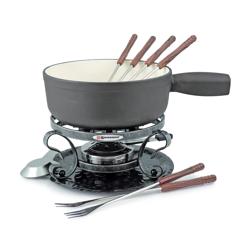
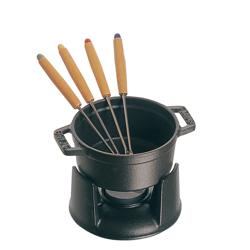
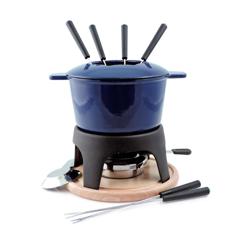
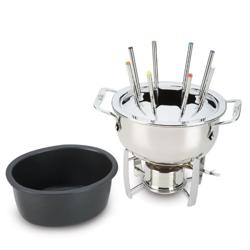
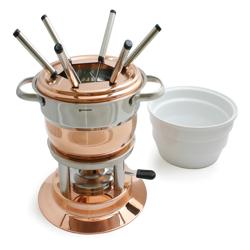
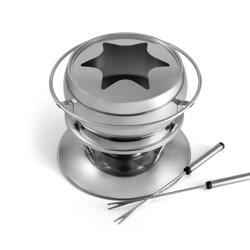
Fondue sets with forks bring a shared pot and dedicated dipping utensils together for serving melted cheese, chocolate or, with a set designed for higher heat, cooking food in broth or oil. The most useful features depend on what you plan to serve: gentle, steady warmth for cheese and chocolate, sufficient heat for broth or oil and enough forks for everyone at the table. Sets commonly include four, six or eight fondue forks, often with colored tips or other markings that help guests recognize their own. Those small details matter when several people are dipping crusty bread into cheese or waiting for a strawberry to emerge from warm chocolate. Long fork handles help keep hands farther from the pot, while the tines hold bite-size pieces during dipping or cooking. Fork length should suit the depth of the vessel, and comfortable handles make a leisurely meal easier to enjoy. The number of included forks is a starting point for choosing a set, but pot capacity and table space matter just as much. A compact pot can suit dessert for two or a small appetizer spread, while a larger vessel offers more room for a group to dip without crowding. Capacity alone does not determine serving size, since a rich cheese course and a full broth fondue meal use the pot differently. Allow space around the set for bread, vegetables, fruit or other accompaniments, along with individual plates and any sauces. A useful setup puts the pot within easy reach without requiring guests to stretch across glasses or serving dishes. For a casual get-together, a few thoughtfully chosen dippers can be enough: firm bread cubes and cooked potatoes with cheese, or strawberries and pieces of pound cake with chocolate. A coordinated pot-and-fork set gives the meal a clear centerpiece, whether fondue is the main event or a dessert shared after dinner.
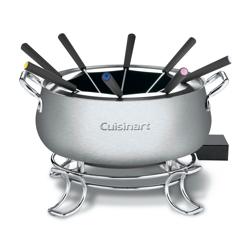
Material and heat source shape how a fondue set performs, so it helps to match both to the foods you enjoy making. Enameled cast iron retains heat well, helping the contents stay warm as guests dip, although its weight can make carrying and washing a filled pot less convenient. The enamel provides a smooth cooking surface without the seasoning required by bare cast iron, but it still needs protection from chips and sudden temperature changes. Stainless steel is durable and generally lighter to handle; heat distribution depends on its construction, including whether the base incorporates a heat-spreading layer. Ceramic vessels can work well for gentle warming when designed for that purpose, but they should not be assumed suitable for stovetop use or high-temperature oil fondue. A nonstick interior can simplify removing cheese or chocolate residue, though compatibility with metal forks and other utensils varies by coating. Electric fondue sets typically offer adjustable heat controls, which can make it easier to move from heating to holding food warm. Even so, a temperature dial does not mean every electric set is suitable for every recipe. Check the intended uses, particularly for oil or broth, and consider cord length and outlet placement so the cord stays away from walking paths. Burner-heated designs avoid the need for a nearby electrical outlet, but require the specified fuel and careful attention to flame adjustment and placement. Candle-warmed designs generally provide gentler heat and may be intended to keep prepared chocolate warm rather than melt ingredients from scratch. For a raised tabletop setup,
Fondue Sets With Stands offer another way to focus on the relationship between the pot, support and heat source. Whatever the design, a steady base, a securely seated vessel and the clearance specified by the manufacturer are important considerations. Handles that offer a confident grip are useful when moving a cooled pot, while a fork rest or notched rim, when included, can help keep utensils organized during cooking.
Everyday practicality matters as much as the finished spread, especially if fondue will become a regular part of entertaining. A removable pot can make serving preparation and cleanup simpler, while an integrated electric vessel may require more careful washing around its controls and connection points. Check care directions for the pot, forks and any removable accessories separately rather than assuming the whole set is dishwasher safe. Let the vessel cool before cleaning, and use soaking only where the manufacturer permits it to loosen clinging cheese or chocolate. Nonabrasive cleaning tools help protect enamel and coated interiors, and electrical bases and plugs should never be submerged. Dry each component thoroughly before storage, keeping forks together and protecting their pointed ends. Consider storage space before choosing a larger set: a pot, stand, burner and collection of forks can take up more cabinet room than the pot’s dimensions suggest. Durable materials are valuable, but long-term use also depends on respecting heat limits, using compatible utensils and handling ceramic or enameled pieces carefully. At the table, follow the recommended fill level so dipping food does not displace hot contents over the rim. Fondue forks are for dipping or cooking, not eating directly from; transfer food to a plate and use a separate dining fork, especially after cooking in hot broth or oil. Keep raw ingredients separate from ready-to-eat accompaniments, and check that meat and seafood reach safe internal temperatures rather than relying on appearance or a fixed dipping time. With those practical details covered, a fondue set can fit many kinds of households and occasions. Couples may appreciate a smaller chocolate set for a shared dessert, while frequent hosts may prefer a more versatile design with additional forks and adjustable heat. For a wedding or housewarming gift, consider the recipient’s cooking habits, storage space and preferred style of entertaining. A set suited to their favorite foods is more likely to become part of familiar gatherings, from cheese fondue with friends to a relaxed dessert at the end of a family meal.