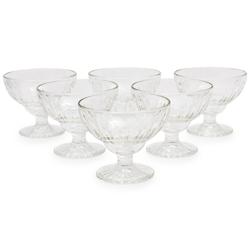
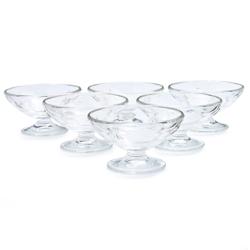
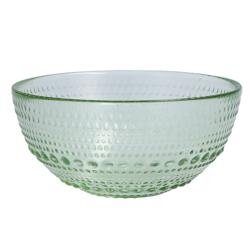
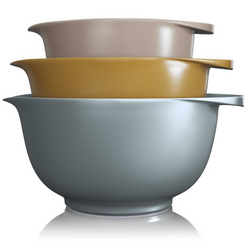
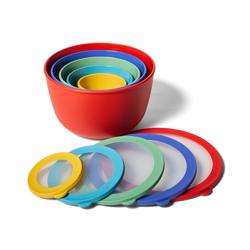
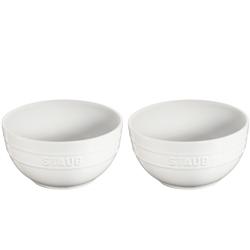
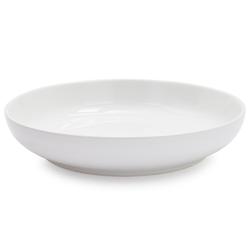
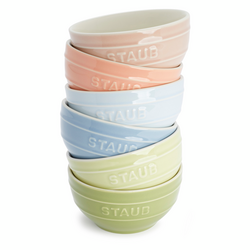
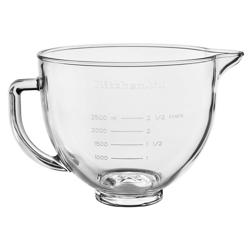
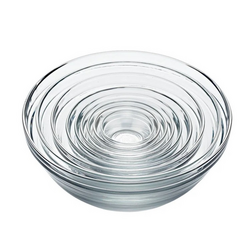
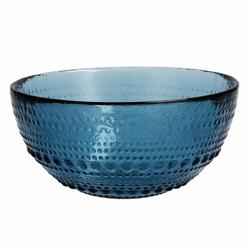
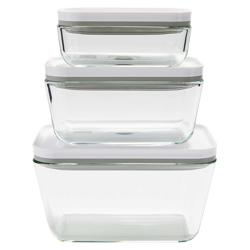
A glass bowl set brings together several bowl sizes for mixing, prepping, serving and, when paired with suitable lids, storing food. Clear glass lets you see ingredients from every angle, whether you’re checking for flour at the bottom of cake batter or spotting the last spoonful of dressing beneath a salad. Its nonporous surface resists lingering odors and stains, making it useful for everything from a garlicky marinade to sliced berries. The best fit for your kitchen depends on how you cook: small bowls keep measured ingredients close at hand, medium bowls handle everyday mixing and larger bowls give you room to toss vegetables without scattering them across the counter. A graduated set can cover several of those tasks while keeping the shapes and proportions consistent. For someone who bakes often, a roomy mixing bowl alongside smaller bowls for cracked eggs, melted butter and dry ingredients makes the work feel more organized. For everyday meal prep, a few medium sizes may be more useful than a collection centered on one oversized bowl. Capacity matters, but so does usable space. A bowl filled nearly to the rim leaves little room for folding whipped cream or turning a spoon through a chunky potato salad. Look for enough headroom to match the task rather than choosing by capacity alone. Shape also changes the experience: deeper sides help contain ingredients while stirring, while a wider opening gives a whisk or spatula more room to move. A stable base is especially helpful when mixing thick batters, and a rim that feels comfortable to grip makes carrying a filled bowl easier. Glass generally has more weight than plastic or stainless steel, so consider how a larger bowl will feel once it holds dough, fruit or a full batch of vegetables. Those everyday details help distinguish a set that simply fits in the cabinet from one that fits the way you cook.
Material and care details are important when comparing glass mixing bowl sets, particularly if you want the bowls to do more than hold ingredients at room temperature. Tempered glass is treated for added strength, while borosilicate glass is formulated to expand less with heat and generally offers greater resistance to sudden temperature changes than ordinary glass. Neither description, however, means a bowl is automatically suitable for the oven, microwave or freezer. The manufacturer’s stated uses and temperature limits should determine where each bowl belongs, and lids need their own care check. A bowl may be dishwasher safe while its lid requires hand-washing or placement on the top rack. For reheating, follow any directions for removing or venting a lid; a secure storage seal is not permission to heat a closed container. Even heat-rated glass needs careful handling. Avoid abrupt temperature changes, such as placing a hot bowl on a cold or wet surface, and never assume that refrigerator-to-oven use is permitted. Glass bowls should not go on a stovetop or under a broiler unless explicitly designed for that purpose. For routine cleaning, a soft sponge and a nonabrasive cleaner help preserve a smooth surface, while soaking can loosen dried batter without aggressive scraping. Check rims and bases for chips or cracks, and stop using damaged bowls rather than saving them for lighter tasks. Durability also depends on storage habits: nest bowls gently instead of dropping one inside another, and keep them where they can be lifted out without knocking against heavy cookware. If compact storage is a priority, nesting glass bowls make good use of vertical cabinet space, though lids may need a separate spot. Measure the shelf opening and depth as well as the space around the largest bowl. A set that nests neatly still needs enough clearance to remove comfortably, particularly when it lives beneath a low shelf or beside frequently used dishes.
Glass bowls with lids are especially useful when preparation and storage overlap. You can chop vegetables ahead, cover a bowl of dressing or put aside a portion of cooked grains without transferring everything to another container. Clear sides make the contents easy to recognize in the refrigerator, and graduated sizes let you choose a bowl close to the amount of food you need to store. Lid design deserves attention here: a simple cover may suit food that stays on a shelf, while a more secure closure can be helpful when carrying a dish. Check the stated seal performance rather than assuming every fitted lid is airtight or leakproof, and keep bowls upright during transport unless the manufacturer says otherwise. When comparing set sizes, check whether the listed count includes lids as well as bowls, since the total does not always tell you how many containers you will have to work with. Beyond prep and storage, glass has a natural place at the table. Its transparency shows off the layers in a fruit salad, the chopped herbs in a grain dish or the texture of a whipped dip without adding another color to the setting. Smaller bowls can hold toppings for a build-your-own dinner, while larger ones bring salads and side dishes to a shared table. For a serving-focused collection,
glass party bowls offer a related direction to explore alongside everyday prep and mixing shapes. Consider the table footprint as carefully as cabinet space: a wide bowl may make serving easier but leave less room for plates, glasses and other dishes. A glass bowl set can also be a thoughtful housewarming or wedding gift, particularly for someone building a kitchen around versatile essentials. For an experienced cook, the most useful gift may fill a specific gap, such as smaller prep sizes or covered bowls for lunches. Whether chosen for a first apartment, a busy household or regular entertaining, a well-matched set earns its place through practical details: comfortable handling, manageable care and sizes that move easily between the meals you make most often.