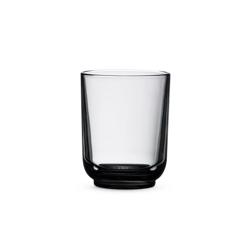
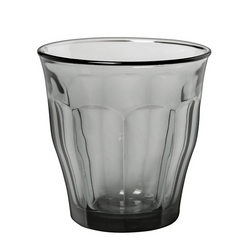
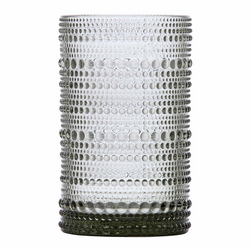
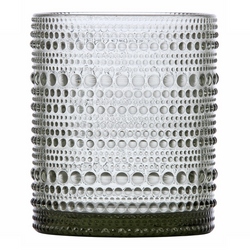
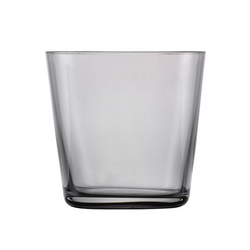
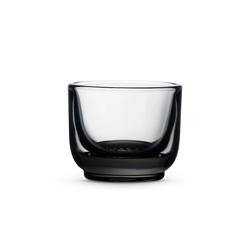
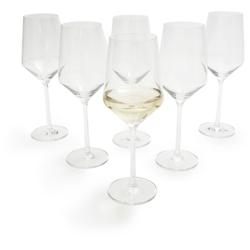
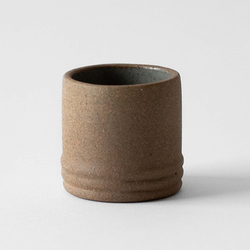
Gray glasses are drinking vessels with a gray tint, offering a neutral alternative to clear glassware for water, juice, cocktails and other beverages. Shades ranging from pale smoke to deeper charcoal bring definition to a place setting without introducing a bright color that needs to match everything else on the table. A translucent gray can reveal the shape of an ice cube or the slice of citrus in a drink, while a darker finish gives the glass a more substantial visual presence. That balance makes gray drinkware a natural companion to white porcelain, textured stoneware, wood serving pieces and stainless steel flatware. On a simple breakfast table, a gray juice glass adds a little contrast beside a white bowl and linen napkin; at dinner, taller gray glasses can help tie together plates and serving dishes collected over time. The effect depends as much on the shape and surface as on the color. Smooth, straight-sided forms have a clean, understated look, while rounded silhouettes feel softer in the hand and alongside curved dinnerware. Ribbed or faceted surfaces catch the light differently, giving even a quiet shade more character. For a coordinated table, choosing glasses with a similar tint and profile creates continuity across different sizes. Mixing gray drinkware with
Clear Glasses keeps the setting light and allows the colored pieces to serve as accents rather than making every vessel match. Gray is particularly useful when the table already includes patterned dishes or colorful food: it contributes another layer without competing for attention. The tint can also change how a beverage appears, especially in darker glass, so transparency matters if seeing the color of wine, tea or a mixed drink is part of the pleasure. A pale gray suits that purpose differently from a more opaque charcoal finish, even when both share the same general shape.
The best fit for everyday use starts with what goes into the glass and how it feels when picked up. A shorter tumbler works well for a modest serving of juice, a drink poured over ice or water beside a bedside carafe. A taller glass leaves more room for sparkling water, iced tea and drinks with generous garnishes, though its full height should still fit comfortably beneath a refrigerator dispenser and inside a cabinet. Capacity alone does not tell the whole story: a glass filled to the rim has less practical room for ice, fruit and comfortable carrying than its stated volume suggests. A broad base can provide a reassuring footprint on the table, while a narrower body may be easier for smaller hands to hold. For frequent use, consider the rim, too. A fine rim can feel delicate against the lips, whereas a thicker rim may have a sturdier feel; neither feature on its own establishes how resistant the glass is to damage. Weight is another personal preference worth considering. A substantial base can feel satisfying for a slowly sipped drink, but lighter glassware may be more comfortable for someone who finds heavy vessels tiring to lift. Surface texture may offer a more tactile hold, although any wet glass still requires care. Material and construction matter alongside those everyday details. Standard glass, tempered glass and crystal glass can differ in weight, clarity and performance, and the appearance of a gray finish does not reveal which material was used. Tempered glass is treated to improve strength, but it is not unbreakable. Crystal glass may suit someone who enjoys refined tableware, though care requirements vary by composition and design. Gray color may be incorporated into the glass itself or applied as a surface treatment, with different implications for cleaning and wear. Checking those details helps distinguish drinkware intended for regular household use from pieces better suited to careful handling. For hot beverages, use only vessels specifically identified as suitable for that purpose rather than assuming a thick wall or heavy base makes a drinking glass heat resistant.
Care and storage are part of choosing gray glasses that will stay useful beyond the first table setting. Follow the care instructions for the particular material and finish, especially when the color comes from a coating or applied decoration. Dishwasher-safe glassware can simplify daily cleanup, but pieces still need enough space in the rack to avoid knocking against one another during a cycle. Where hand-washing is recommended, mild dish soap, a soft sponge and a thorough rinse are sensible starting points. Abrasive pads can scratch surfaces or damage some finishes, and repeated contact with flatware in a crowded sink can leave marks or cause chips. Washing glasses separately from heavy pots makes careful handling easier. Water droplets and mineral deposits may be more noticeable against certain gray finishes, so drying with a clean, lint-free cloth can help preserve an even appearance. Avoid sudden temperature changes unless the manufacturer's guidance specifically permits them, and retire glasses with chipped rims or cracks. For storage, leave a little breathing room between pieces and stack only shapes designed for stacking; glasses that nest together neatly are not necessarily safe to store that way. These practical considerations are especially helpful in a busy household, where drinkware moves repeatedly from cabinet to table to sink. They also make gray glasses a thoughtful housewarming or wedding gift for someone who prefers versatile tableware over a strongly themed design. A recipient who enjoys mixing cocktails may appreciate a different shape and weight than someone who mainly serves water with family meals, so intended use is a better starting point than appearance alone. Matching the recipient's existing dishes exactly is rarely necessary with a neutral tint, but considering cabinet space, preferred glass size and willingness to hand-wash makes the choice more personal. Whether used for a quiet lunch, a shared dinner or drinks with friends, well-chosen gray glassware brings subtle color to the table while keeping the focus on comfortable, everyday use.