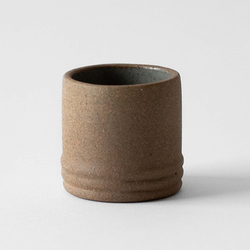
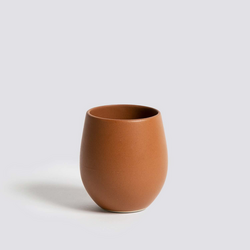
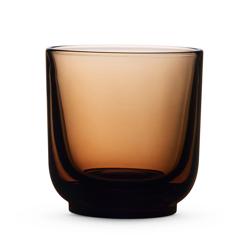
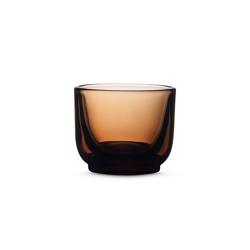
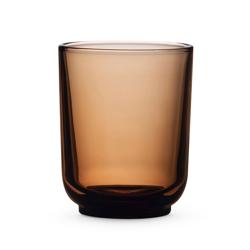
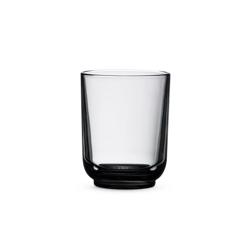
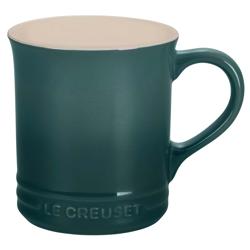
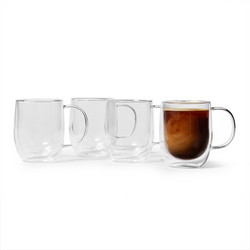
Brown glasses bring a warm, grounded note to the table, with tones that can range from translucent amber and honey to smoky chestnut and deeper coffee brown. As drinkware, they offer a different look from clear glass without requiring a whole new set of dishes or linens. A brown drinking glass beside a white plate creates a simple contrast; against cream stoneware, it feels softer and more tonal. With blue dinnerware, the same glass can add warmth, while green linens draw out its earthy character. The effect also depends on how much light passes through the glass. Lighter tints let the color of a drink show through, while darker shades put more emphasis on the outline and surface of the vessel. On a breakfast table, that might mean sunlight catching the edge of a glass of orange juice. At dinner, it might be the subtle reflection of candlelight along a rounded bowl or textured side. These details make brown glassware useful for both everyday meals and more considered table settings, especially if you prefer pieces that feel decorative without being reserved for special occasions. During the cooler months, brown tones sit comfortably alongside woven napkins, wood serving pieces and simple greenery, but their usefulness extends well beyond a seasonal table. They can feel equally at home beside a pitcher of iced tea or a casual lunch on a sunny afternoon. For a coordinated serving arrangement,
Brown Trays can carry the warm palette through to a drink station or coffee table. Matching every shade exactly is not necessary. A little variation between the glass, tray and tabletop gives each material room to stand out. The most useful starting point is the setting you already have: brown glasses should work with your familiar plates, comfortable gathering spaces and the way you actually serve drinks.
Shape, capacity and feel matter just as much as color when choosing brown glasses for everyday use. A shorter tumbler can suit water at dinner, a modest serving of juice or a cocktail over ice, while a taller glass leaves more room for sparkling water, iced tea and garnishes. Consider the usable space rather than capacity alone. A glass filled with ice needs extra room for the drink, and a comfortable serving usually stops below the rim. If large ice cubes are part of your routine, check that the opening can accommodate them. For glasses that will move regularly between a kitchen cabinet, dining table and dishwasher, the details you notice in your hand are worth considering. A narrower body may be easier to grip, while a wider base can feel more stable on a table. Substantial glass has a reassuring weight, though it may be less comfortable for someone who prefers lighter drinkware. Ribbed or faceted surfaces add visual texture and can give fingers a more defined place to rest, but comfort depends on the shape and the person using it. A smooth rim and balanced proportions contribute to an easy sip, whether the glass holds a lunchtime lemonade or an evening drink. Material descriptions also deserve a close look. Brown color may come from the glass itself or from a surface treatment, and that distinction can affect care requirements. Tempered glass, when specified, is treated for increased strength, but no drinking glass is unbreakable. Thickness alone does not establish resistance to impact or sudden temperature changes. Use glassware for hot beverages only when the manufacturer explicitly identifies it as suitable for that purpose. Brown tones may look inviting beside coffee or warm cider, but appearance is not evidence of heat resistance. Cabinet height, shelf depth and dishwasher clearance are practical checks, too. A tall silhouette may look lovely on the table yet be awkward beneath a low shelf, while a broad tumbler can take up more rack space than expected.
Caring for brown glassware starts with the instructions for its particular material and finish. Some glasses are dishwasher safe, while others need hand-washing to help preserve their color or decorative surface. When dishwasher use is permitted, position each glass so it cannot knock against neighboring dishes or catch on moving parts. Avoid crowding the rack simply to fit in one more glass; contact during the wash can lead to chips or scratches. For hand-washing, use mild dish soap, a soft sponge and a thorough rinse, paying attention to grooves and textured areas where residue can collect. A soft, lint-free cloth can help remove water droplets before they leave visible spots, particularly on darker or glossy surfaces. Avoid abrasive scrubbers, and follow the manufacturer's recommendations before using a treatment for mineral buildup. Let glasses reach a moderate temperature before washing rather than moving them directly from an icy drink into hot water. For storage, leave enough space to lift each glass without scraping its neighbors, and stack only designs intended for stacking. Check rims and bases periodically, retiring any glass with a crack or chip from drinking use. With suitable care, brown glasses can become familiar table pieces rather than something brought out only for company. A coordinated group gives a shared meal a consistent look, while a mix of compatible shapes can suit a household with different drink preferences. For entertaining, think about whether guests will be seated at dinner or carrying drinks between rooms. Comfortable weight and an easy grip become especially useful when someone is also holding a small plate. Brown glassware can also make a thoughtful housewarming, wedding or host gift for someone drawn to warm neutrals, vintage-inspired settings or relaxed everyday entertaining. The best fit depends less on following a particular decorating style than on the recipient's habits and space. Glasses that suit their favorite drinks, fit their cupboards and match their preferred care routine are more likely to earn a regular place at the table.