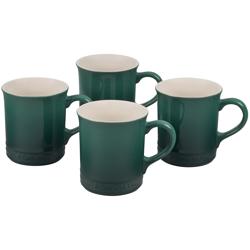
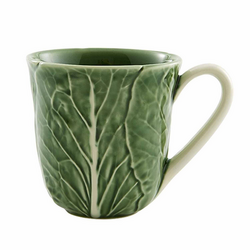
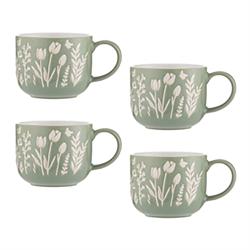
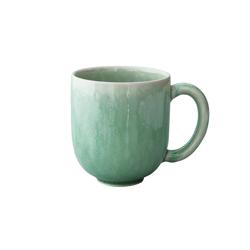
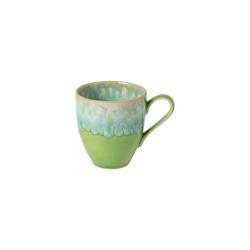
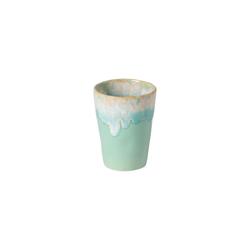
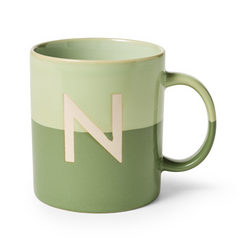
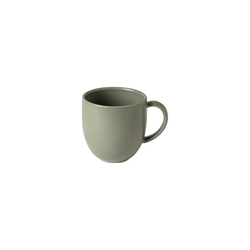
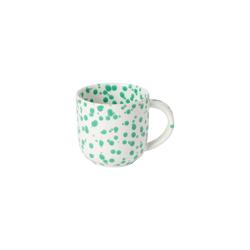
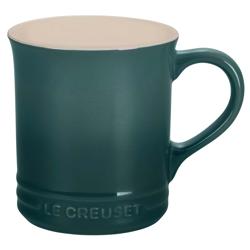
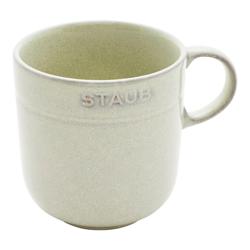
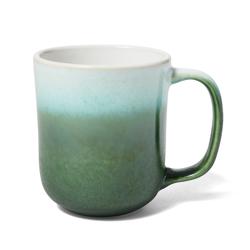
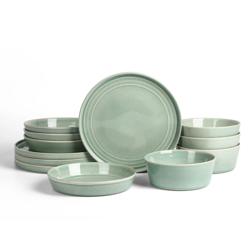
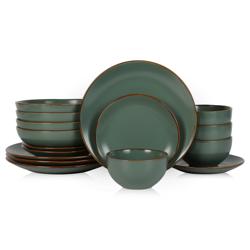
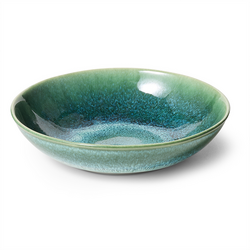
Green stoneware mug sets bring coordinated color and a substantial feel to everyday coffee, tea and cocoa. Made from clay fired at high temperatures, stoneware is a dense ceramic valued for its durability and ability to hold warmth. A green glaze adds another layer of character, whether the shade is a soft sage, a muted olive or a deep forest green. These sets suit kitchens where mugs do more than sit behind a cabinet door: lined up on an open shelf, carried to a desk or placed beside breakfast plates, they become part of the room’s everyday rhythm. Matching mugs give the table a consistent look, while variations in glaze can keep the arrangement from feeling too uniform. Reactive glazes may create differences in color, pooling and surface pattern during firing, so mugs within the same set can have subtle distinctions. A glossy finish reflects light and emphasizes the depth of a green glaze; a matte finish has a quieter appearance that works well alongside wood, linen and other ceramics. Neither finish alone determines durability or ease of care, so the maker’s details matter more than appearance when comparing practical features. Green also offers plenty of room to mix with existing dinnerware. Sage complements white plates and pale wood, olive sits comfortably with cream and warm neutrals and darker greens create contrast against lighter table settings. Matching every piece is not necessary. Repeating a similar shape, glaze finish or color undertone can make different pieces feel connected. For a breakfast table shared by two people or a household that regularly gathers for coffee, a coordinated set helps make serving feel considered without requiring a formal place setting. The most useful choice balances that visual appeal with the details noticed every day: a comfortable handle, a pleasant rim and enough room for a favorite drink.
Size and shape make a meaningful difference in how green stoneware mugs fit into a routine. A mug with a capacity of around 8 to 10 ounces may suit a modest serving of brewed coffee or tea, while a 12- to 16-ounce capacity leaves more room for a longer drink, milk or foam. Stated capacity does not always equal a comfortable serving size; space below the rim helps prevent spills when carrying a full mug from the counter to the table. For generous pours,
Large Green Stoneware Mugs offer a related direction to explore, especially when room for frothed milk is part of the appeal. Overall dimensions matter just as much as ounces. A tall mug may not fit beneath the spout of a coffee machine, while a broad bowl can take up more shelf space than expected. Check height against the machine’s clearance and consider the full width, including the handle, when planning cabinet storage. Handle shape is another small detail with a big effect. A roomy loop can accommodate a relaxed grip, while a smaller handle may feel more secure to someone who prefers holding it with one or two fingers. Because stoneware has a substantial feel, the combined weight of the mug and its contents deserves attention, particularly for anyone who finds heavy drinkware uncomfortable. The rim should feel pleasant to sip from, and the base should sit steadily on a flat surface. A wider opening makes room for latte foam and gives a tea bag or infuser space to move, though the opening also affects how quickly a drink loses heat. When considering set size, account for more than the number of people at home. Mugs used for a morning coffee may still be in the dishwasher when someone wants afternoon tea. A few extras can simplify hosting or keep a shared kitchen running smoothly. Stackability can help in a small cabinet, but mugs should only be stacked when their shape and the maker’s guidance support it.
Good care helps a stoneware mug set remain useful through repeated brewing, serving and washing. Stoneware is durable, but it is not unbreakable or automatically chip-resistant. Handles and rims can be vulnerable to knocks against a sink, faucet or neighboring dish, so careful loading and a little space between pieces are worthwhile habits. Dishwasher and microwave compatibility vary by construction, glaze and decorative details; always check the care instructions rather than assuming every stoneware mug can be treated the same way. Microwave-safe labeling also does not mean a mug will stay cool to the touch. Use care when lifting it after heating, and do not assume that a mug is oven safe simply because it is made of stoneware. Avoid abrupt temperature changes, such as moving a mug directly from the refrigerator to a source of intense heat, unless the manufacturer specifically permits that use. For hand-washing, mild dish soap and a soft sponge are a sensible starting point. Coffee and tea can leave marks over time, so rinse mugs after use and follow the maker’s recommendations for removing stains without scratching the surface. Let each mug dry before putting it away, and avoid wedging handles tightly together on crowded shelves. These everyday considerations are especially helpful when choosing green stoneware mug sets as gifts. A new household may appreciate coordinated drinkware for breakfasts and visitors, while a regular tea drinker may value a comfortable shape that works with a favorite infuser. For someone with limited storage, a smaller set that fits an existing shelf can be more thoughtful than a larger collection. Consider the recipient’s usual drinks, care preferences and kitchen colors rather than choosing on appearance alone. The same approach works when refreshing personal drinkware: focus on the mugs that will be reached for repeatedly, not just the ones that look appealing in a display. With a suitable capacity, manageable weight and care requirements that fit the household, green stoneware mugs can bring both practical comfort and a welcome touch of color to the table.