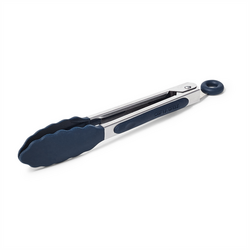
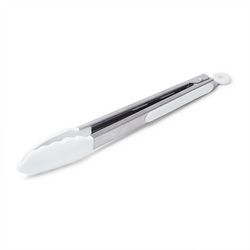
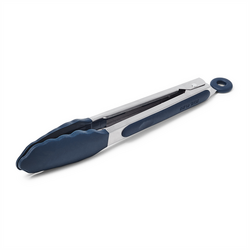
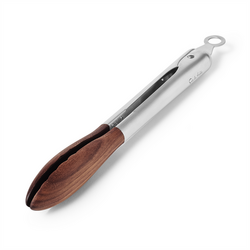
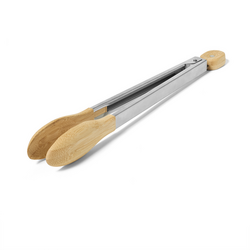
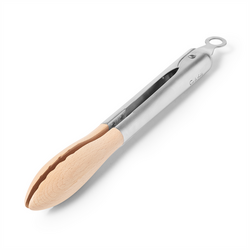
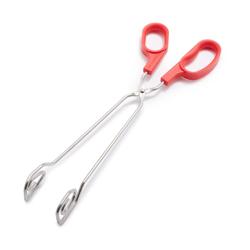
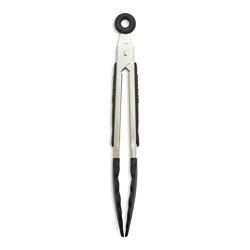
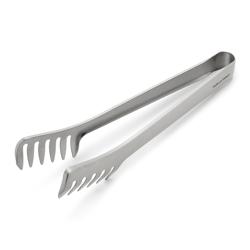
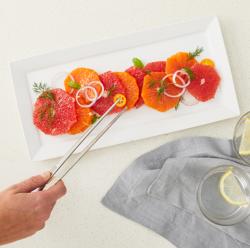
Mini tongs for cold cuts are compact serving utensils that help guests lift sliced or folded meats neatly from a platter, sandwich tray or charcuterie board. Often around 5 to 7 inches long, they offer more control in a small serving area than full-size kitchen tongs, making it easier to pick up a ribbon of prosciutto or a folded slice of turkey without disturbing neighboring food. Their appeal is practical: a comfortable squeeze brings the tips together around a portion, while the shorter handles keep the movement close to the plate. On a board arranged with overlapping salami, soft cheeses and crisp crackers, that smaller footprint leaves more room for the food and gives each utensil a clear place to rest. Mini serving tongs suit everything from a quick family sandwich lunch to a generously filled buffet where guests build their own plates. They are especially useful when meats are arranged in loose folds or small portions that can be lifted individually. Very thin slices that cling together may still need to be separated before serving; tongs work best when the arrangement makes each portion easy to reach. A pair beside the roast beef and another beside the ham can make a shared platter feel more organized, with less reaching across the table. For a narrow appetizer tray, shorter tongs can look proportional and stay out of the way, while a slightly longer pair may offer better reach on a deeper platter. The right fit depends as much on the serving dish and the person holding the utensil as on the food itself. A small pair should feel easy to open, close and set down, with enough space between the tips to grasp a folded slice rather than merely pinch its edge. That balance makes these modest serving tools useful well beyond an occasional party.
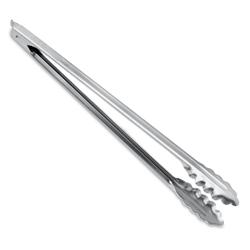
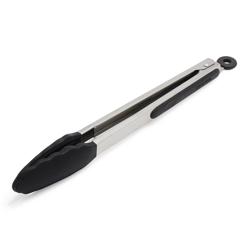
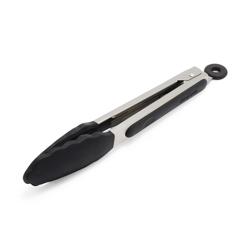
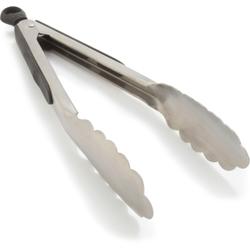
Material and tip design influence how mini tongs handle cold cuts, how they feel in the hand and how they hold up to repeated use. Stainless steel is a common choice for its durability, resistance to corrosion and straightforward appearance alongside serving pieces of different styles. All-metal tips can slip beneath the edge of a folded slice, and gently scalloped edges can help hold food without requiring a hard squeeze. Rounded edges are worth looking for when the platter includes delicate meats that tear easily. Silicone-tipped styles offer a softer contact surface, which can be helpful with serving dishes that need protection from metal utensils, though suitability depends on the dish’s care instructions. Tip thickness matters, too: broad, cushioned ends may grasp a substantial fold of ham comfortably but feel less precise around a thin slice tucked between other foods. Neither material is automatically the better choice; the most useful option matches the food, the serving surface and the way the tongs will be handled. A lightly textured grip can be helpful when hands are damp, while smooth handles have fewer contours to wipe clean. Spring tension deserves attention because a stiff utensil can feel tiring even when it is small. For someone with limited hand strength, an easy squeeze and a manageable opening may matter more than a very compact shape. Hinged and one-piece designs also feel different in use, and a locking mechanism, when included, keeps the arms together for storage. A lock should be simple to operate without getting in the way during serving. For related serving tasks,
Small Tongs offer another way to explore compact utensils suited to different foods and dishes. Across these styles, secure alignment is an important detail: the tips should meet evenly so a slice stays supported as it moves from the platter to a plate.
Mini tongs earn their drawer space through repeated everyday use, not just by looking tidy beside a charcuterie board. At a sandwich station, they give guests a dedicated utensil for each meat, helping keep turkey separate from salami and making the arrangement easier to navigate. Keeping separate utensils with separate foods can reduce accidental mixing, although it does not make a shared spread allergen-free. A clean utensil rest or small plate beside the serving dish gives the tips somewhere to land between uses and helps keep handles from settling into the food. For larger gatherings, more than one pair can prevent a single utensil from traveling between dishes or holding up the line. Compact tongs can also suit cheese cubes, small vegetables and other bite-size foods, provided the tips grip the shape securely. They are serving tools, however, and a design intended for cold cuts should not be assumed suitable for a hot pan or grill without checking its stated use and heat limits. Care is usually simple, but the manufacturer’s directions should determine whether a pair goes in the dishwasher or needs to be hand-washed. Hinges, scalloped edges and the area around a locking mechanism deserve a close rinse because small pieces of food can collect there. Thorough drying helps preserve the finish and keeps moisture from lingering in joints before storage. Over time, dependable spring action, firmly attached tips and arms that resist bending contribute more to usefulness than decorative details alone. For a frequent host, a sandwich enthusiast or someone furnishing a first kitchen, mini tongs can make a thoughtful addition to a serving-focused gift with a board or platter. They are small enough to store easily yet purposeful enough to use whenever sliced meats come to the table. Whether the setting is a countertop lunch spread or a shared appetizer platter, well-proportioned cold cut tongs help make serving more comfortable while keeping the food neatly arranged.