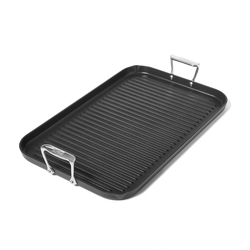
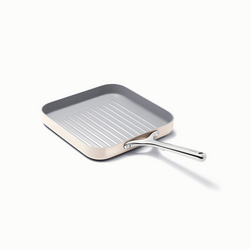
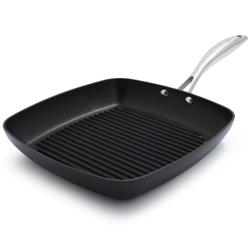
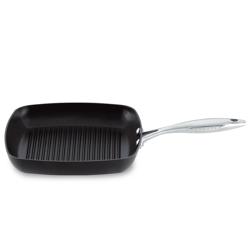
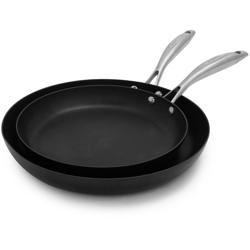
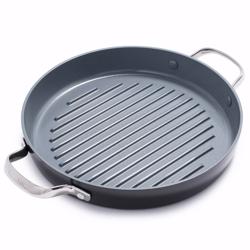
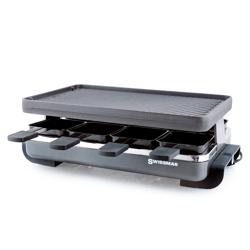
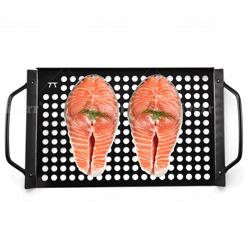
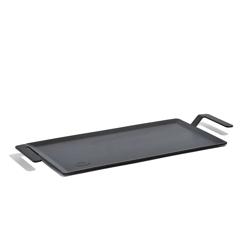
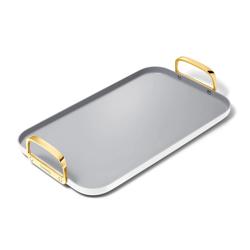
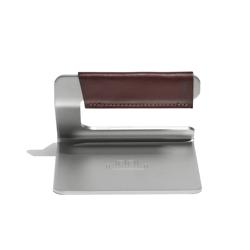
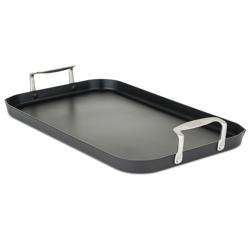
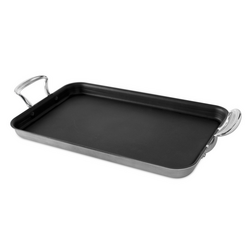
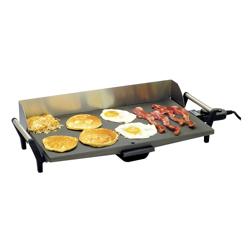
A nonstick grill uses a coated cooking surface to help meats, vegetables and sandwiches release easily, often with less oil and simpler cleanup. Raised ridges give food distinctive grill marks while allowing some cooking juices and rendered fat to collect below the food. For everyday meals, that combination works well with everything from salmon fillets and chicken cutlets to zucchini planks and pressed sandwiches. Delicate fish is easier to lift when its skin releases cleanly, and sliced vegetables are easier to turn without leaving their browned edges behind. A nonstick grill pan brings this cooking surface to the stovetop, while an electric indoor grill provides its own heat source. Contact-style grills cook from above and below, making them useful for sandwiches or foods of an even thickness. Open grilling surfaces leave more room to turn asparagus, arrange shrimp or check the browning on a burger. Each format offers a different way to fit grilling into familiar meal routines, whether dinner means a single serving or several portions cooked together. The appeal is not limited to meat: thick slices of eggplant, marinated tofu and firm peaches can all benefit from a ridged cooking surface when prepared at an appropriate heat setting. Lightly coating food with a suitable cooking oil, when recommended by the manufacturer, can encourage browning without making the cooking surface unnecessarily greasy. Grill marks come from contact with the heated ridges, so food needs room and time against the surface rather than constant movement. Although indoor grilling does not reproduce the smoky flavor of charcoal or wood, it can bring appealing color and a pleasantly browned exterior to everyday ingredients. A useful nonstick grill suits the foods cooked most often, with enough room to avoid crowding and a shape that feels comfortable to handle from preparation through cleanup.
Materials, cooking area and compatibility all influence how a nonstick grill fits into a kitchen. Aluminum conducts heat readily and keeps many grill pans manageable to lift, while a substantial base can help distribute heat more evenly across the cooking surface. Hard anodized aluminum provides a hardened underlying surface, but the nonstick coating still needs care appropriate to its finish. Traditional and ceramic nonstick coatings vary in their construction, recommended temperatures and utensil requirements, so the manufacturer’s instructions are more useful than broad assumptions about a coating type. For stovetop cookware, burner compatibility is essential. An induction cooktop requires cookware with a compatible magnetic base, and a pan that performs on a gas burner is not automatically suitable for induction. Flatness and size matter on smooth cooktops, too. A large rectangular grill pan may offer generous room for skewers, but its dimensions should work with the burner arrangement rather than simply fill the stovetop. The usable cooking area deserves attention alongside the overall measurements: handles, rims and drainage channels can take up space without adding room for food. A smaller surface may be easier to store and wash, while a larger one can keep portions together for a shared meal. Comfortable handles and a weight that feels manageable are especially helpful when moving cookware containing hot juices. For electric models, counter space, cord placement and clearance around the appliance are part of the fit. A lid or floating hinge can accommodate different food thicknesses, while removable cooking plates and an accessible drip tray may make cleanup more convenient. Adjustable heat settings offer flexibility for ingredients that brown at different rates, though cooking temperatures and safe use depend on the individual appliance. For meals that call for both ridged and smooth cooking surfaces,
Nonstick Indoor Grill Griddles bring together formats suited to grilled sandwiches, vegetables, pancakes and other everyday favorites. Oven compatibility is another feature to verify rather than assume, since handles, lids and coatings can have different heat limits.
Lasting satisfaction with a nonstick grill depends as much on everyday handling as on its initial construction. A durable coating is still a cooking finish, not a scratchproof surface, and utensils approved by the manufacturer help protect it. Silicone, wood or suitable nylon tools are often useful for lifting food between the ridges without scraping them. For fish, a broad, flexible turner supports the fillet; for vegetables, gentle-tipped tongs make it easier to turn individual pieces without dragging them across the surface. Cutting directly on the grill or using sharp metal tools can damage finishes that are not designed for that contact. Heat control matters as well. Prolonged empty heating and temperatures above the stated limit can harm a nonstick coating, and a grill does not need to be smoking hot to cook a satisfying meal. Food residue and marinades deserve attention because sugars can darken quickly, leaving sticky deposits in the channels between ridges. Once the cooking surface has cooled as directed, warm water, mild dish soap and a nonabrasive sponge are often enough for routine cleaning. A soft brush suitable for the finish can reach narrow grooves without harsh scrubbing. Dishwasher-safe construction may be convenient, but the care instructions should determine whether machine washing is appropriate; electrical components should never be immersed unless expressly designed for it. Letting hot cookware cool before washing also helps avoid sudden temperature changes that can contribute to warping. During storage, a protective layer between stacked pans can prevent neighboring cookware from rubbing against the coating. These details make a difference for frequent cooks who want dependable food release over time. A nonstick grill can also be a thoughtful gift for someone furnishing a kitchen, a sandwich enthusiast or a cook who enjoys preparing smaller portions without managing a full outdoor setup. Matching the format to the recipient’s cooktop, storage space and usual meals makes the gift more useful than choosing by size alone. From a quick lunch to a carefully prepared dinner, the right fit makes grilling feel like a practical part of the kitchen rather than a separate project.