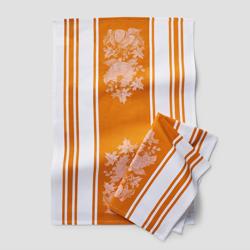
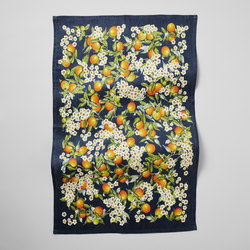
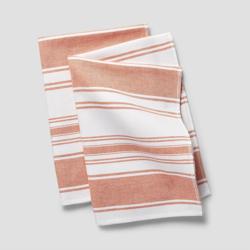
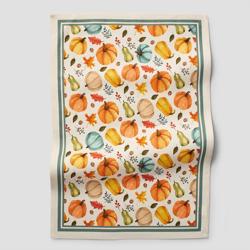
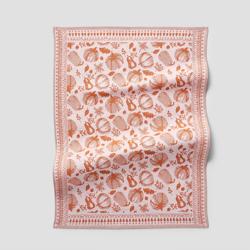
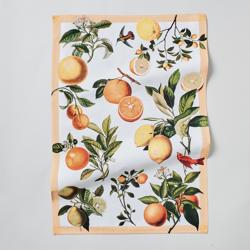
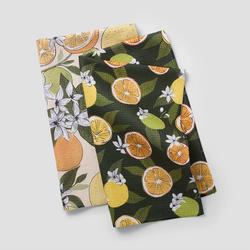
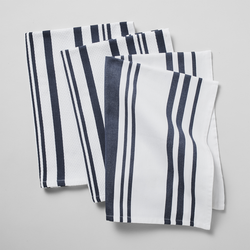
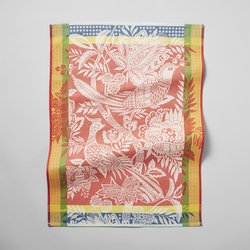
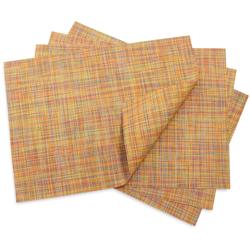
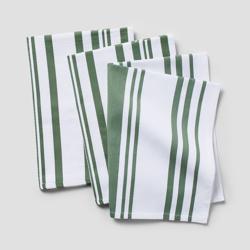
Orange decor towels add color, pattern and everyday usefulness to a kitchen, whether draped over an oven handle, folded beside the sink or hung from a wall hook. Their appeal comes from the balance of a decorative accent and a working kitchen linen: a towel can brighten a neutral space while staying within reach for drying hands or finishing the dishes. Orange covers a surprisingly broad range of shades. Bright citrus tones create a lively focal point against white cabinets, while muted terracotta, rust and apricot work comfortably with wood, cream-colored tile and natural stone. The best shade depends on the colors already in the room and how much attention the towel should draw. A solid orange towel offers a clean block of color; stripes introduce a little movement without overwhelming a small kitchen. Floral, geometric and fruit-inspired patterns can give the space more personality, especially when their background color repeats something already present in the room. Texture matters, too. A woven pattern reads differently from a printed design, and a subtle textured surface can add interest without requiring another contrasting color. For a restrained look, repeat orange in one or two nearby accents rather than matching every surface. A patterned towel with touches of cream or blue can also connect an orange accent to an existing palette. Consider how the towel looks when folded, not just spread flat. A large motif may disappear over a handle, while a border or repeating stripe can remain visible. In a compact kitchen, even a narrow strip of color can make a noticeable difference without taking up counter space. For a broader approach to coordinating kitchen and tabletop accents, explore
Orange Decor. Towels are an easy place to establish that connection because they sit naturally among the things used every day, rather than needing a separate spot for display.
Materials and construction help determine whether an orange decorative towel is best suited to drying dishes, wiping hands or adding a finishing touch to the room. Cotton is a familiar choice for kitchen towels because it is generally absorbent, washable and comfortable to handle, though performance varies with the weave and finish. Looped cotton provides more surface area for taking up moisture, making it useful near the sink. Flat-woven cotton is typically less bulky and folds neatly over a rail, while waffle weaves offer texture that can support absorption without the feel of a heavy towel. Linen is another option to consider for a lightweight cloth that tends to dry readily and becomes softer with use. For drying clear glassware, a smooth, low-lint weave is usually more helpful than a plush surface that may leave fibers behind. Fiber blends can change the feel, drying time and appearance of a towel, so the material description deserves as much attention as the color. Decorative details also influence intended use. Raised embroidery, tassels or an embellished border may look appealing on display but make part of the towel less convenient for wiping a glass or drying a plate. A simple woven or printed design can be a practical choice when the same towel needs to look good and work hard. Size and placement matter just as much. A longer towel offers more fabric for drying a stack of dishes, but it should not trail onto the floor or interfere with an appliance door. A smaller towel can fit a narrow hook or crowded sink area more comfortably. Check the dimensions against the place where it will hang, allowing room for it to unfold and dry between uses. Keep a towel for clean dishes separate from one used to wipe spills or messy hands. Decorative kitchen towels are not a substitute for oven mitts or potholders, particularly when damp, so choose appropriate heat protection for handling hot cookware.
Good care helps orange decor towels keep both their usefulness and their color. Start with the care label, since fiber content, printing and trim can all affect washing and drying instructions. When recommended, washing before the first use can remove finishing residues and help a towel perform as intended. Strong orange dyes may release some color initially, so washing with similar colors is a sensible precaution. Use a suitable detergent and avoid chlorine bleach unless the label specifically permits it; bleach can affect both the shade and the fabric. Fabric softener can leave a coating that reduces absorbency, so it is generally best left out when drying performance is a priority. Treat food stains promptly with a method appropriate for the material rather than letting tomato sauce, coffee or cooking oil settle into the fibers. Follow the recommended dryer setting, and avoid excessive heat that may contribute to shrinkage or damage decorative details. Linen and flat-woven cotton may develop wrinkles, which can suit a relaxed kitchen; smooth them while slightly damp or iron only as the care instructions allow. Between washes, spread towels out so moisture can escape instead of leaving them bunched beside the sink. Switch to a fresh towel when one becomes soiled, and use separate cleaning cloths for raw food spills. For durability, look at the construction as well as the fabric: secure hems, even stitching and firmly attached hanging loops are useful signs of attention to everyday wear. Orange towels can also make a thoughtful housewarming or host gift for someone who enjoys a colorful kitchen. Choose the shade around the recipient’s space, with a muted tone for a quieter palette or a lively pattern for someone who welcomes bolder accents. For frequent cooks, prioritize easy care and a useful weave; for someone who enjoys setting a coordinated table, give more weight to the pattern and finish. The most satisfying choice brings together a color they enjoy and a towel they will reach for often.