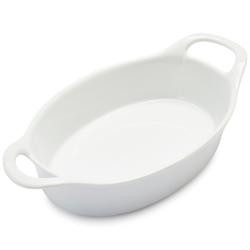
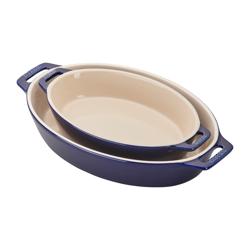
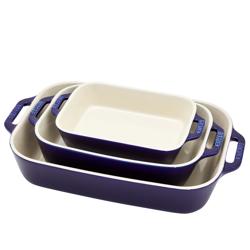
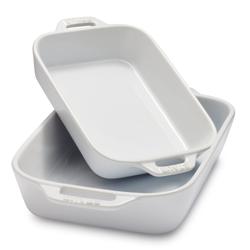
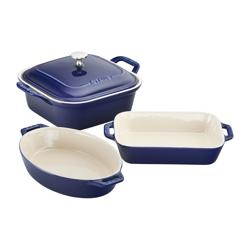
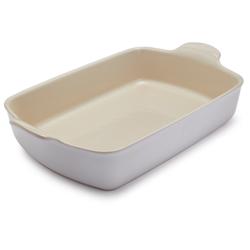
An oval baker is an elliptical oven-safe dish used for baking, roasting and serving casseroles, gratins, vegetables and desserts. Its curved outline accommodates longer foods, while the broad surface gives breadcrumb toppings, shredded cheese and pastry room to brown. An oval baking dish can move from a weeknight vegetable side to the center of a shared meal without looking out of place. Think sliced potatoes tucked into cream, eggplant layered with tomato sauce or tender pears baked beneath an oat crumble. The rounded ends also suit arrangements of asparagus, carrots or fish fillets, provided the food fits without crowding. For roasted vegetables, a little space between pieces helps moisture escape rather than collect around the food. For a creamy casserole, closer layers are often exactly the point. Depth matters as much as shape: a shallow oval baker exposes more of the food to oven heat, making it especially useful for gratins and dishes with crisp toppings, while a deeper dish provides room for layered vegetables, saucy pasta and generous fillings. Small oval baking dishes work well for individual portions, baked dips or a side dish for two. Larger versions suit family dinners and meals where several people will serve themselves at the table. Capacity alone does not tell the whole story, though. Two dishes that hold the same volume can produce different results if one is wide and shallow and the other narrow and deep. When adapting a recipe written for a rectangular pan, aim for a similar capacity and food depth, and judge doneness by the recipe’s visual and temperature cues rather than the clock alone. Leave enough headroom for bubbling sauces and rising batters. A baker filled to the rim is harder to carry and more likely to spill, especially when a bubbling cheese topping hides liquid underneath.
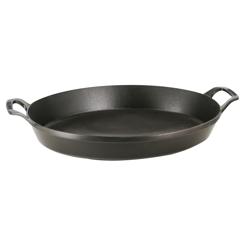
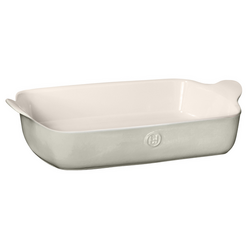
Material influences how an oval baker heats, how long it stays warm and how it feels to handle. Oven-safe stoneware and other ceramic baking dishes are familiar choices for casseroles, baked pasta and fruit desserts because they retain heat well and offer an appealing oven-to-table presentation. Their glazed interiors can make serving and cleanup easier, although a glaze should not be mistaken for a nonstick coating; greasing the dish may still be helpful when the recipe calls for it. Porcelain offers a smooth serving surface and can make a simple preparation look at home on a dressed table. Its durability depends on the construction and care, so thin edges and projecting handles still deserve thoughtful handling. Glass provides a clear view of the sides and bottom of a bake, which can help when checking browning. Only glass specifically rated for oven use belongs in the oven, and its temperature and handling limits matter. Enameled cast iron is heavier but holds heat particularly well, making it useful when food will remain in the serving dish throughout the meal. That extra weight becomes more noticeable once the baker is full, especially when lifting it from a low oven rack. Stainless steel offers a different balance: it is generally lighter than cast iron, resists chipping and suits cooks who prefer a metal baking vessel. The thickness and construction of the metal affect heating performance, so material names alone cannot predict every result. Across all materials, oven, broiler, microwave and freezer compatibility are separate considerations. A dish suitable for baking is not automatically suitable for direct broiler heat or stovetop use. Ceramic and glass also require attention to sudden temperature changes; freezer-to-oven use should never be assumed. The manufacturer’s instructions should determine temperature limits, preheating requirements and whether any lid or accessory shares the same capabilities as the dish itself.
A comfortable fit in the kitchen makes an oval baker more useful over time. Check the full exterior dimensions, including handles, against oven space, storage shelves and any countertop oven where the dish might be used. The gently tapered ends can leave room beside another pan, but the widest point and handle span determine whether everything actually fits. Handles should offer enough room for a secure grip with oven mitts, not just bare fingers. A substantial rim can also help with lifting, though any filled baker needs two-handed support. At the table, set the dish on a dry, heatproof trivet and use a serving utensil that can reach into the curved ends without scraping the interior. Rounded corners often make spooning out the last portion easier than working around sharp angles. Color and finish have a practical role in presentation, too. A white or neutral glaze lets browned cheese, green vegetables and tomato sauce stand out, while a
yellow baker brings a cheerful accent to a simple table. For someone setting up a kitchen, a versatile medium-size baking dish can earn its place through frequent use; for an enthusiastic host, a smaller companion dish may be just as welcome for sides or dessert. An oval baker also makes a thoughtful housewarming or wedding gift when its size, weight and care requirements suit the recipient’s cooking habits. Everyday care helps preserve that usefulness. Let the dish cool before washing, avoid abrupt temperature changes and loosen baked-on food with soaking when the care instructions permit it. A soft sponge and compatible cleaner are usually a better starting point than abrasive scrubbing. Dishwasher-safe does not mean every finish benefits from aggressive detergents or crowded loading, and chipped or cracked bakeware should be evaluated according to the manufacturer’s safety guidance. With suitable handling, an oval baker can become a familiar part of cooking and serving, equally useful for a modest supper or a dish passed around a full table.