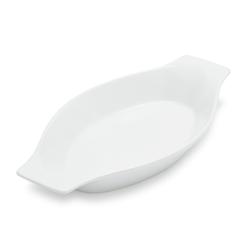
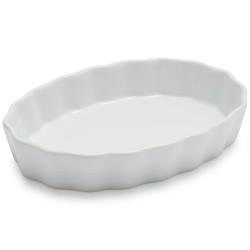
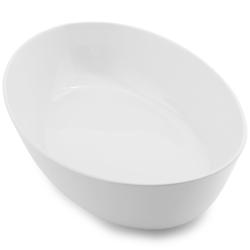
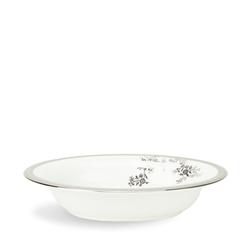
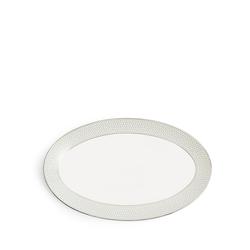
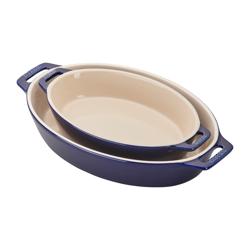
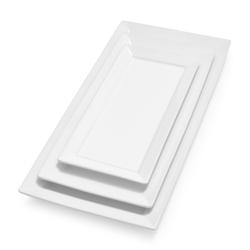
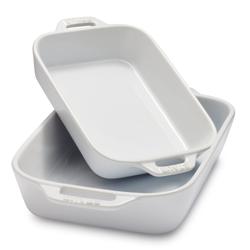
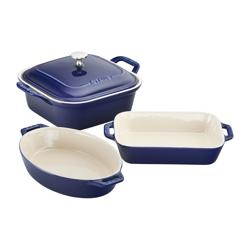
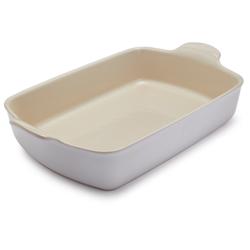
Oval porcelain dishes include shallow gratin dishes, deeper bakers and serving platters for everything from individual portions to family-style meals. Their elongated shape suits foods such as baked fish, layered vegetables and sliced roasts, while curved edges give the presentation a softer outline than rectangular serveware. The most useful shape depends on what you plan to prepare and how you like to serve it. A shallow oval gratin dish exposes more of the food’s surface, making it a good choice for recipes that call for a golden cheese topping or crisp breadcrumbs. A deeper baking dish leaves more room for saucy casseroles, baked pasta and fruit fillings that may bubble as they cook. Flat or gently rimmed oval platters serve a different purpose, providing space to arrange appetizers, carry sandwiches to the table or present a main course with its garnishes. Porcelain is a fine ceramic fired at high temperatures to create a dense, durable body. Its smooth glazed surface generally resists stains and odors, making it practical for repeated use with a range of foods. Oven-safe porcelain also holds heat after baking, helping food stay warm during serving, though the dish itself needs a trivet and careful handling. Not every porcelain serving piece is intended for cooking, so oven suitability should always be confirmed rather than assumed from appearance. For individual servings, smaller oval dishes can give each person a portion with its own browned edges. For a shared side, a wider dish makes it easier to reach the center without digging through a deep layer. Think about the finished texture as much as the recipe’s volume: potatoes spread in a shallow layer cook differently from the same amount packed into a deeper vessel. Matching the dish’s depth and surface area to the recipe helps preserve the balance of tender filling, bubbling sauce and crisp topping that makes baked dishes so appealing.
Size matters beyond the amount of food a dish can hold. Check overall dimensions, including handles or extended rims, against your oven rack, cabinet shelves and serving space. Interior dimensions describe the area that holds food, while exterior measurements determine whether the dish fits where it needs to go. Two oval baking dishes with similar capacities can have very different footprints, particularly when one is broad and shallow and the other is narrow and deep. If several dishes need to share the oven, allow room around them for air to circulate and make sure each can be removed safely. On the table, consider how the oval will sit alongside dinner plates, drinking glasses and other serving pieces. An elongated platter can run along the center of a narrow table, leaving space on either side for place settings, but its width still deserves a quick measurement. Handles or broad rims can offer a more secure grip with oven mitts; they also add to the storage space required. Weight is another practical consideration, especially when a dish will be filled with a dense casserole or carried from the kitchen to a separate dining area. For presentation, white porcelain creates a simple backdrop for the colors of roasted carrots, tomato sauce or a scattering of fresh herbs. It pairs easily with patterned plates, wood serving boards and cloth napkins without requiring a fully matched table setting. Coordinating oval pieces with
white porcelain oven-to-table dishes in other shapes can help accommodate different recipes while keeping the presentation consistent. A versatile oval dish can also make a thoughtful housewarming or wedding gift, especially for someone who enjoys cooking for friends. Consider the recipient’s household size, storage space and favorite meals rather than choosing by appearance alone. A compact kitchen may benefit from a manageable everyday size, while someone who regularly hosts shared meals may appreciate a larger serving surface.
Good care helps porcelain stay useful and attractive through everyday meals and special gatherings. Start with the manufacturer’s instructions for oven temperatures, microwave use, dishwasher cleaning and any restrictions on the broiler. Oven safe does not automatically mean broiler safe, and decorative details can change how a piece should be used or cleaned. Porcelain is durable, but it can chip if knocked against a faucet, countertop or another dish. Set it down gently and avoid crowding it against heavy cookware in the sink. During storage, a soft liner between stacked pieces can reduce rubbing and protect rims from accidental contact. Sudden temperature changes are another concern. Unless the manufacturer specifically permits it, do not move a refrigerated dish directly into a hot oven or place a hot baker on a cold or wet surface. Let hot porcelain cool before washing, and use a dry, heat-resistant trivet beneath it at the table. For baked-on cheese or sauce, allow the cooled dish to soak in warm, soapy water before cleaning with a nonabrasive sponge. This loosens residue without the aggressive scraping that can damage a glaze. Dishwasher-safe pieces can simplify cleanup, but leave enough space in the rack to prevent them from knocking against neighboring dishes. Check microwave instructions before reheating leftovers, particularly if the porcelain has metallic decoration, and remember that the dish may become hot even when reheating a small portion. With these habits, an oval dish can become part of a comfortable cooking routine rather than something reserved for company. Use an oven-rated baker for a vegetable gratin beside the main course, bring a serving platter to the table with sliced chicken or arrange toast and fruit for a relaxed breakfast. The right piece earns its place by fitting the food, the kitchen and the way meals are shared, with a shape that feels equally at home on a busy dinner table or a carefully set one.