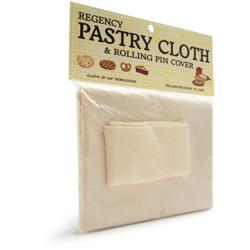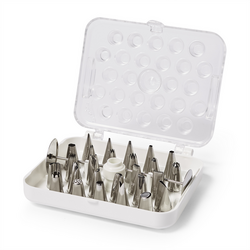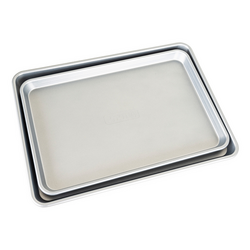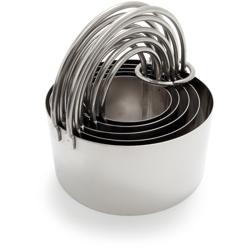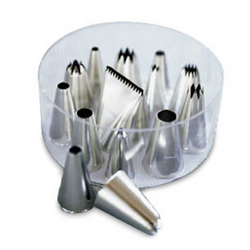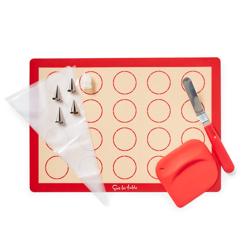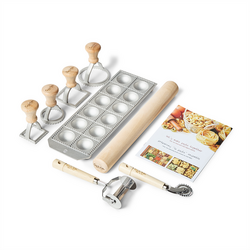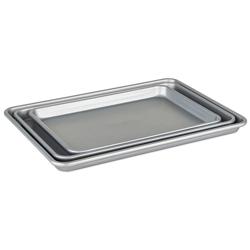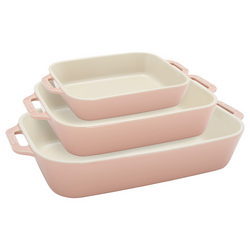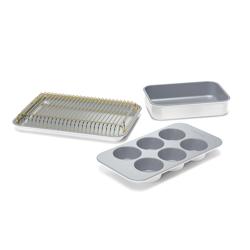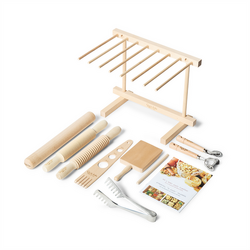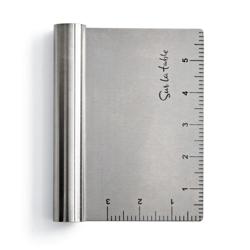
Pastry sets bring together complementary baking tools for preparing dough, shaping pastries or decorating finished desserts. Depending on the set, they may include essentials such as a rolling pin, pastry blender, dough scraper, cutters, pastry bags or piping tips. Dough-focused sets are useful for pie crusts, biscuits and tarts, while decorating sets support tasks such as filling éclairs, piping cream puffs and finishing cupcakes. The most useful combination depends less on the number of pieces than on how those pieces fit the baking someone enjoys. A baker who regularly makes fruit pies may appreciate tools that help blend butter into flour, lift a delicate crust and trim its edges. Someone drawn to bakery-style finishes may get more use from piping bags and a selection of tips that create smooth rounds, ridged borders or soft rosettes. These collections support different stages of the same process, from a flour-dusted work surface to the final swirl of cream. A scraper can gather loose flour and dough without requiring repeated handling, while a pastry blender helps cut fat into dry ingredients without working it in with warm hands. Matching cutters create consistent shapes, which can help similar-size pastries bake more evenly when rolled to the same thickness. For decorating, a few distinct tip shapes can offer plenty of range without making the task feel complicated. A round opening suits dots, lettering and filling work; a star-shaped opening adds definition to buttercream and other mixtures that hold their shape. Pastry tool sets can give newer bakers a practical starting point and help experienced bakers organize tools around a favorite technique. The appeal is in having pieces that work well together, whether the project is a simple batch of biscuits or a tray of filled pastries for a celebration. A focused collection can also make setup easier, with the right tools close at hand before dough is mixed or a piping bag is filled.
Materials and construction influence how pastry tools feel in use, how precisely they work and how much care they need afterward. Stainless steel is common in cutters, scrapers and piping tips because it provides a firm working edge and stands up well to repeated use with proper care. A cutter should feel sturdy enough to press through dough without losing its shape, while a piping tip needs a clean opening to produce a defined pattern. Silicone offers flexibility for tasks such as brushing pastry or working with sticky mixtures, although its softness serves a different purpose from the rigidity of a metal blade. Wooden handles and rolling pins have a comfortable feel, but they need care suited to the material rather than prolonged soaking. Reusable pastry bags may be made from coated fabric or flexible synthetic materials, each with its own balance of grip, flexibility and cleanup needs. Fit matters just as much as material. Handles should feel secure without forcing the wrist into an awkward position, and a rolling pin should suit both the dough being rolled and the available counter space. With decorating sets, the bag opening, tip and any coupler need to be compatible. A coupler can make changing tips easier without emptying the bag, but not every tip uses the same size. Bag capacity also affects control: a smaller bag can feel more manageable for detailed work, while a larger one can reduce refilling when piping generous portions. Overfilling either can make it harder to apply steady pressure. Care instructions deserve attention across the whole set, particularly when it combines different materials. Some components may be dishwasher safe, while others require hand-washing. Cleaning dough from seams before it dries and rinsing frosting from narrow tip openings make cleanup less frustrating. Reusable bags should be cleaned thoroughly and allowed to dry completely before storage. Keeping sharp cutters protected and small decorating pieces together helps preserve their condition and makes the next baking project easier to begin.
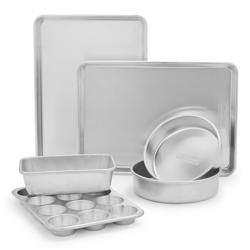
A well-chosen pastry set fits into the way a kitchen is actually used. For an occasional baker, a compact collection centered on familiar recipes may be more useful than a large assortment of specialized tools. Someone who makes biscuits for family breakfasts has different needs from a baker practicing piped borders for birthday cakes, even though both value comfortable handling and reliable results. More experienced bakers may prefer a focused set that adds a new technique or keeps frequently used tools together. Storage is worth considering, especially in a shared kitchen where a crowded drawer can make delicate tips difficult to find and sharp cutters awkward to reach. A case or dedicated container, when included, can help separate small pieces and protect their edges. For kitchens that need preparation tools alongside pans and other baking essentials,
Baking Sets offer a related category to explore. Pastry sets also make thoughtful gifts when the selection reflects the recipient’s interests rather than simply offering the largest piece count. A new baker might enjoy approachable tools for rolling and cutting dough, while someone who loves decorating may welcome a coordinated collection for practicing piping techniques. Housewarmings, weddings and birthdays are natural occasions for gifts that invite time in the kitchen, particularly when paired with a favorite recipe. The right tools leave room for progress: the first attempt might be a rustic tart with folded edges, followed later by neatly cut pastry rounds or cream-filled choux. Consistent results still depend on the recipe, dough handling and practice, but tools that feel comfortable make those skills easier to repeat. There is satisfaction in lifting a round of dough without tearing it, pressing out biscuits with clean edges or finishing a dessert with a steady ribbon of cream. Pastry sets support those small, practical moments, helping turn a collection of ingredients into something worth sharing.