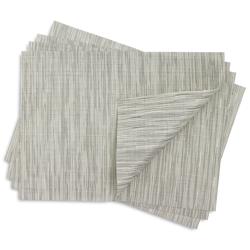
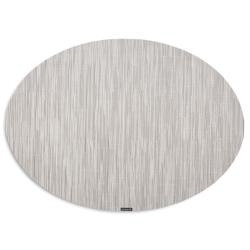
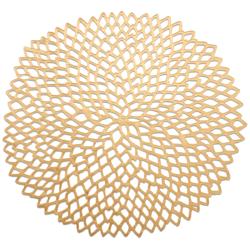
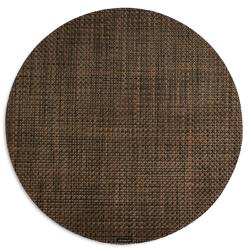
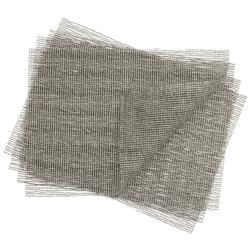
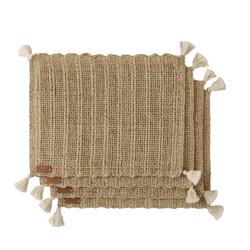
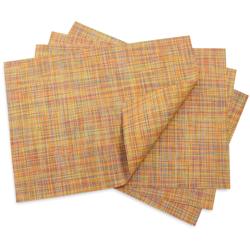
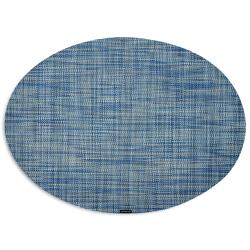
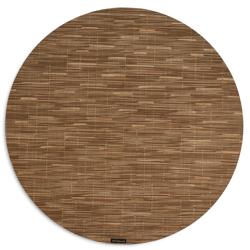
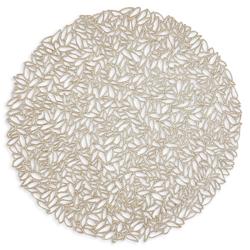
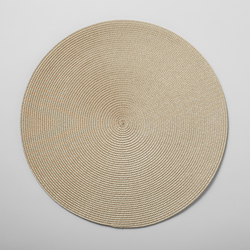
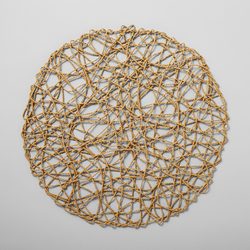
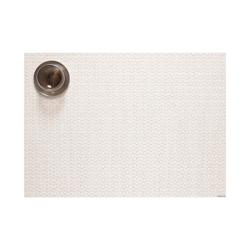
Placemats for centerpieces create a defined base for vases, decorative bowls and candleholders, adding color and texture without covering the entire table. A well-proportioned mat brings separate objects together into one arrangement and leaves the surrounding surface open for place settings and serving dishes. It can make a simple pitcher of flowers feel more intentional or give a low bowl of fruit a distinct place on an everyday dining table. Unlike a full-length runner, a single placemat concentrates the decoration in a smaller area, making it especially useful when the table also serves as a spot for homework, conversation or casual meals. The most suitable shape depends on both the centerpiece and the space around it. Round placemats echo the curves of a vase or bowl, while rectangular and oval shapes give a longer arrangement room to spread out. A shaped or openwork mat can become part of the decoration itself, with its outline visible beneath clear glass or plain ceramic. For a balanced look, the centerpiece generally sits comfortably within the mat’s edges, leaving enough of the material visible to frame it. An arrangement that completely hides its base loses much of that layered effect. On a narrow table, a compact mat keeps the center from feeling crowded; on a broad tabletop, a larger footprint can help a small grouping feel connected to the rest of the setting. Color has a similar role. A mat close to the table’s color adds subtle depth, while a contrasting shade makes the arrangement more noticeable. A pale woven surface beneath a dark bowl, for example, highlights the bowl’s silhouette without requiring extra decoration. For everyday use, that modest layer can be enough to make the table feel finished, even when there are no individual place settings laid out.
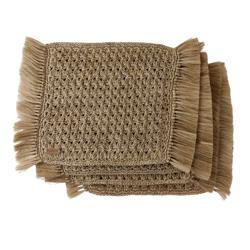
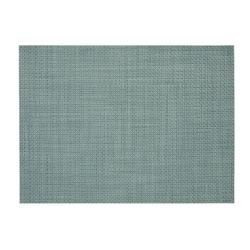
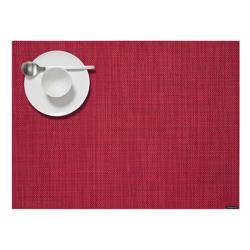
Material influences how a centerpiece placemat looks, feels and fits into daily life. Woven natural fibers bring visible texture that works well alongside stoneware, wood and loosely arranged flowers. Their slightly irregular surfaces can soften the appearance of a polished tabletop, although a coarse weave is not always the best foundation for a narrow-footed vase or delicate candleholder. A flat, even surface matters more than texture when an arrangement includes tall or easily tipped objects. Cotton and linen placemats offer a softer fabric layer and can coordinate with napkins or a tablecloth without needing to match them exactly. Depending on their construction and care instructions, fabric mats may be washable, but they can also absorb water, collect stains or need pressing to lie smoothly. Vinyl and other wipe-clean materials can be practical around a frequently refilled flower vase or a fruit bowl that moves between the kitchen and dining room. Metallic finishes and decorative cutout designs add pattern and reflected light, particularly beneath simple glass vessels, though their care needs vary and delicate edges may require gentler handling. No single material provides every kind of protection. Open weaves and cutouts allow moisture and crumbs to reach the surface below, and even a solid mat should not be assumed to be waterproof or heat resistant. A watertight vase, a suitable saucer beneath a planter and prompt attention to spills help protect both the placemat and the table. Candleholders should sit securely and keep flames well away from fabric, fibers and other combustible decoration; a decorative placemat is not a substitute for a heat-safe base. Durability also comes down to construction. Even weaving, secure stitching and edges that stay flat are useful qualities when the mat will be moved often. For a table used throughout the day, easy care may matter more than an elaborate finish. For an arrangement that stays in place, a finer texture or detailed border may be worth the extra attention. Following the material’s care instructions helps preserve its shape and appearance, whether that means wiping it clean, spot cleaning or laundering it as directed.
The right fit leaves room for the way people actually use the table. A centerpiece on a family dining table needs space around it for elbows, water glasses and shared bowls, not just enough room for the decoration itself. A low arrangement on a flat placemat can create a focal point while keeping sightlines clear for conversation. On a round table, a circular base often feels natural because it follows the tabletop’s outline and gives everyone a similar view. Coordinating that central layer with
placemats for a round table can help create a cohesive setting, especially when the outer mats and centerpiece base share a color or texture rather than an identical pattern. On rectangular tables, an oval or rectangular centerpiece mat can follow the table’s length, while a round mat offers a softer contrast to straight edges. Measuring the available center space with place settings in position gives a more useful sense of fit than looking at the empty table alone. The base of every vessel should rest fully and securely on the mat, without straddling a raised border or an uneven overlap. Beyond the dining room, these mats can define a decorative grouping on a console, anchor a bowl on a breakfast table or add a finished layer beneath a vase on a sideboard. They suit people who enjoy changing small details without replacing all their table linens, as well as hosts who prefer an uncluttered setting. A thoughtfully chosen placemat can also complement a vase or serving bowl as a housewarming or wedding gift, particularly in a versatile color that works with the recipient’s home. Storage deserves a little consideration, too: some mats stack neatly in a drawer, while others should be kept flat to avoid creases or curled edges. With a stable surface, manageable care requirements and proportions that suit the furniture, a centerpiece placemat can become an easy, lasting part of setting the table.