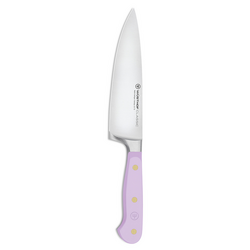
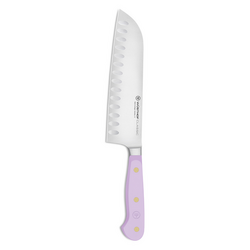
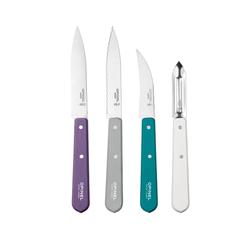
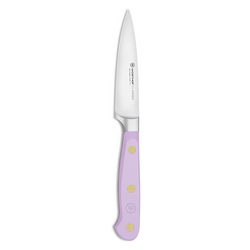
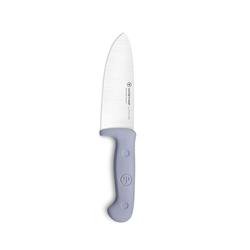
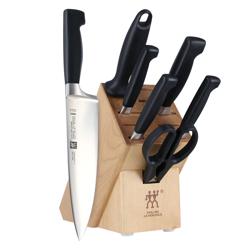
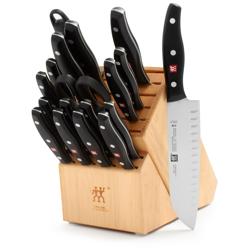
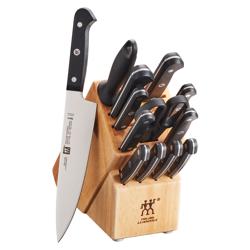
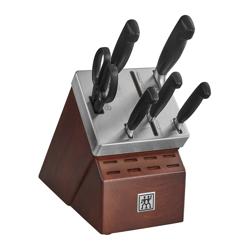
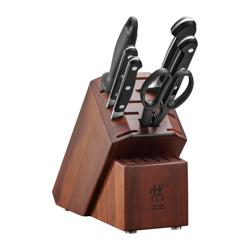
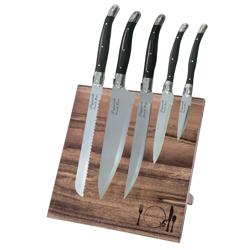
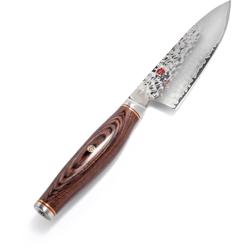
Purple kitchen knives come in sets and as individual knives, with color most often on the handle and sometimes on the blade. A single knife can add a splash of color to the tools you reach for every day, while a matching set can bring a consistent look to a knife block or prep area. Start with the work that happens most often on your cutting board. A chef’s knife is a versatile choice for chopping onions, mincing herbs and slicing boneless chicken. Its broad blade also gives you room to gather chopped parsley to transfer to a bowl. A santoku can handle much of the same prep, but its typically flatter edge suits cooks who prefer lifting and lowering the blade to rocking it across the board. A paring knife comes in handy for hulling strawberries or trimming the bruised spot from a peach, while a utility knife offers a little more blade length for slicing small pieces of fruit or cheese. A serrated bread knife is useful for more than crusty loaves: It can cut through a tomato’s skin without crushing the flesh. If the knife block already holds a favorite chef’s knife, adding a purple knife in a different shape can fill a gap without duplicating what you own. If you’re setting up a kitchen from scratch, look at which blade shapes a set includes rather than relying on piece count alone. A set might count a block or shears among its pieces, so the total doesn’t always tell you how many knives you’ll use for prep. For a cook who regularly makes sandwiches, chops vegetables and slices bread, a few well-chosen blade shapes can cover most meals without taking up much counter space.
The shade of purple can be as subtle or as bold as you like. A muted lavender handle looks at home beside a pale wood cutting board, while deep plum offers a quieter contrast against stainless steel. If you like mixing colors rather than matching every handle,
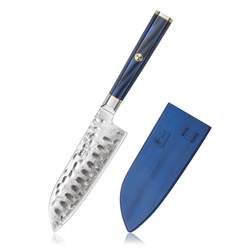
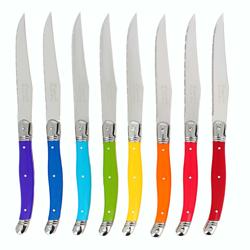
Blue Kitchen Knives can complement lilac or violet while making it easier to tell two similar knives apart in a block. Color is easy to spot, but the shape and feel of the handle matter more once dinner prep begins. A slim handle may feel natural in a smaller hand, while a fuller, rounded grip may be more comfortable for someone who likes more surface to hold. A textured finish can offer extra grip, and a smooth handle with few seams may be simpler to wipe clean. How you hold the knife matters, too. If you tend to pinch the blade near the handle with your thumb and index finger, look for a comfortable transition between the two. If you wrap your whole hand around the handle, look for enough space for your fingers without feeling crowded. Blade length and height affect fit as much as the grip does. A compact chef’s knife can feel easier to maneuver on a small board when you’re dicing a shallot, while a longer blade can slice across a large head of cabbage with fewer cuts. A taller blade can offer more room for your knuckles when chopping. Weight is largely a matter of preference: A lighter knife may feel nimble when you’re working through a pile of green beans, while a heavier one may feel steadier through a dense sweet potato. The right fit is the one that feels comfortable not just for the first cut, but for the rest of the prep.
Blade and handle materials offer better clues to how a purple kitchen knife will hold up than the color alone. Stainless steel is common for kitchen blades because it resists corrosion, though it still benefits from being washed and dried promptly. Molded handles generally take little upkeep, while wood may call for more attention to moisture and occasional conditioning, depending on the finish. On a knife with a colored blade, the purple may come from a surface coating rather than the steel itself. Check the care directions for that finish, since abrasive scrubbers and contact with other utensils can leave marks. For most kitchen knives, hand-washing with mild dish soap and a soft sponge, then drying with a towel, is a good everyday routine unless the manufacturer directs otherwise. Avoid soaking knives and choose a wood or plastic cutting board rather than cutting on glass, stone or ceramic, which can dull an edge faster. A knife block, fitted blade guard or in-drawer knife organizer keeps edges from knocking against other utensils. When a straight-edged knife starts slipping on tomato skin instead of biting in, it may be time to sharpen it. Serrated blades need a different approach, so check the care instructions before using the same sharpener for both. If you’re choosing a gift, think about what the recipient cooks as well as the color they love. A purple paring knife can be a thoughtful housewarming gift for someone who always has fruit on the counter. A set may make more sense as a wedding gift for a couple furnishing a kitchen together, especially if it includes storage that fits their space. For someone who already has a favorite set, a single knife in a shade they love can feel more personal, particularly if it does a job their other knives don’t. The color makes the gift easy to remember, but a comfortable handle and a blade that suits the recipient’s cooking are what will keep it in regular use.