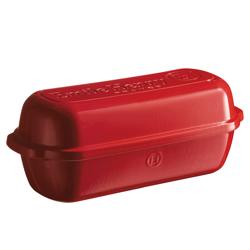
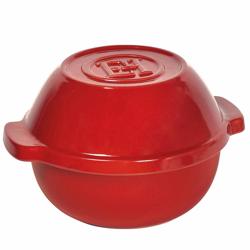
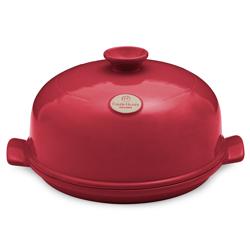
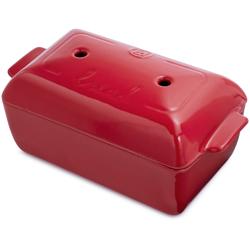
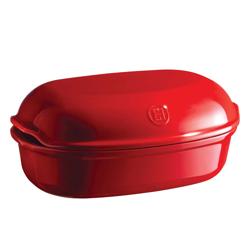
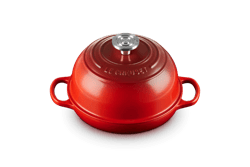
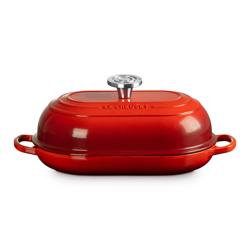
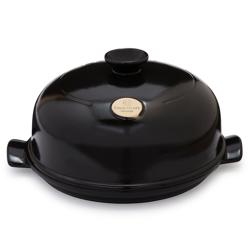
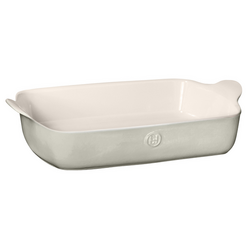
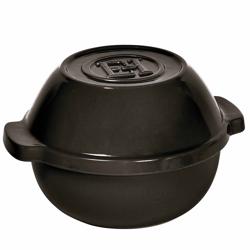
Red clay bread cloches are covered ceramic baking vessels that hold steam around bread dough, helping create a crisp crust and a tender interior in a home oven. A cloche typically pairs a shallow base with a domed lid, giving a shaped loaf room to rise while retaining moisture released by the dough. That humid environment keeps the surface flexible during the first part of baking, allowing the loaf to expand before the crust sets. Removing the lid later lets moisture escape so the exterior can brown and crisp. The result can be a rounded sourdough boule with a deeply colored crust, a rustic white loaf with an open crumb or a hearty whole-grain bread ready for thick slices and sandwiches. While a cloche helps create favorable baking conditions, flour choice, fermentation, shaping and baking time still influence the finished loaf. Its appeal is the ability to surround bread with steam without relying on a separate pan of water in the oven. Clay and ceramic also retain heat, supporting steady baking once the vessel reaches temperature. Within this category, “red” may describe the natural color of the clay or a glaze applied to the surface; color alone does not indicate how the baker will perform. An earthy, unglazed finish has a different look and feel from glossy red ceramic, but the clay formulation, construction and permitted baking methods matter more than appearance. A red finish adds a warm accent to a kitchen shelf, while the rounded shape makes the vessel’s purpose immediately recognizable. For someone who enjoys the rhythm of mixing dough, folding it between other tasks and lifting the lid to see how a loaf has risen, a bread cloche brings a dedicated tool to that routine. It suits bakers moving beyond open-tray baking as well as experienced bread makers who prefer a covered ceramic vessel for their everyday loaves.
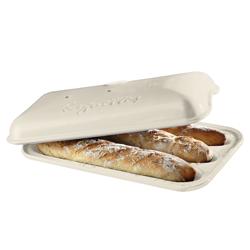
Choosing a red clay bread cloche starts with the bread that will go inside it. The base needs enough usable space for the shaped dough to spread slightly, and the dome needs enough clearance for upward expansion. A round cloche naturally suits boules, while a longer covered baker better accommodates oval loaves; matching the shape to the breads baked most often is more useful than choosing by appearance alone. Check the recommended dough capacity along with the interior dimensions, since the outside width includes space that may not be available to the loaf. A vessel that looks generous on the counter can still be too shallow for a tall, well-risen bread. Oven fit matters, too: account for the full height with the lid in place and leave the clearance required by the manufacturer. Handles, knobs and the edge of the base should be manageable with thick oven mitts, especially when lifting the hot lid midway through baking. Consider where that lid will rest before choosing a size, since it needs a stable, heat-safe landing spot beside the oven. Material and finish affect daily use as much as shape. Glazed surfaces are generally less absorbent and can make residue easier to remove, while exposed clay requires attention to the maker’s cleaning and preparation directions. Some cloches combine glazed and unglazed surfaces, so an exterior finish does not tell the whole care story. Ceramic does not rust, but that does not mean every cloche needs the same preparation or can tolerate the same heat. Preheating empty, starting in a cold oven and soaking before use are not interchangeable practices; follow the instructions for the particular vessel. Weight also varies with size and construction, so consider the combined weight of the base, lid and dough rather than assuming every clay baker will be easy to lift. These practical details help distinguish a cloche that simply looks appealing from one that fits comfortably into a regular baking routine.
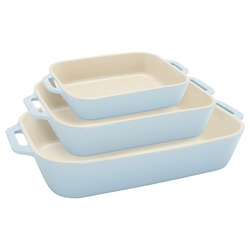
With appropriate handling, a clay bread cloche can be a lasting part of a home baker’s kitchen, though ceramic deserves care around hard surfaces and sudden temperature changes. Its sturdy feel does not make it immune to chips or cracks. Place hot components on a dry, heat-safe trivet rather than a cold or wet counter, and let them cool before washing. Follow the stated oven temperature limit and any restrictions on broiler, stovetop or freezer use; being suitable for bread baking does not make a vessel suitable for every heat source. Dishwasher safety depends on the construction and finish, so check the care directions instead of treating all glazed ceramic alike. For unglazed areas, follow any restrictions on soaking or detergents, and allow the vessel to dry thoroughly before storage. When stacking or putting the lid away, avoid knocking the rim against nearby cookware. A little space on a shelf makes a frequently used cloche easier to reach and less likely to be bumped. Intended use is another worthwhile consideration: a bread cloche is designed around the needs of a rising loaf, rather than the broad, open cooking surface used for casseroles or roasted vegetables. For those other oven-to-table tasks,
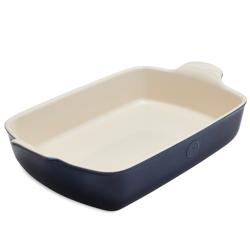
Blue Clay Baking Dishes offer a complementary category to consider, with a contrasting color for a ceramic bakeware collection. As a gift, a red clay bread cloche is especially thoughtful for someone who maintains a sourdough starter, experiments with different flours or regularly shares homemade bread. Knowing the recipient’s oven size, preferred loaf shape and storage space helps make the choice practical as well as personal. It can also suit a newer baker who already enjoys making dough and wants a vessel dedicated to covered baking. Whether the finished loaf becomes toast at breakfast, bread alongside soup or slices passed around a dinner table, the value of a cloche lies in how naturally it supports the bread someone loves to bake and eat.