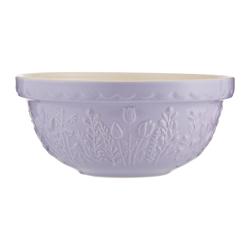
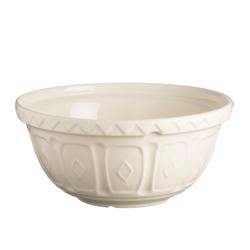
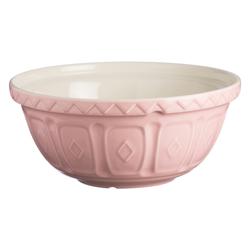
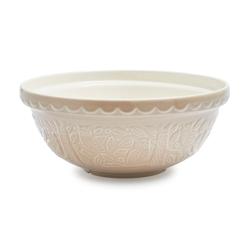
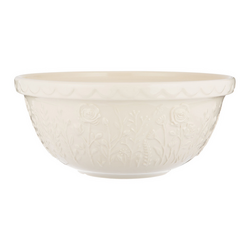
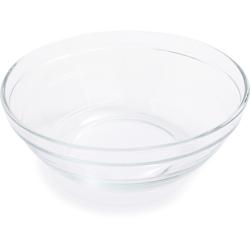
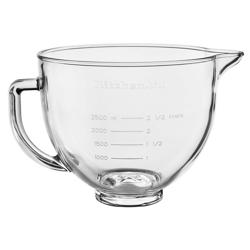
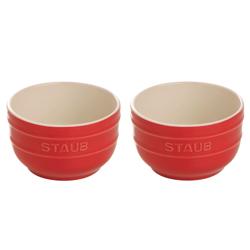
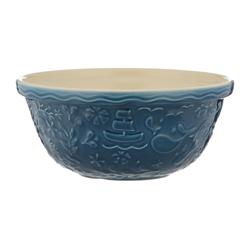
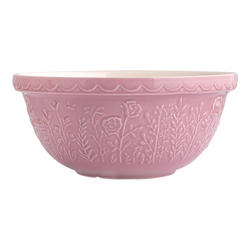
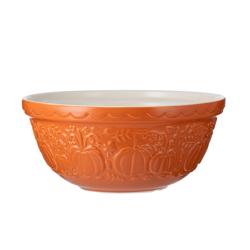
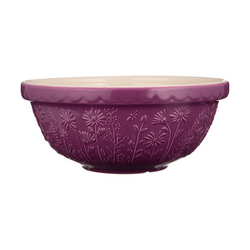
Retro mixing bowls pair vintage-inspired colors, shapes and patterns with the everyday usefulness of a kitchen essential. Their appeal comes from familiar details: broad rims, rounded sides, cheerful stripes and colors that recall well-used family kitchens. Some styles draw on the substantial earthenware bowls associated with bread making, while others echo the colorful nesting bowls that became fixtures in midcentury homes. That connection gives them character without making them purely decorative. A bowl that looks at home on an open shelf can also earn its place through pancake breakfasts, batches of cookies and dough mixed by hand. Retro describes an aesthetic, not necessarily an age; a newly made bowl can capture an older look without being an antique or collectible. Materials help shape both that appearance and the experience of using it. Ceramic bowls, including stoneware, often have a reassuring weight that helps them stay put during stirring, though their heft can make lifting a full bowl more demanding. Glass lets you see unmixed flour along the bottom and check ingredients from the side. Enamel-coated metal can offer a colorful finish with less weight than a similarly sized stoneware bowl, depending on its construction. Each material has different care requirements, so the finish and intended use matter as much as the look. For food preparation, bowls should have intact surfaces and be identified as suitable for food contact. An older decorative bowl is not automatically appropriate for mixing simply because it resembles one remembered from childhood. The pleasure of retro kitchenware is strongest when the nostalgic details support a real routine: a comfortable rim to hold, enough depth for vigorous stirring and a shape that feels manageable from counter to table. A contrasting interior can also make pale flour or streaks of butter easier to spot, depending on the colors involved.
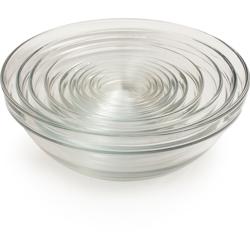
The right proportions make retro mixing bowls useful well beyond baking. A small bowl suits whisking a dressing, beating eggs or holding chopped herbs beside the cutting board. A medium bowl gives muffin batter room to come together without making a modest batch feel lost, while a larger bowl accommodates tossed vegetables, bread dough or the first stage of a generous cake recipe. Usable mixing space matters more than capacity alone: ingredients need room to move without spilling over the rim. For someone who folds whipped egg whites into batter, a broad opening and gently sloping sides can leave space for sweeping a spatula down and underneath. Deeper sides help contain splashes when whisking liquids, although no shape eliminates splatter entirely. A substantial base can steady a bowl, while a lighter one may be easier to cradle in one arm when stirring or pouring. A defined rim gives fingers somewhere to grip; a pouring spout can help direct thin batter into a pan, but its usefulness depends on the consistency of the mixture and the shape of the receiving vessel. Anyone who uses a handheld mixer should check that the bowl is suitable for that use rather than assuming every decorative interior can tolerate beaters. Storage deserves the same attention as mixing. Nesting shapes make efficient use of a cupboard, but the largest bowl still needs to fit through the cabinet opening and sit within comfortable reach. Check the overall width, including handles or spouts, rather than judging fit by capacity. Bowls that double as serving pieces can simplify an everyday meal, especially for salads or dishes mixed and served in the same vessel. Their suitability for hot food, refrigeration, microwave use or oven use must come from the manufacturer’s instructions, not from the material’s appearance. For kitchens with limited space, a few complementary sizes can be more practical than several bowls that all serve the same purpose.
Thoughtful care helps preserve the finish that makes a retro mixing bowl distinctive. Dishwasher safety varies by material, decoration and construction, so it is worth checking the care instructions before making the dishwasher part of the routine. When hand-washing is recommended, a soft sponge and mild dish soap are a sensible starting point; abrasive pads can dull or scratch some finishes. Dry bowls thoroughly before nesting, and avoid forcing a tight stack together. A soft protective layer between bowls can help reduce contact marks, particularly when glazed surfaces or decorated exteriors rub against one another. Ceramic and glass need protection from knocks against the sink or countertop, and sudden temperature changes can damage materials that are not designed to withstand them. Enamel finishes also need gentle handling because impacts can cause chips. A bowl with a crack, a chipped food-contact surface or a damaged finish should be taken out of food-preparation use. These practical details are especially relevant when choosing a gift: a frequent baker may appreciate generous mixing room and a steady base, while someone furnishing a first kitchen may value manageable weight and compact storage. For a housewarming or wedding gift, colors that work with the recipient’s dishes can make a nostalgic design feel personal rather than ornamental. A bowl does not need to match every plate to belong in the kitchen; a familiar accent color or a simple stripe can connect otherwise different pieces. For a broader range of distinctive looks,
Unique Mixing Bowls offers another way to explore the relationship between practical function and personal style. Retro designs are especially appealing to cooks who enjoy leaving useful tools in view, ready for the next batch of biscuits or a quick salad. The best fit is a bowl whose weight, shape and care requirements suit the person reaching for it, with enough character to make an ordinary task a little more enjoyable.