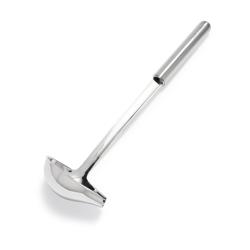
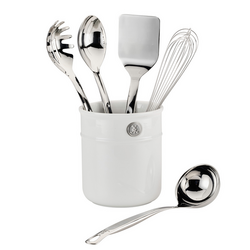
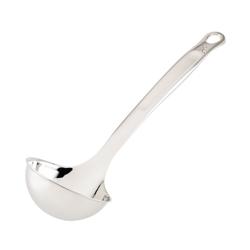
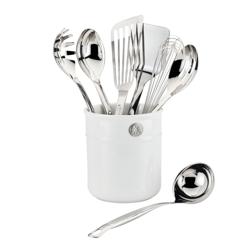
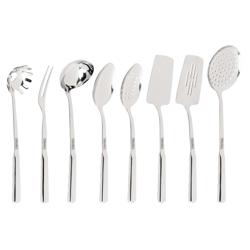
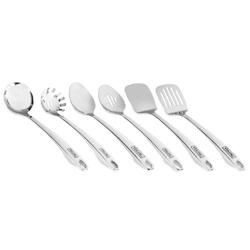
Silver ladles bring a polished, thoughtful finish to serving soups, sauces, punch and other foods with plenty of liquid. Their deep bowls are shaped to scoop and transfer more than a standard serving spoon, while a curved handle helps keep hands comfortably away from hot pots, tureens and serving bowls. A large ladle is useful for hearty soups, stews and broths, making it easy to fill each bowl with an even balance of liquid and vegetables, meat or grains. Smaller ladles are well suited to gravy, pan sauces, custard and cream, where a controlled pour matters more than volume. Long-handled styles are especially helpful for punch bowls, beverage dispensers and deep vessels, while compact designs can be more comfortable for passing at the table. For a broader selection of everyday serving tools, explore our
Cooking Ladle assortment. Silver ladles can suit many different kitchens and entertaining styles. A simple silver-finish stainless steel ladle works well for regular family meals, from ladling tomato soup into bowls on a cool evening to serving sauce alongside roast vegetables. A silver-plated ladle adds a little more ceremony to a holiday table, dinner party or buffet without requiring a formal occasion every time it is used. Sterling silver and coin silver pieces often appeal to collectors and anyone who appreciates heirloom tableware, especially when a ladle has an attractive handle, engraved detail or a history that can be passed along with it. These pieces also make memorable gifts for newlyweds, hosts, cooks, collectors and anyone building a table setting one meaningful piece at a time. A well-chosen ladle may begin as a practical serving utensil and become part of a family’s traditions, appearing whenever a favorite soup, punch or gravy is prepared.
When choosing a silver ladle, start with the food and vessel it will serve. For soup and stew, look for a wide, deep bowl that can hold a generous portion without spilling as it travels from pot to bowl. A smaller bowl offers better control for gravy and sauces, particularly when the goal is to pour a narrow ribbon over mashed potatoes, roasted meats or vegetables. Consider the handle length in relation to the serving bowl: a longer handle gives more reach into tall pots and punch bowls, while a shorter handle can feel balanced when serving from a shallow tureen or passing dishes around a crowded table. Capacity, weight and grip also matter. A substantial ladle may feel reassuring in the hand, but a lighter design can be easier to use repeatedly when serving a large gathering. Inspect the bowl-to-handle connection for a secure, smoothly finished join and look for a comfortable shape that will not twist when full. The word “silver” can describe several finishes and materials, so checking the construction is an important part of the purchase. Solid sterling silver is typically marked “925,” indicating 92.5% silver, while coin silver refers to older or regional silver standards that may have different markings. Silver-plated ladles have a thin layer of silver over a base metal and can offer the appearance of silver at a more accessible price. Modern silver-finish stainless steel options are designed for practical everyday service and are often dishwasher safe, depending on the manufacturer’s care instructions. If you are considering an older or collectible piece, examine the back of the handle and the bowl for hallmarks, maker’s marks, wear or areas where plating may have thinned. Engraving, patina and small signs of use can add character, but deep scratches, loose handles or exposed base metal may affect durability and appearance.
Care depends on the material and finish. For sterling silver and silver-plated ladles, wash gently with warm water and mild dish soap, then dry promptly with a soft cloth to help prevent water spots and tarnish. Avoid abrasive pads, harsh cleaners and vigorous polishing, which can remove plating or soften fine details over time. Acidic foods and drinks can be hard on silver finishes if left sitting in the bowl, so rinse a ladle after serving tomato-based soups, citrus punch, fruit sauces or other acidic recipes. Stainless steel versions are generally more forgiving, though checking the care instructions before placing one in the dishwasher is still a good habit. During the cooler months, a silver ladle earns its place at the center of the table, moving smoothly from a simmering pot of lentil soup to waiting bowls or adding the finishing spoonful of gravy to a festive meal. With the right size, material and care routine, it can be both a dependable kitchen tool and a graceful piece of tableware—ready for everyday suppers, generous gatherings and the occasions that call for something a little more special.