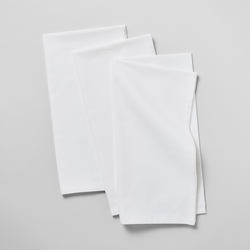
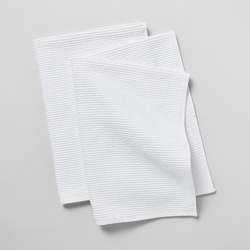
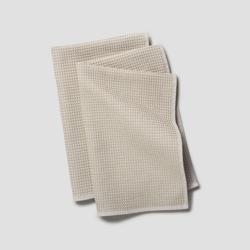
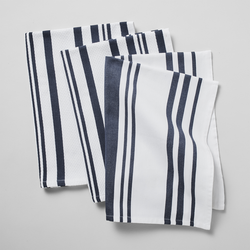
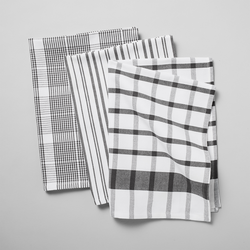
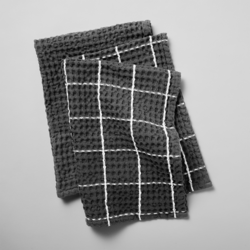
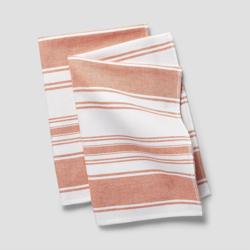
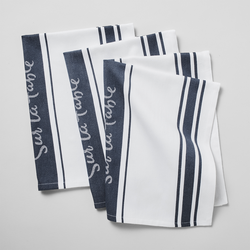
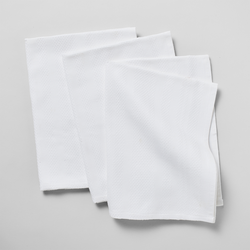
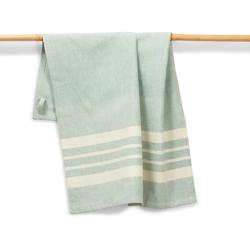
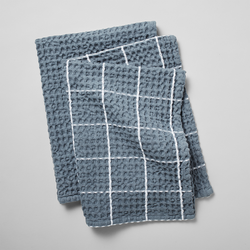
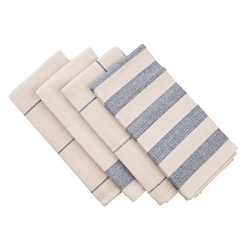
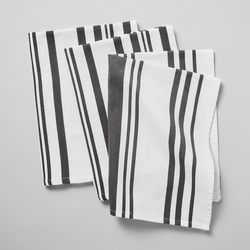
Simple towels are everyday kitchen linens with understated designs and practical uses, from drying dishes and hands to wiping up small spills. Solid colors, narrow stripes and subtle woven textures keep the look easy to coordinate with dinnerware, countertops and other kitchen textiles. Their appeal is as much about function as appearance: a towel should feel comfortable in your hands, absorb moisture effectively and hang neatly within reach of the sink. Cotton is a common choice for kitchen towels because it combines softness, absorbency and straightforward care. Linen is another option, valued for its lightweight feel and ability to dry readily, while cotton-linen blends bring qualities of both fibers together. The weave matters just as much as the fiber content. Terry cloth has loops that provide surface area for absorbing water, making it useful for drying hands or tackling splashes around the sink. Waffle weaves have a textured, gridlike surface that can offer absorbency without the bulk of a densely looped towel. Flat-weave towels are generally less bulky and easy to fold, with a smooth surface that works well for everyday dish drying. Thin flour sack styles are especially flexible, useful for reaching inside a mixing bowl or drying the rim of a pitcher. For drinking glasses and polished flatware, a towel that sheds little lint helps avoid stray fibers on a clean surface. No single texture has to handle every task. A small mix of smooth and textured towels can make more sense than choosing by appearance alone, particularly in a kitchen where someone is washing produce, rinsing utensils and drying hands throughout meal preparation. Simple styling leaves room to focus on those useful differences without making the kitchen feel visually busy. It also makes towels easy to pair with patterned aprons or table linens without needing an exact match.
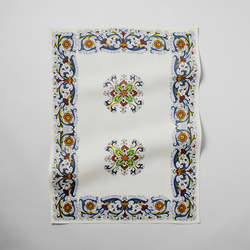
The best fit for your kitchen depends on how you cook, where you keep towels and which jobs you expect them to do. A larger dish towel offers more fabric for drying a salad bowl or a stack of dinner plates, but it should still hang clear of the floor when draped over a towel bar. A smaller hand towel may be easier to keep beside a compact sink, especially when counter space is shared with a drying rack and soap dispenser. Check dimensions rather than relying on a photograph, and consider how the towel will fold over its usual hook or rail. Hanging loops can be helpful when there is no room for a full towel bar. Thickness also deserves attention: a substantial towel can feel comfortable and take up plenty of moisture, while a lighter construction is easier to tuck into a drawer and spread out between uses. Absorbency and drying speed are related to the entire construction, not simply how soft a towel feels before its first wash. For someone who cooks most days, keeping separate towels for clean dishes, hands and surface cleanup makes the routine easier to manage. A pale towel beside the dish rack and a striped one near the handwashing area can provide a simple visual cue. Set aside any towel that touches raw meat juices and launder it before reuse; everyday kitchen towels are not a substitute for appropriate cleaning and sanitizing. They are also not a replacement for oven mitts or potholders when handling hot cookware, particularly when damp. Beyond sink-side tasks, a clean, lint-free towel can gently dry washed herbs or line a bread basket, provided it is reserved for food contact and free of cleaning-product residue. For a more familiar patterned look alongside understated linens,
Traditional Towels offer another direction to consider. Coordinating by a shared color rather than an identical pattern can keep the combination relaxed and cohesive.
Durability becomes clear through repeated washing, drying and daily handling, so construction and care deserve as much attention as color. Look for neatly finished hems, secure stitching and fabric that feels suited to its intended task. A lightweight towel is not necessarily fragile, just as a thick towel is not automatically more durable; fiber quality, weave and finishing all contribute to how it holds up. Loose loops can catch on utensils or jewelry, while poorly secured edges may fray with use. Follow the care label for washing and drying, since different fibers, dyes and decorative details may need different treatment. Washing before first use can remove manufacturing residues and help a towel perform as intended. Fabric softeners and dryer sheets can leave coatings that reduce absorbency, so avoiding them is often helpful for hardworking kitchen linens. Use the recommended amount of detergent, treat stains promptly according to the fabric’s care instructions and use bleach only when the label permits it. Some natural-fiber towels may shrink or develop a more relaxed texture after laundering. Smooth them before folding if a tidy stack matters to you, but a few wrinkles do not diminish their usefulness. Between tasks, spread damp towels out so air can circulate rather than leaving them crumpled beside the sink. Let them dry fully before storing them, and replace used towels with clean ones regularly, sooner if they become soiled. Keeping a few extras makes it easier to put out a fresh towel without waiting for laundry day. These uncomplicated linens suit first apartments, shared households, enthusiastic home cooks and anyone who appreciates a well-organized kitchen. They also make thoughtful housewarming or wedding gifts when chosen with the recipient’s habits in mind: low-lint towels for someone who enjoys setting the table, absorbent hand towels for a frequent cook or easy-care neutrals for a household with varied tastes. A simple towel earns its place through small, repeated jobs, bringing a comfortable texture and an orderly touch to the spaces used every day.