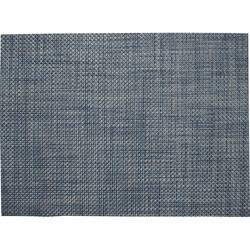
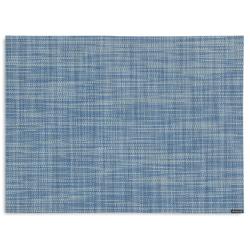
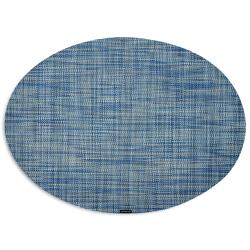
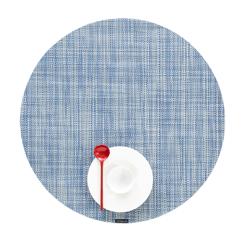
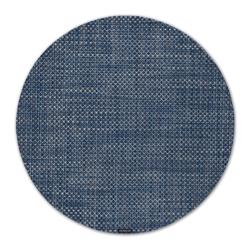
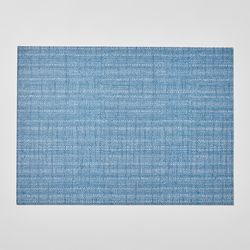
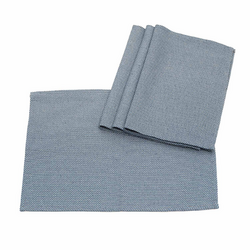
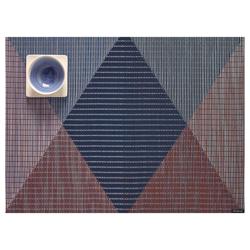
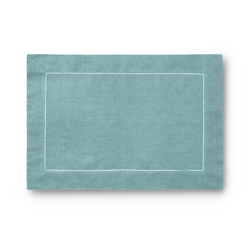
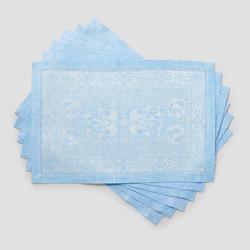
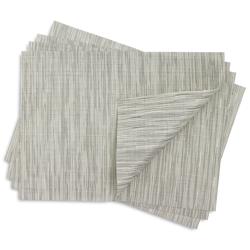
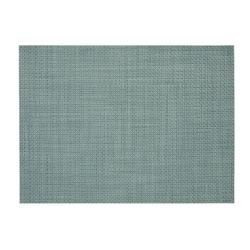
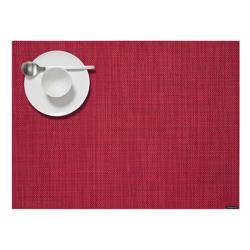
Soft blue placemats bring gentle color to family dinners while helping protect the tabletop from everyday crumbs, drips and contact with dishes. Their understated shade pairs easily with white dinnerware, natural wood and simple glassware, making a meal feel thoughtfully set without making the table feel formal. For families who use the same table for homework, afternoon snacks and dinner, placemats also help mark the transition to mealtime: a clear spot for each plate, a folded napkin and room to settle in. Soft blue can lean toward a pale sky tone, a muted gray-blue or a slightly deeper dusty blue, and those differences influence how it looks alongside existing dishes. A gray-blue shade can echo the veining in a stone tabletop, while a clearer blue provides a subtle contrast against warm wood. Solid colors keep the focus on the food and dinnerware; narrow stripes, small checks and woven patterns add detail without crowding a table already filled with bowls and serving platters. Texture makes an equally noticeable difference. A smooth surface gives each setting a clean outline, while a ribbed weave or softly textured cloth brings a more relaxed feel to everyday meals. Blue works particularly well as a repeating accent, connecting a patterned plate with a napkin or a small vase rather than requiring every piece to match. With blue dishes, a lighter placemat can create enough contrast to keep the plate’s shape and decoration visible. Related options in
Placemats For Blue Dinnerware offer another way to coordinate that combination. The appeal is practical as much as decorative: soft blue placemats can look at home beneath a bowl of spaghetti on an ordinary evening or beside serving dishes passed around when grandparents join for dinner. They add a consistent backdrop even when family members reach for different favorite plates, helping a familiar mix of dinnerware look intentional rather than mismatched.
Material and construction determine how placemats feel in use and how much attention they need after dinner. Cotton placemats often have a soft, familiar hand and suit casual settings, though washing and drying requirements vary with the weave and finish. Linen brings visible texture and a relaxed appearance, with natural creasing that some households enjoy rather than press away. Cotton blends and other fabric blends can balance softness with shape retention, but fiber content alone does not establish whether a placemat is machine washable, stain resistant or safe for the dryer. Wipe-clean vinyl and coated woven materials may be a practical match for frequent meals with young children, especially when a damp cloth is easier to manage than another load of table linens. An open weave, however, can allow liquid to reach the table underneath, so a wipeable surface should not be mistaken for a waterproof barrier. Quilted construction adds cushioning beneath dishes, while flatter styles take up less room in a drawer and provide a more even surface for smaller pieces of dinnerware. For daily use, neatly finished edges, secure stitching and a shape that lies flat matter more than decorative detail alone. A raised or curling corner can catch a sleeve, and a very textured surface may not be the best resting place for a narrow glass. Soft blue is light enough that tomato sauce, berry juice and oily dressings may leave visible marks, making the recommended care method an important part of the choice. Prompt attention to spills, cleaning according to the care label and allowing mats to dry fully before stacking help keep them ready for the next meal. Washable fabric can be convenient for regular rotation, while a care routine that requires spot cleaning may suit less messy settings. Placemats can help limit everyday surface wear, but they are not substitutes for trivets beneath hot cookware. Heat resistance varies by construction, and serving dishes straight from the oven need protection designed for that purpose.
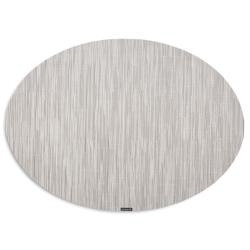
The right fit leaves enough space for everyone to eat comfortably without sacrificing the center of the table. A placemat needs to work with the dinner plate’s diameter, the position of the flatware and the distance between neighboring seats. On a narrow dining table, an oversized mat may leave little room for a salad bowl or bread basket, even if it looks generous beneath a single plate. Rectangular shapes provide a defined area for the plate and utensils and often suit long tables, while round or oval shapes can soften the arrangement and work well where the tabletop curves. At a round table, the space between place settings becomes tighter toward the center, so shape matters as much as overall size. Glasses should rest fully on a stable surface rather than balance across a placemat edge. The most useful arrangement is often one that leaves the center open for shared food and lets each person lift a fork without brushing the next setting. Households that serve dinner family-style may prefer a simpler, more compact layout than those that plate meals in the kitchen. The number of placemats matters, too: enough for the usual seats plus a few extras can accommodate visitors or keep the table set while another group is being cleaned. Storage is worth considering for something used every day. Flexible fabric mats can often be folded, while structured or coated styles may need to lie flat to avoid lasting creases; the care instructions should determine how they are put away. For a housewarming or a family member furnishing a first dining space, soft blue placemats make a useful gift when their size and care needs fit the recipient’s routine. Paired with coordinating napkins, they offer a starting point for a welcoming table without dictating an entire decorating scheme. Whether dinner means tacos with several small bowls of toppings or a single platter of roast chicken and vegetables, a well-chosen placemat gives each person a comfortable place while leaving room for the meal everyone shares.