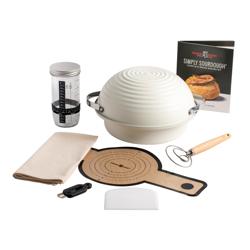
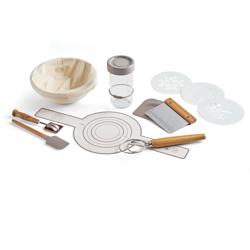
Sourdough gifts for starter care support the small, regular tasks that keep a culture going: measuring flour and water, mixing thoroughly and giving the starter room to rise. Useful choices include easy-to-clean containers, accurate measuring tools and flexible utensils that reach into corners without leaving flour behind. Unlike gifts focused on shaping or baking bread, these essentials serve the part of the process that happens between loaves. A starter is a living culture of yeast and bacteria, and its container becomes a familiar fixture in a baker’s kitchen. That makes fit and everyday usability especially important. A wide opening makes feeding less messy, while a stable base helps when stirring a thick mixture. Straight sides make it easier to judge changes in volume and scrape down the interior. For a gift centered on the container itself,
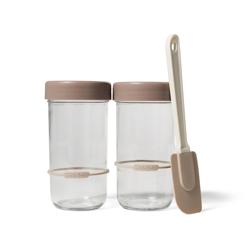
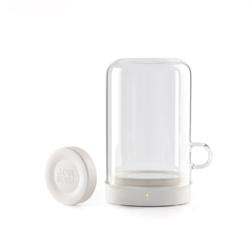
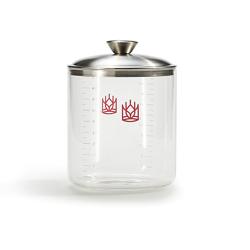
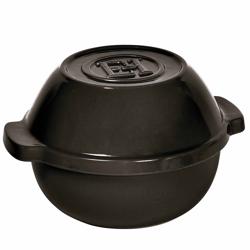
Sourdough Starter Jars & Crocks is a natural place to begin. Clear glass lets a baker see bubbles throughout the mixture and notice the line left behind after a rise. Food-safe glazed ceramic offers a different look and feel, with a smooth interior that should be easy to inspect and clean. Neither material needs to be chosen for appearance alone; the opening, weight and lid design all affect how comfortably the container works in daily use. Capacity matters, too. A vessel should hold the baker’s usual amount of starter with generous space for expansion after feeding, rather than fitting the mixture only at its lowest level. A container that is unnecessarily large can make a modest starter awkward to stir and its rise harder to read. A lid or cover helps protect the contents from debris and drying, but an actively fermenting starter needs a setup that allows gas to escape rather than a tightly sealed vessel. Those practical details make a starter-care gift useful long after it has been unwrapped.
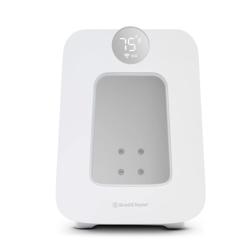
Measuring and mixing accessories are strongest when they suit the container and the way the recipient bakes. A scale helps a baker repeat a familiar feeding ratio without relying on how loosely flour settles into a scoop. For someone maintaining a small starter, sensitivity to small additions can matter more than a high maximum capacity. An easy-to-read display, straightforward controls and a platform that accommodates the feeding container are useful considerations. The display should remain visible beneath the container, and a tare function makes it possible to account for the vessel before adding ingredients. These are everyday conveniences, especially when a baker wants to feed a starter without setting out several measuring vessels. Mixing tools deserve the same attention. A flexible silicone head can sweep flour from the sides and fold it into a thick culture, while a handle with enough reach keeps fingers clear of the rim. A very broad utensil may work well in an open crock but feel cumbersome inside a narrower jar. Smooth surfaces and a design with few crevices make cleanup easier because starter can dry into a stubborn coating around seams and joints. Food-contact suitability and the manufacturer’s care instructions matter more than a decorative finish. Stainless steel can be a durable choice for suitable mixing utensils, while silicone offers flexibility; either should feel secure and comfortable in the hand. For accessories that will be washed frequently, dishwasher-safe construction may be welcome, though lids and components can have different care requirements. Markings or reusable indicators that make the starter’s starting level easy to see can also be helpful, particularly when several people share the baking routine. The best combination does not need to include every bread-making accessory. A few compatible pieces that measure, mix and clean well can be more useful than a crowded collection of tools intended for later stages of making a loaf.
The recipient’s habits are often the best clue to choosing sourdough starter-care gifts. A newer baker may appreciate simple tools that make the culture easier to observe, with a clear view of its rise and enough access to stir without scattering flour across the counter. Someone who has maintained a starter for years may value a better-fitting utensil, a more comfortable container or a second vessel that makes switching to a clean one less disruptive. For a baker with limited counter space, a compact footprint and accessories that store neatly can matter more than a large coordinated collection. Someone who shares starter with friends has a different use in mind: a manageable container that is easy to carry, clean and pass along with feeding notes. These distinctions help make a birthday, housewarming or host gift feel personal without requiring the giver to know the recipient’s exact bread recipe. Durability is worth considering across the whole gift. Glass should be free of chips and handled with care around hard sinks and countertops; ceramic should have an intact, food-safe glaze without cracks that complicate cleaning. Neither material is immune to breakage, so a comfortable grip can be as important as visual appeal. For frequent use, sturdy lids, washable surfaces and clearly readable markings are details worth noticing. A smooth container also makes it easier to remove dried residue and see whether the interior is clean before the next feeding. Gift combinations work best when their parts fit together physically and functionally: the utensil reaches the bottom, the vessel sits securely on the scale and the lid suits fermentation rather than transport alone. There is no need to replace a baker’s established routine or choose equipment for an imagined larger batch. Sourdough starter-care gifts earn their place by making the existing routine easier, whether the recipient bakes every few days or maintains a small culture between occasional loaves. The lasting appeal is in that regular usefulness: less flour caught around the rim, fewer awkward corners to scrape and a clear view of the starter rising after a feeding.