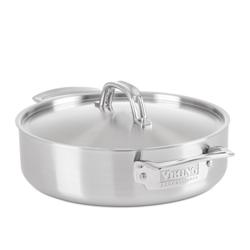
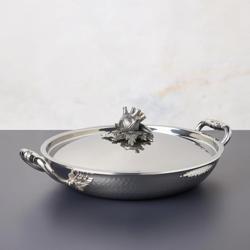
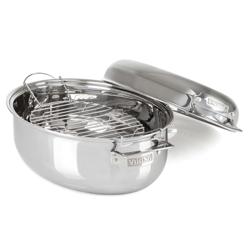
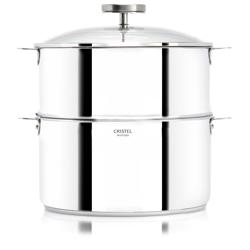
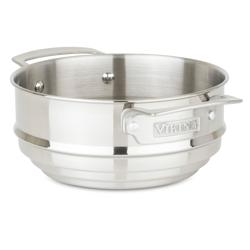
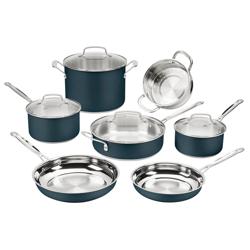
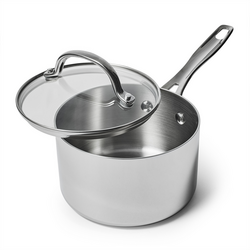
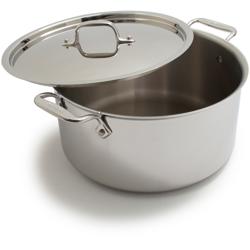
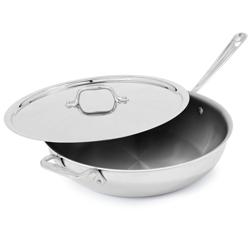
Stainless steel casseroles are cooking vessels used for dishes such as braises, baked pasta, vegetables and one-pot meals. Often designed with two side handles and a lid, they offer a durable, nonreactive cooking surface; suitability for stovetop, oven or induction use depends on each vessel’s construction and manufacturer’s specifications. The name can describe anything from a broad, relatively shallow pan to a deeper covered pot, so shape and intended use matter as much as the label. Cooking casseroles also differ from insulated serving casseroles, which hold prepared food and should not be placed on a burner or in an oven unless specifically approved for that purpose. For cookware, stainless steel brings practical advantages to everyday meals. It does not require seasoning, handles tomato sauces and wine-based braising liquids well and provides a light-colored interior that makes browning easier to see. Those browned bits left after searing chicken or mushrooms can become the foundation of a sauce when loosened with stock. Because stainless steel alone does not conduct heat especially efficiently, many cooking vessels pair it with an aluminum or copper layer. Fully clad construction carries those layers through the base and sides, while an encapsulated base concentrates the conductive material beneath the cooking surface. Both approaches can support everyday cooking, but their performance depends on the complete design rather than the number of layers alone. A well-fitting lid helps limit evaporation during a gentle simmer, while uncovered cooking allows a sauce to reduce or a topping to brown. Glass lids offer a view of the food without lifting the cover; stainless steel lids avoid a glass component and may have different heat limits. The right combination supports the way a meal comes together, whether that means tender beans simmering with aromatics, chicken finishing in its sauce or a bubbling pasta bake carried to the table on a protective trivet.
Capacity is most useful when considered alongside the casserole’s width, depth and usable cooking area. A wide base gives pieces of chicken or cauliflower more contact with the cooking surface, helping them brown without being piled on top of one another. Shallower sides make it easier to turn food and serve portions, and they expose more of a dish to the oven’s heat for a browned finish. A deeper casserole leaves room for stock, leafy greens that wilt as they cook or a generous batch of beans. Two vessels with the same stated capacity can therefore suit quite different meals. Smaller households may appreciate a manageable pan for dinner and a portion of leftovers, while frequent hosts or batch cooks may need more room. Even then, some headspace is useful for stirring and simmering without spills. Physical fit deserves equal attention: the full width, including handles, needs to work with the cooktop, oven rack and storage space. A broad pan on a much smaller burner may heat unevenly, even with conductive layers beneath the steel. For induction cooking, the base must contain a compatible magnetic material; a stainless steel exterior alone does not establish compatibility. Flat bases and manufacturer-confirmed cooktop suitability help narrow the choice. Handles should provide enough clearance for a secure grip with oven mitts, especially when the casserole is full. Their shape also affects how easily the vessel moves from burner to oven or onto a trivet for serving. Metal handles can become hot, including during stovetop cooking, so their appearance is not a reliable indication that they are safe to touch. Oven and broiler ratings should be checked separately for the body, lid, knobs and any other components. A casserole that tolerates oven cooking with its lid off may have a lower limit when covered, and broiler use requires explicit approval rather than an assumption based on the material.
Day-to-day care helps stainless steel casseroles stay useful through repeated rounds of searing, simmering and baking. Stainless steel is not nonstick, but thoughtful heat control makes cooking and cleanup more manageable. For many browning tasks, moderate preheating followed by cooking oil works better than immediately turning the burner to its highest setting. Patting ingredients dry and leaving space between them helps moisture escape, while allowing a browned surface to form can make food easier to release. Delicate foods and thick sauces still need attention, and the pan’s care instructions should take precedence over general techniques. After cooking, let the vessel cool before washing rather than putting a hot pan under cold water, which can contribute to warping. Warm water, dish soap and a nonabrasive sponge are a good starting point for routine cleanup. A soak can soften baked-on sauce around the edges, and gently simmering water in a stovetop-safe casserole can help loosen stubborn residue. Dishwasher suitability varies, particularly when lids or handles include other materials, so check the manufacturer’s directions. Drying after washing helps reduce water spots. Rainbow discoloration and mineral deposits can often be addressed with a cleaner approved for the cookware; chlorine bleach and harsh abrasives are best avoided. When cooking pasta or other foods in water, adding salt after the water reaches a boil and stirring to dissolve it helps keep salt crystals from resting against the steel, where they can contribute to pitting. With appropriate care, stainless steel offers lasting utility without a cooking coating that needs to remain intact. It suits cooks building a cookware collection, households replacing a frequently used pan and gift recipients who enjoy preparing meals to share. A casserole can handle the main dish while complementary
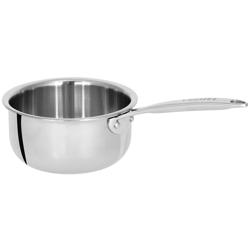
Stainless Saucepans take care of gravy, a vegetable purée or a separate sauce. Together, these shapes support everyday cooking without requiring every part of dinner to fit into the same vessel.