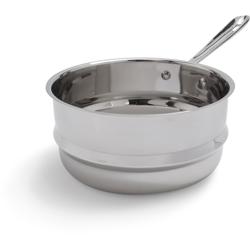
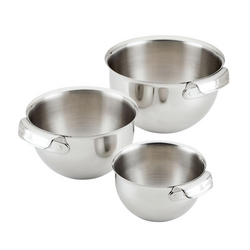
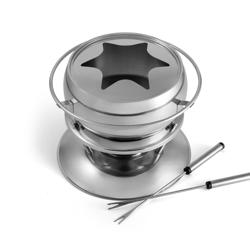
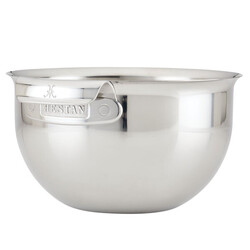
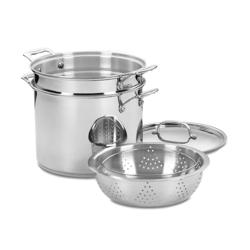
Stainless steel double boilers use steam from simmering water in a lower pot to gently heat food in an upper vessel. This indirect heat is useful for melting chocolate, warming delicate sauces and cooking custards that can scorch or curdle over a direct burner. The upper vessel sits above the water rather than in it, creating a gentler cooking environment while keeping the ingredients separate from the water below. For home bakers, that can mean a smooth pool of melted chocolate for dipping strawberries or coating cookies. For cooks who enjoy making sauces, it provides a manageable setting for whisking egg yolks and butter into hollandaise or preparing a silky sabayon. Gentle heat gives delicate mixtures more room for adjustment, though stirring and attention still matter. A double boiler reduces exposure to intense direct heat; it does not make ingredients immune to overheating. Stainless steel is especially practical for this kind of cooking because it is durable, generally nonreactive and easy to clean. It works well with a broad range of ingredients without the seasoning requirements of cast iron or carbon steel. The uncoated cooking surface also stands up well to regular whisking when utensils are used as directed. Stainless steel alone is not an especially efficient heat conductor, so the construction of the lower pot matters. A layered or encapsulated base may incorporate a more conductive metal to help distribute burner heat across the bottom. The upper vessel has a different job: holding the food securely over the steam and providing room to stir, whisk or fold. A rounded interior can make it easier to reach a sauce with a whisk, while a smooth rim helps with transferring melted ingredients. Together, these details make stainless steel double boilers useful for cooks who want dependable equipment for small but important tasks, including preparing a glossy glaze, gently melting butter with chocolate or keeping a delicate sauce warm briefly before serving.
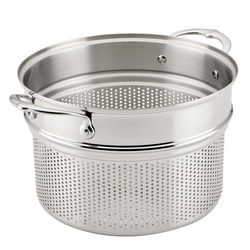
Size and fit deserve as much attention as material when comparing stainless steel double boilers. A complete set pairs a lower pot with an upper vessel designed to rest on it, while a separate insert needs to match a suitable saucepan. Diameter alone does not tell the whole story. The shape of the insert, the depth of the lower pot and the way the rim rests on the saucepan all affect how securely the pieces work together. A good fit supports the upper vessel without wobbling and leaves enough space below it for water to simmer without touching its underside. Inserts with stepped rims may accommodate more than one saucepan size, but the stated dimensions and compatibility details are still worth checking. Capacity should reflect the food being prepared, not simply the largest pot that fits on the stove. A modest upper vessel can be convenient for a small batch of chocolate or a sauce for dinner, while a roomier one gives custard mixtures space for whisking without splashing over the edge. Usable working space matters more than filling a vessel to its stated capacity, especially with mixtures that foam or increase in volume. Handle shape and placement also influence everyday comfort. A long handle can help steady an insert during whisking, while side handles may make a larger vessel easier to lift with both hands. Handles can become hot from the burner or rising steam, so comfortable clearance for oven mitts is a practical consideration. Cooktop compatibility applies to the lower pot that touches the burner; induction cooking requires a compatible magnetic base, and not every stainless steel construction qualifies. A lid can be useful for some warming tasks, although condensation needs particular attention around melted chocolate because even a small amount of water can cause it to seize. The
Best Double Boiler collection offers another place to consider these features alongside the recipes, saucepan sizes and storage space that shape your cooking routine.
With sensible care, stainless steel double boilers can remain useful through years of baking, sauce making and everyday kitchen projects. Their uncoated interiors do not depend on a nonstick layer, although the finish can still develop scratches, water spots or discoloration with use. Those cosmetic changes do not necessarily mean the cookware has lost its usefulness. Prompt cleaning makes a noticeable difference after working with chocolate, milk or eggs, which can leave stubborn residue once dried. Warm water, dish soap and a soft sponge are a good starting point, with soaking often helping to loosen food before scrubbing. Dishwasher suitability varies by construction and handle materials, so the care directions should determine whether each piece goes into the machine. Harsh abrasives and chlorine bleach are best avoided unless the manufacturer specifically permits them, and any cleaner should be appropriate for the cookware’s finish. Allowing the pieces to cool before washing helps avoid abrupt temperature changes, while thorough drying reduces water spots and keeps nested pieces from trapping moisture in storage. During cooking, the lower pot needs enough water to maintain steam without boiling dry, and lifting the upper vessel calls for care around escaping steam. These are small habits that help make the equipment comfortable to use regularly. For an enthusiastic baker, a double boiler supports familiar favorites such as chocolate-dipped shortbread, rich custard fillings and smooth dessert toppings. For a cook interested in classic techniques, it provides a useful setting for learning how egg-based sauces thicken and how gentle heat changes a mixture’s texture. It can also be a thoughtful gift for someone who enjoys making desserts from scratch, particularly when its size suits the cookware already in their kitchen. A compact design may be more useful to an occasional baker than an oversized set, while someone who prepares larger batches may appreciate extra working room. The most useful choice is one that fits securely, feels manageable when full and makes those delicate cooking tasks easier to approach with confidence.