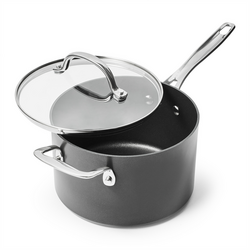
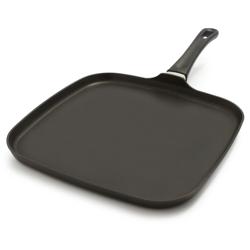
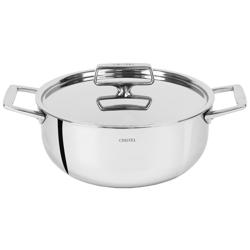
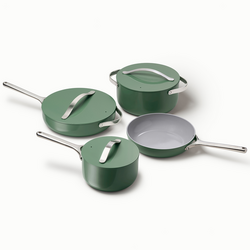
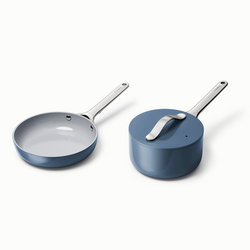
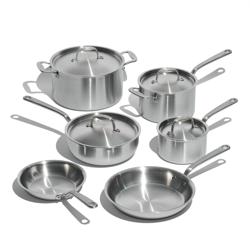
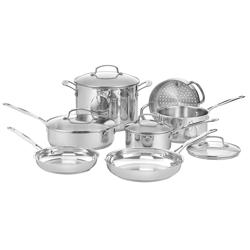
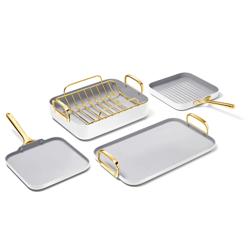
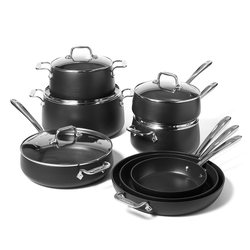
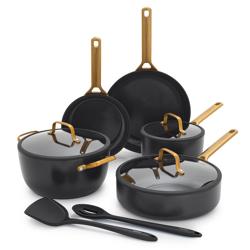
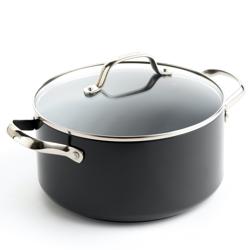
Sturdy aluminum cookware brings together responsive heating, manageable weight and the kind of everyday usefulness that earns a pan a regular place on the stove. Aluminum conducts heat efficiently, helping warmth move across the cooking surface rather than staying concentrated directly above the burner. That makes it useful for everything from gently scrambling eggs to sautéing a generous handful of sliced mushrooms or simmering a sauce while the rest of dinner comes together. Its relatively light weight also makes a difference when lifting a full pot, tilting a pan to baste or carrying dinner from the stove to the table. Construction matters as much as the material itself: a substantial base and well-built body can help distribute heat and resist warping, while securely attached handles provide a steady grip. Cast aluminum is formed in a mold and often has a substantial feel, while other aluminum cookware is shaped from sheets of metal; either approach can produce dependable cookware when thoughtfully engineered. Hard anodized aluminum undergoes a process that creates a harder, more wear-resistant surface than untreated aluminum, making it a practical consideration for frequent cooking. That treatment is not the same thing as a nonstick coating, although the two are often combined. A nonstick cooking surface can make delicate foods easier to release, whether breakfast means a folded omelet or pancakes with tender edges. Uncoated aluminum has different care and cooking considerations, especially with acidic ingredients, so the cooking surface deserves as much attention as the body underneath it. Across these constructions, sturdiness is about the whole pan rather than weight alone. A comfortable handle, a stable base and a cooking surface suited to the food all contribute to cookware that feels dependable in use. For a busy household, that combination can mean less effort moving between everyday tasks without giving up the control needed for a carefully cooked meal.
The best fit depends on both the kitchen and the way meals take shape. A broad, shallow cooking surface gives vegetables and proteins room to brown, while deeper sides provide space for stirring grains, tossing pasta with sauce or keeping a bubbling mixture contained. Capacity is worth considering alongside cooking-surface size: a pan may hold a generous volume but still offer limited room for ingredients to sit in a single layer. For someone cooking mostly for one or two, manageable proportions can be more useful than extra capacity; larger households and cooks who prepare meals ahead may appreciate more room. A fitted lid helps retain moisture for covered cooking, while handle shape and placement affect comfort when pouring or moving a full vessel. A helper handle can be particularly useful on a larger pan. Cooktop compatibility is another important distinction within aluminum cookware. Aluminum itself is not magnetic, so induction cooking requires cookware built with a compatible magnetic base. Gas, electric and glass cooktops also call for attention to the manufacturer’s directions, including base size and surface compatibility. A flat base that sits securely on the burner supports steady contact, and lifting cookware rather than sliding it helps protect a glass cooking surface. For recipes that move from stovetop to oven, the stated oven-safe limit applies to the complete piece, including its handles and lid; broiler use needs separate confirmation. Storage can influence the right fit, too, particularly in a kitchen with shallow drawers or limited cabinet space. Nesting shapes may save room, but the finish still needs protection wherever pieces touch. Cooks comparing construction styles may also consider
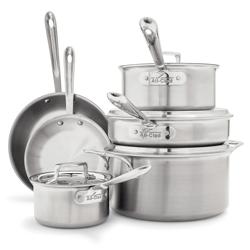
durable stainless steel cookware, which offers a different cooking surface and often uses an aluminum core or base to help distribute heat. The choice is less about finding one material for every task and more about matching the cooking surface, shape and handling to the meals made most often.
Good care helps sturdy aluminum cookware keep doing its job, and a few everyday habits can make that care straightforward. Because aluminum transfers heat readily, high burner settings are not always necessary; moderate heat often provides plenty of cooking power, especially for eggs, vegetables and other foods that benefit from close control. Coated cookware should not be left heating empty, and any preheating should follow the manufacturer’s directions. Keeping a gas flame beneath the base rather than letting it climb the sides also helps avoid unnecessary heat around handles and exterior finishes. Wood, silicone or other utensils approved for the cooking surface are sensible companions, particularly when a nonstick coating is involved. Even a hard anodized body does not make an applied coating scratchproof. After cooking, allowing the pan to cool before washing helps avoid sudden temperature changes that can contribute to warping. Gentle hand-washing with a soft sponge is often a good way to preserve the finish, though the care instructions should determine whether dishwasher cleaning is suitable. Abrasive pads and harsh cleaners can damage some surfaces, and bare aluminum may discolor when exposed to certain detergents or foods. Long simmering or storing acidic foods such as tomato sauce in uncoated aluminum can also affect the surface and flavor, so a suitable coated interior or another nonreactive vessel is preferable for those tasks. Drying cookware thoroughly and placing a soft protector between stacked pieces helps prevent avoidable marks in storage. These practical details make aluminum cookware appealing to a wide range of cooks, from someone furnishing a first kitchen to an experienced home cook who wants an easier-to-lift pan for daily meals. It can also be a thoughtful housewarming or wedding gift when chosen around the recipient’s cooktop, household size and preferred foods. A well-matched piece does not need elaborate treatment to feel useful; it needs the right construction, sensible care and a place in the everyday cooking routine.