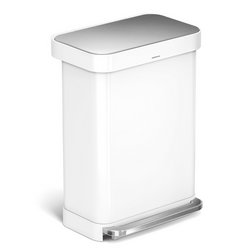
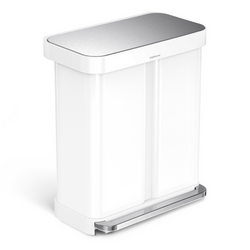
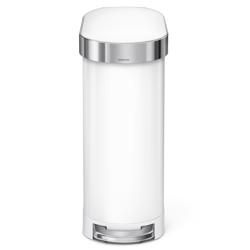
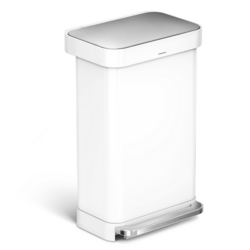
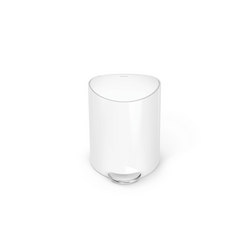
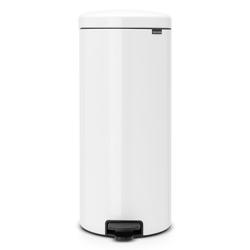
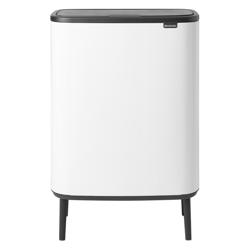
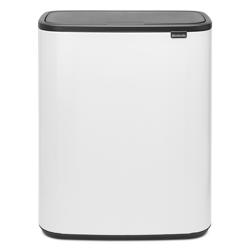
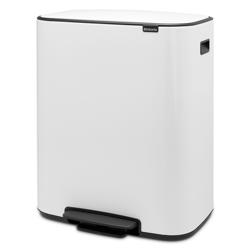
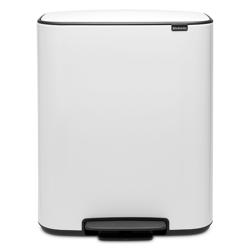
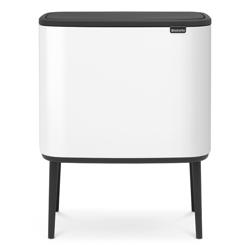
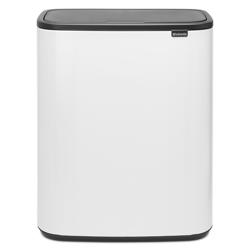
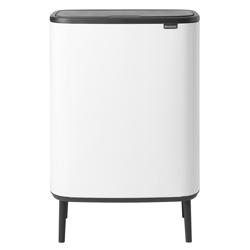
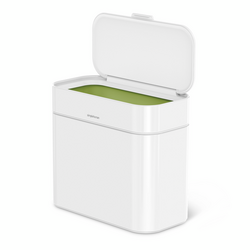
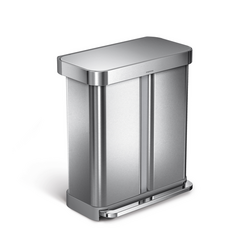
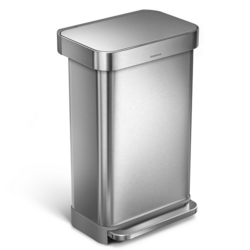
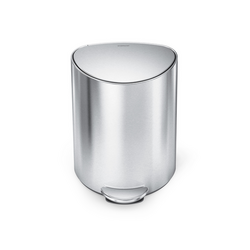
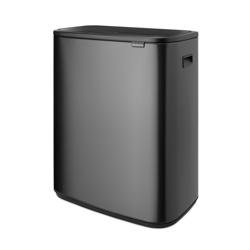
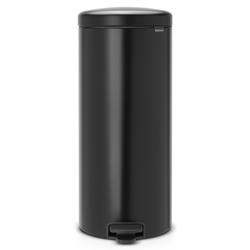
White pedal-operated bins are waste containers with a foot pedal that opens the lid, allowing you to dispose of everyday trash without lifting the lid by hand. Their light-colored finish works well in kitchens, bathrooms, laundry rooms and home offices, while the covered design keeps discarded packaging and other waste out of sight. In a kitchen, that hands-free opening is especially useful when you’re holding an empty egg carton, gathering vegetable trimmings or clearing up after dinner. A step on the pedal gives you access without adding another handle to wipe down afterward, although regular cleaning is still important. White brings a quiet, practical appeal to an object that often sits in plain view: it can blend into pale cabinetry, complement white appliances or provide a simple contrast to wood floors and darker counters. The shape and finish influence that effect as much as the color. A glossy surface catches light and feels crisp beside tile, while a matte finish creates a softer look. Rounded bins can sit comfortably at the end of a cabinet run, and rectangular shapes often make better use of a straight stretch of wall. For a small bathroom or workspace, a compact white pedal bin provides a discreet place for tissues, discarded labels and other light waste. A kitchen bin needs to accommodate a different rhythm, from breakfast cleanup to the wrappers and scraps that come with preparing a full meal. Think about where waste actually collects rather than choosing by appearance alone. A bin near the main prep area can save repeated trips across the room, provided it stays clear of cabinet doors and walkways. For households with several cooks, a predictable spot for waste also makes sharing the kitchen easier. The best fit is a bin that looks at home in the room and opens easily when your hands are occupied.
Materials, construction and dimensions help determine how well a white pedal-operated bin will suit daily use. Painted or coated steel can offer a sturdy body with a smooth exterior, while plastic is generally lighter and avoids concerns about rust on the plastic components. Neither material tells the whole story: the quality of the coating, the lid hinge, the pedal linkage and the base all matter. A pedal should feel steady underfoot, and the container should remain stable as the lid opens, even when the liner is nearly empty. If a model has a soft-closing mechanism, it can help keep cleanup quieter during early breakfasts or after the rest of the household has settled down. Check the details rather than assuming every pedal bin includes this feature. A removable inner bucket can make emptying and wiping the interior more manageable, while a liner-retaining system may help keep the bag from slipping beneath heavier waste. Capacity deserves the same attention as the mechanism. A smaller container encourages frequent emptying, which can be useful for food-related waste, but may fill too quickly in a busy household. A larger container leaves more room for bulky packaging and cleanup after shared meals, though it also needs a convenient place to stand. If your kitchen generates substantial everyday waste,
Large Kitchen Pedal Bins offer a useful category to explore alongside your space requirements. Measure the intended location for width, depth and height, then allow additional room for the lid to rise and your foot to reach the pedal. An overhanging countertop, low shelf or nearby drawer can interfere with an otherwise suitable shape. Leave enough clearance to remove the liner or inner bucket without wrestling it past a cabinet edge. Bag fit matters, too: a liner that is too short may pull loose, while excessive material around the rim can get in the way of a neat closure. Check the recommended liner dimensions as well as the bin’s stated capacity.
Keeping a white pedal bin looking fresh is largely a matter of regular, gentle care. Pale surfaces make splashes and scuffs easy to notice, which can be helpful when a quick wipe is all that’s needed. For routine cleaning, follow the manufacturer’s directions and use a soft cloth with a suitable mild cleaner; abrasive pads and harsh chemicals may scratch plastic or damage a painted finish. Pay attention to the underside of the lid, the rim and the pedal, where everyday contact can leave residue. Wipe up leaks promptly and let washed interior parts dry before replacing the liner. If the body or components are metal, avoid leaving moisture pooled around seams or the base. A covered bin helps keep waste out of view and may help contain odors, but it does not replace regular emptying, especially when food scraps are involved. Wrapping particularly messy waste or separating compostable scraps where local services accept them can make the main container easier to maintain. Avoid overfilling: a bag pushed above the rim can stop the lid from closing properly and make removal more awkward. These small habits also help protect the mechanism from unnecessary strain. Intended use should shape the choice beyond the kitchen. In a bathroom, look for a footprint that leaves comfortable access beside the vanity; in a laundry room, consider a convenient position for lint and packaging, away from damp areas. For a home office, a modest capacity may be sufficient when most paper goes into a separate recycling container. A foot pedal is useful for many people, but it should be comfortable for the person using it; anyone who finds stepping or balancing difficult may prefer a different opening style. As a practical housewarming gift, a white pedal bin can suit someone setting up a first apartment or refreshing a utility space, particularly when you know their preferred dimensions and finish. Whether it supports quick weekday meals, an afternoon of baking or a thorough kitchen cleanup, the right bin earns its place through steady operation, manageable care and a shape that fits naturally into everyday life.