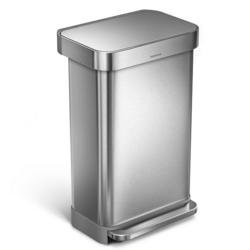
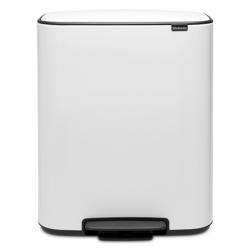
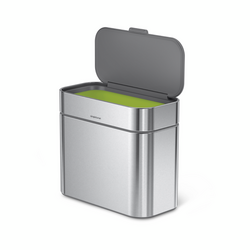
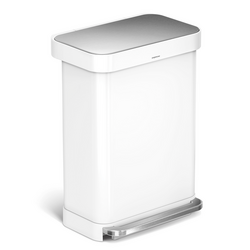
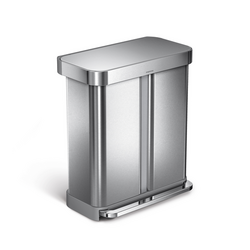
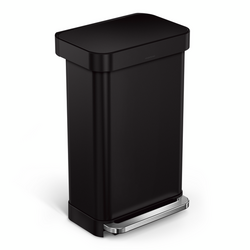
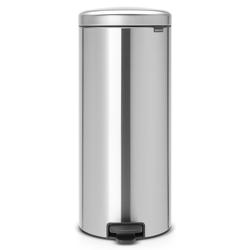
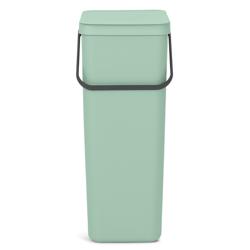
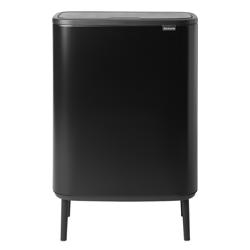
Large kitchen pedal bins are spacious, foot-operated trash cans designed for everyday food preparation, cleanup and household waste. Often holding about 10 to 20 gallons or more, they pair a larger capacity with a pedal that opens the lid without using your hands. That combination is useful when carrying vegetable trimmings from the cutting board, clearing plates after dinner or holding an empty carton that needs to go straight into the trash. Capacity is a helpful starting point, but the best fit also depends on how much waste your household produces and how often it gets taken outside. A bin around 10 to 13 gallons can suit many everyday kitchen routines, while a larger capacity may make sense for shared households or frequent entertaining. More space does not always mean a better match: a partly filled bag containing food scraps may still need prompt removal. The shape of the bin matters just as much as the number of gallons it holds. Rectangular designs can make efficient use of a straight wall beside a cabinet, while round bins may fit naturally at the end of an island or in an open corner. A slim profile can preserve walking room, though a tall lid still needs clearance beneath a counter or shelf. Allow space for the pedal to move fully and for someone to stand comfortably in front of it. Rear-hinged lids may also need room behind the bin rather than sitting directly against a wall. In a busy kitchen, a convenient location near the prep area is helpful, provided the bin does not obstruct an oven door, dishwasher or frequently used drawer. Overall dimensions, opening height and usable floor space give a clearer picture of fit than capacity alone. For a tighter floor plan or a secondary disposal spot,
Small Kitchen Waste Bins may be a more practical match than a larger container.
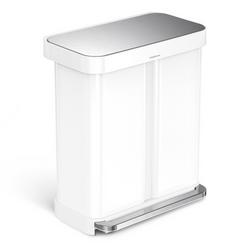
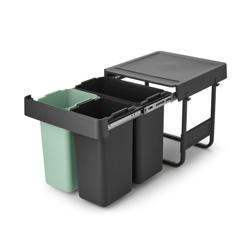
Materials and construction influence how a large pedal bin looks, feels and stands up to repeated use. Stainless steel offers a clean appearance that works alongside many kitchen appliances, with a rigid body suited to daily handling. Fingerprint-resistant finishes can help reduce visible marks, but they still need regular cleaning, particularly around the lid and rim. Plastic bins are generally lighter to move when cleaning the floor, and a smooth interior can be straightforward to wipe down after a spill. A well-fitted lid, stable base and securely attached pedal matter with either material. The pedal should feel comfortable underfoot, while the opening mechanism should lift the lid without making the body rock or slide. Soft-close mechanisms, where included, lower the lid gradually instead of letting it drop, a welcome detail in kitchens connected to living or dining areas. A stay-open function can be useful when peeling a pile of potatoes or changing the liner, though it is a separate feature from ordinary pedal operation. Inside, removable buckets can make it easier to clean spills and carry loose debris out for disposal. Designs without an inner bucket may leave more of the outer body available for the bag, so the interior layout deserves attention alongside the stated capacity. Liner rings, retaining edges and bag supports can help keep the bag from slipping down as waste collects. Bag compatibility is worth checking carefully: two bins with the same gallon capacity may have different heights, opening widths or liner requirements. A bag needs enough room to fold securely over its support and lift out without catching. Dual-compartment pedal bins offer another arrangement, keeping trash and accepted recyclables together in one footprint. Their stated capacity may describe both compartments combined, so the size of each section matters, especially when one side fills faster than the other. These details make a difference during ordinary tasks, from dropping in a coffee filter to taking out a full bag after dinner.
Large kitchen pedal bins work best as part of a manageable cleanup routine, not simply as somewhere to collect more trash. A broad opening can make it easier to empty a dustpan or clear food scraps without brushing the rim, while a secure liner helps contain drips from everyday kitchen waste. A closed lid can keep contents out of sight and help limit escaping odors, but it does not replace regular emptying or cleaning. Liquids, loose food residue and leaks beneath the bag are common reasons a bin needs attention before it looks full. Follow the care instructions for the material and finish, using mild soap and a soft cloth where recommended. Abrasive pads and harsh cleaners can damage some surfaces or coatings. Removable inner buckets should be cleaned as directed and allowed to dry before a fresh liner goes in; moisture left underneath a bag can make the next cleanup less pleasant. The underside of the lid, the rim and the pedal also benefit from routine attention. Avoid forcing an overfilled bag through a narrow opening or pressing down on waste that could contain sharp edges. A larger bag can become heavy before the bin reaches capacity, particularly when it contains dense food waste, so a comfortable lifting weight matters as much as volume. For households that cook most meals at home, a conveniently placed pedal bin can support a steady rhythm of trimming, chopping and clearing the counter. In a shared kitchen, dependable pedal action and a lid that closes consistently help make that same routine easier for everyone. Separate recycling or food-scrap collection may reduce the amount of general trash produced, changing how much bin space is useful. Whether the kitchen serves one enthusiastic cook or a household with several meal schedules, the right balance of capacity, accessible placement and easy-care construction makes daily cleanup simpler without taking over the room.