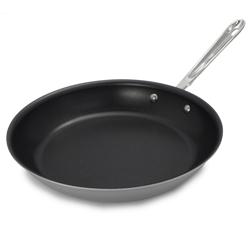
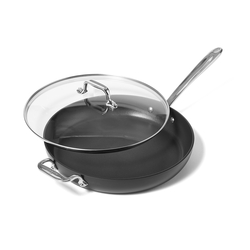
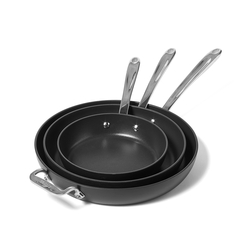
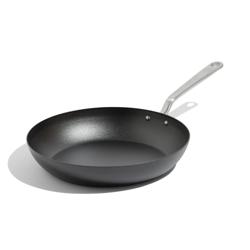
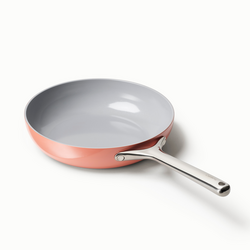
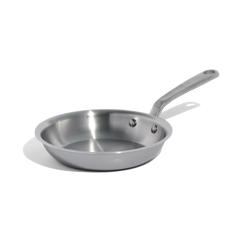
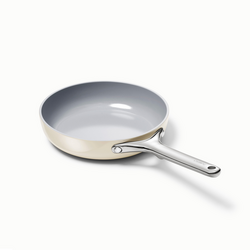
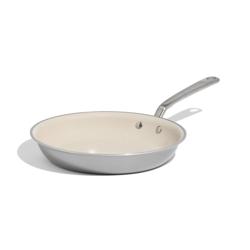
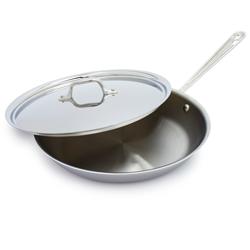
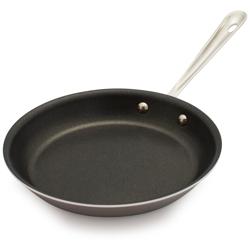
A 12-inch nonstick pan gives everyday cooking a little more room, whether breakfast means several eggs at once or dinner starts with fish fillets and a handful of vegetables. The broad cooking surface lets you spread ingredients out rather than stack them together, making it easier to turn tender foods and keep an eye on how each portion is cooking. A nonstick surface is especially useful for omelets, pancakes, delicate seafood and other foods that can cling to an uncoated pan. It also makes a practical companion for warming tortillas, cooking veggie burgers or preparing a quick lunch from leftover rice and vegetables. A little butter or oil can contribute flavor and browning without needing to serve as the main barrier between food and cookware. The 12-inch measurement generally refers to the diameter across the top rim, not the flat cooking surface, so the shape of the sides matters as much as the stated size. Gently sloped sides give a spatula room to slide beneath an egg or lift a fillet, while a somewhat deeper shape can help contain vegetables as you stir. For households that cook several portions together, that extra working room can reduce the need to prepare everything in small batches. It is also useful for one or two people who like to cook enough for another meal. Still, more space is helpful only when it works with your kitchen: a large pan needs a suitable burner, enough clearance around neighboring cookware and a comfortable place to store it. A wide rim can occupy more room than expected in a crowded cabinet or sink, particularly when the handle extends well beyond the body. The right fit leaves enough space to cook comfortably without making lifting, washing or putting the pan away feel cumbersome. The
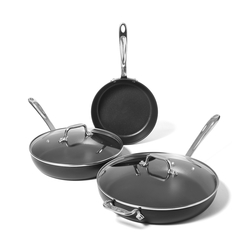
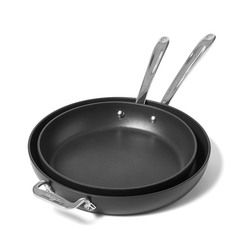
All-Clad Nonstick Fry Pan collection is also worth exploring when comparing sizes for the meals you make most often.
Construction helps determine how a nonstick pan feels in your hand and responds on the stove. Aluminum conducts heat readily, making it a useful foundation for cookware intended for everyday tasks. Hard anodized aluminum has a treated surface that increases the hardness of the underlying aluminum, though the care requirements of a nonstick pan still depend on its cooking surface and overall design. Stainless steel layers or bases can contribute strength and, when made with magnetic materials, compatibility with induction cooktops. Not every aluminum nonstick pan works on induction, and a stainless steel appearance alone does not confirm that it will, so cooktop compatibility deserves a close look in the product details. A flat base that sits securely on the burner is important, particularly on smooth electric and induction surfaces. Matching the pan to an appropriately sized heating element supports more even cooking; a very small burner beneath a wide pan can leave the outer area heating differently from the center. Weight is another meaningful consideration in a 12-inch format. A substantial pan may feel reassuringly stable, but the combined weight of cookware and food should remain manageable when moving dinner from stove to counter. Handle shape, angle and clearance all affect comfort, especially when lifting with an oven mitt. A helper handle, when included, can make a fuller pan easier to carry with two hands. Oven use depends on the complete construction, including the coating, handle and any lid, rather than the body material alone. Temperature limits can differ, and oven compatibility does not automatically mean a pan is suitable for the broiler. If covered cooking is part of your routine, confirm whether a lid is included or whether a compatible one is needed separately. These details help distinguish a pan that looks right from one that genuinely fits the way you cook.
Nonstick cookware is at its best when everyday habits support the cooking surface. Low to medium heat is often enough for eggs, pancakes and gently cooked fish, while prolonged heating of an empty pan can damage the coating. Following the manufacturer’s heat recommendations matters more than trying to make one pan handle every cooking technique. For an intensely seared steak or a recipe that calls for very high heat, a different cooking surface may be the better match. Silicone, wood and other nonabrasive utensils help protect nonstick finishes during stirring and serving; cutting food inside the pan or scraping it with sharp edges can shorten its useful life. Cooking sprays can also leave stubborn residue on some coatings, so check the care instructions before making them part of the routine. Cleanup is usually straightforward when food releases well, but gentle treatment still matters. Let the pan cool before washing rather than placing hot cookware under cold water, then use warm water, mild dish soap and a soft sponge as directed. Hand-washing can help preserve the finish even when a pan is labeled dishwasher safe. For storage, a soft pan protector or cloth between nested pieces helps prevent the base of one pan from rubbing against another’s cooking surface. Nonstick coatings do not last indefinitely, and wear depends on use, heat, utensils and cleaning habits. A surface that is peeling or flaking is a reason to replace the pan, not scrub it more aggressively. For someone setting up a kitchen, replacing worn cookware or building a more useful everyday assortment, a 12-inch nonstick pan can be a thoughtful gift when it suits their stove and storage space. Its appeal lies in familiar meals made with less sticking and easier cleanup: an omelet that folds neatly, pancakes that turn cleanly and a tender piece of fish that reaches the plate intact.