Professional vegetable prep starts with control, consistency and a comfortable setup. The right knife should feel balanced in your hand, with a sharp, stable blade that moves cleanly through firm roots, crisp stalks and delicate herbs. A chef’s knife is a versatile choice for most prep, while a smaller utility or paring knife can handle trimming, peeling and detail work. Look for a handle that feels secure without forcing your fingers into an awkward position, and choose a blade length that gives you room to work while still feeling manageable. A dependable cutting board is just as important: it should provide a broad, stable surface, resist slipping and leave enough room to separate trimmed vegetables from finished cuts. A damp kitchen towel beneath the board can add extra stability, while a bowl for scraps keeps the work area clear. For cooks preparing vegetables in larger quantities, a sharpener or honing tool helps maintain a clean edge between professional sharpenings. Sharpness is not about rushing; it allows the blade to pass through food with less pressure, which improves precision and makes repetitive prep feel easier on the hands. These essentials suit home cooks building confidence, culinary students practicing foundational techniques, working chefs preparing mise en place and anyone who enjoys turning a market haul into an organized row of ready-to-cook ingredients. They also make thoughtful gifts for new apartment dwellers, cooking school graduates and enthusiastic hosts who are ready to replace mismatched kitchen tools with equipment chosen for a purpose.
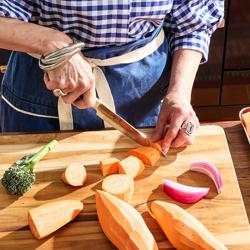
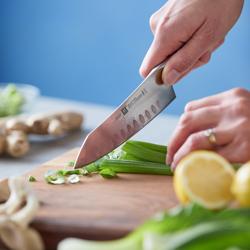
Good knife skills begin with a steady stance and a relaxed grip. Hold the knife by pinching the blade just in front of the handle with the thumb and index finger, then wrap the remaining fingers around the handle. This grip offers more control than holding only the end of the handle and helps the knife feel like an extension of your hand. Your guiding hand should form a gentle claw, with fingertips curled inward and knuckles facing the blade. Rest the side of the blade against those knuckles as you move the food forward, keeping fingertips protected and creating a reliable guide for even cuts. Keep the cutting board at a comfortable height, use a deliberate pace and let the sharp edge do the work. Depending on the vegetable and desired result, the knife may rock with its tip close to the board, or it may lift and move forward in a push-cut. A rocking chop can be useful for herbs and repeated chopping, while a push-cut often gives firmer vegetables a cleaner, more controlled slice. Practice with foods that offer clear feedback, such as carrots, celery, onions or potatoes. Begin by trimming a small portion to create a flat side, then set that side down before slicing. This simple step prevents the vegetable from rolling and gives you a safer foundation. During the cooler months, when soups, roasted vegetables and hearty braises return to the table, consistent cuts help ingredients cook at the same rate. Even a casual weeknight cook can notice the difference: evenly sized carrots stay pleasantly tender rather than leaving some pieces hard while others collapse.
A professional approach to vegetable prep is less about speed than repeatable results. Julienne cuts create slender matchsticks, generally about 1/8 inch square and around 2 inches long, useful for salads, stir-fries and garnishes. Batonnet cuts are thicker sticks, often about 1/4 inch square, and can be cross-cut into uniform dice. Small, medium and large dice are selected according to the dish, with smaller pieces adding quickly distributed flavor to sauces and larger cubes holding their shape in soups and stews. Brunoise takes the process further, turning julienne into very fine cubes for delicate fillings, garnishes and refined vegetable preparations. For round vegetables such as carrots or zucchini, rondelle cuts produce even coins, while an oblique cut creates angled pieces with more surface area for browning. Leafy greens and herbs call for chiffonade: stack or roll the leaves gently, then slice across to create fine ribbons without crushing them. When shopping for tools suited to these techniques, consider blade shape, weight, edge maintenance, handle comfort and the amount of prep you typically do. Someone making a small salad may prefer a lighter, nimble setup, while a cook preparing several pounds of vegetables for a restaurant-style meal may value a larger work surface, a substantial chef’s knife and storage that keeps edges protected. A knife guard, block or drawer organizer can be especially useful in a shared kitchen or as part of a gift, helping prevent blades from knocking against one another. To build skill, focus on one cut at a time: practice batonnet before moving to dice, and learn to chiffonade after becoming comfortable with a steady slicing motion. For structured instruction and hands-on guidance,
Knife Skills Classes for Dicing Vegetables can help connect the tools, grip and cutting motion with the finished result. With a stable board, a well-maintained knife and patient repetition, a pile of whole vegetables becomes orderly prep ready for roasting, sautéing, steaming, pickling or serving fresh.