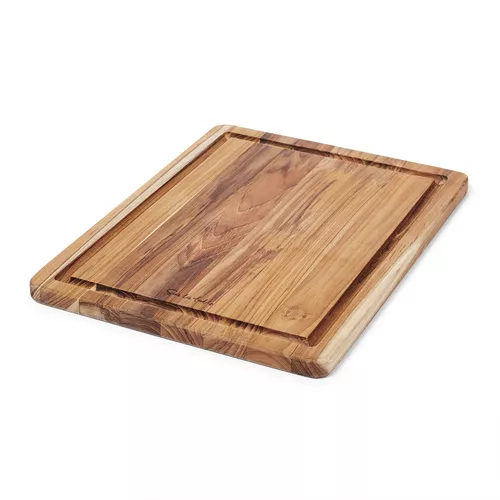
Cutting Boards for Chicken

Choose cutting boards for chicken with enough room to trim, slice and portion poultry comfortably. Compare board dimensions and care instructions to find an option that fits your prep space and cleanup routine. Use a separate board for raw chicken, keeping it apart from boards used for produce and ready-to-eat foods to help prevent cross-contamination.

Sort by:
Cutting boards for chicken provide a dedicated surface for trimming raw poultry, portioning breasts and carving cooked meat. Plastic and wood cutting boards can both be used for raw chicken when they are in good condition and properly cleaned and sanitized. Keeping a separate board for raw poultry helps prevent its juices from reaching foods that will not be cooked, such as salad greens, bread or fresh fruit. The right material depends on how you prepare meals and how you prefer to clean up afterward. Plastic boards are often lightweight and easy to carry between the counter and sink, making them practical for trimming a few thighs or slicing chicken for stir-fry. Many are dishwasher safe, though care instructions vary, and a larger board still needs to fit inside the dishwasher without blocking the spray arms. A smooth, nonporous surface is useful for cleanup, while enough thickness helps the board stay flat during use. For cooks who prefer a heavier surface, wood cutting boards offer a substantial feel and a cutting surface that is generally gentle on knife edges. Their weight can help keep them steady while you separate a whole chicken into portions or slice a cooked breast across the grain. Wood requires hand-washing and periodic conditioning, so it suits someone comfortable giving a kitchen tool a little regular attention. Food-safe composite materials offer another option, with weight, texture and care requirements that depend on their construction. Whatever the material, a board should be easy to inspect for damage and manageable enough to wash thoroughly after every use. Color can also help organize prep: yellow is commonly used to identify raw poultry boards in color-coded systems, but it is not a safety requirement. Consistently reserving a board for raw chicken matters more than its color.

Size and shape make a noticeable difference once the knife work begins. A compact board may be enough for trimming a single chicken breast, but a whole bird needs room for the chicken itself, the knife and the pieces as they are separated. A cramped surface can leave a wing hanging over the edge or push raw juices onto the counter. A broader board gives you space to work without crowding, especially when preparing several servings for family dinners or meals to portion ahead. At the same time, a board that barely fits on the counter or cannot sit comfortably in the sink can make an everyday task more cumbersome. Consider the usable cutting area rather than the outer dimensions alone, since wide juice grooves and handles take up some of that space. A perimeter groove can help catch liquid during prep or collect juices when carving a roast chicken, although it needs careful cleaning along with the rest of the board. Flat surfaces provide more uninterrupted room for slicing, and they can be convenient when moving chopped ingredients with a bench scraper. Nonslip edges or feet can add stability, particularly on smooth countertops, while a heavier board may feel more settled under the knife. Reversible designs provide two working faces, but flipping a board is not a substitute for washing and sanitizing it after contact with raw poultry. Keep cooked chicken on a clean board rather than returning it to the surface used before cooking. That distinction matters whether you are slicing meat for sandwiches, shredding chicken for tacos or carving a bird at the table. Handles, finger grips and manageable weight are worth considering, too. A board that feels comfortable to lift when dry may be harder to handle when wet, especially if it is large or thick. For smaller kitchens, a board that stores upright without crowding the counter may be more useful than an oversized carving surface.

Good care helps a cutting board remain useful, but durability also starts with choosing a construction that matches the work. Regular boneless prep calls for a dependable surface that tolerates repeated slicing, while heavier cutting around joints benefits from a substantial board intended for that kind of use. No cutting surface stays pristine forever, and knife marks are not all equal: shallow wear differs from deep grooves, cracks or split seams that are difficult to clean. Replace boards when damage prevents thorough cleaning, regardless of the material. After raw chicken prep, wash the board with hot, soapy water, sanitize it using a method appropriate for its material and let it dry completely before storage. Follow the maker’s directions for dishwasher use and sanitizing products rather than assuming every board can handle the same treatment. Wood should not be soaked or left sitting in water, and both faces need to dry with adequate airflow. Food-grade mineral oil or a conditioner recommended for the board can help keep wood from drying out; it does not replace washing or sanitizing. Plastic may require less conditioning, but it still needs inspection for warping and deeply scored areas. Easy access to the sink, a comfortable grip and a surface you can clean without wrestling it into place all make consistent care more practical. For someone furnishing a first kitchen, a dedicated poultry board can be a useful addition alongside a separate board for vegetables and ready-to-eat foods. It can also make a thoughtful housewarming or wedding gift for a cook who regularly prepares chicken at home. Match the choice to the recipient’s habits: a lightweight, dishwasher-safe board suits someone who values simple cleanup, while a substantial wooden board may appeal to someone who enjoys maintaining well-made kitchen tools. Whether dinner involves a few breaded cutlets or a whole roast chicken, the most useful board is one that fits the task, stays steady and can be cleaned thoroughly before its next use.

FAQ