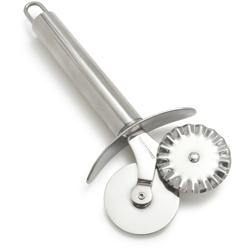
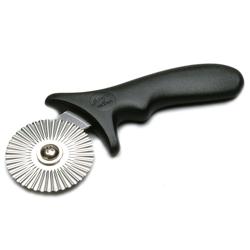
A fluted pastry wheel is a handheld kitchen tool with a rotating, wavy-edged blade that cuts a decorative border into pastry dough or fresh pasta. Also called a jagging wheel, it creates a scalloped or zigzag edge as it rolls, giving simple dough shapes a distinctive finish. Unlike a straight pastry wheel, which leaves a smooth cut, a fluted wheel adds detail along the cut edge without requiring each notch to be shaped by hand. That makes it useful for lattice pie strips, individual pastries, homemade crackers and filled pasta. A row of evenly cut lattice strips can bring definition to a fruit pie, while scalloped squares turn a sheet of dough into neatly portioned turnovers or savory bites. For fresh pasta makers, the same rolling action can trim ribbons or separate ravioli into individual pieces. The decorative cut is the wheel’s main purpose; it should not be assumed to seal filled dough on its own. A secure closure still depends on the dough, the filling and how firmly the layers are pressed together. The finished appearance also varies with the recipe. A firm pasta dough may hold a crisp zigzag, while a rich pastry can soften and expand in the oven, leaving a gentler outline. Fluted pastry wheels suit cooks who enjoy those small finishing touches, whether the project is an elaborate pie or a quick batch of cheese crackers. They are especially handy when a recipe calls for repeated strips or shapes, since the rolling blade can make a continuous cut across a sheet of dough. For home bakers working in a modest space, that versatility gives a compact tool several roles without the storage demands of a large collection of shaped cutters. The appeal is practical as much as decorative: a comfortable wheel makes trimming and portioning feel controlled, with an edge that adds character to everyday baking.
Materials and construction help determine how a fluted pastry wheel feels in use and how easily it fits into a kitchen routine. Stainless steel is a common blade material because it resists corrosion and offers a durable cutting edge, though the axle, handle and overall assembly deserve attention too. A wheel should rotate freely without excessive sideways wobble, and the connection between the blade and handle should feel secure. Smooth rotation helps the blade travel through dough rather than drag it across the work surface. Wheel diameter affects handling as well: a smaller wheel can feel nimble around compact shapes, while a larger one may offer more clearance when cutting thicker dough. Neither size replaces the need for a suitable cutting surface and manageable dough thickness. Handle shape is another meaningful consideration, especially for anyone making several batches at a time. A rounded wooden handle can offer a familiar feel, while molded handles may provide contours or a textured grip. All-metal designs have fewer material transitions to consider when cleaning. The best fit leaves room for the fingers above the work surface and allows a relaxed grip without forcing the wrist into an awkward angle. For cooks with limited hand strength or dexterity, handle thickness and grip security may matter more than decorative details. Care requirements depend on the complete tool, not just the blade. A stainless steel wheel does not automatically make a wooden handle or assembled joint dishwasher safe, so the manufacturer’s instructions should guide cleaning. Flour and dough can collect around the axle and between the flutes, making prompt cleaning helpful before residue dries. Thorough drying is particularly important around moving parts and where different materials meet. Wooden handles should not be left soaking, and every design benefits from storage that protects the cutting edge from knocks. A suitable cutting board also helps protect both the blade and the work surface; cutting directly on a baking sheet or an unprotected countertop can cause damage.
Choosing among fluted pastry wheels starts with the kind of cooking that happens most often in the kitchen. A frequent pie baker may value an easy-to-control wheel for long lattice strips and tidy pastry borders, while a pasta enthusiast may care most about visibility around the blade when trimming close to a filling. Designs that combine straight and fluted wheels can be useful for cooks who want both edge styles in one tool, although the extra blade can change the balance and cleaning requirements. A single-wheel design keeps the cutting point easy to see and may feel more natural for smaller hands or detailed work. Dough behavior matters just as much as the tool itself. Soft, sticky dough can cling to the blade or stretch as it is cut, while dough that is excessively firm may crack rather than form a clean edge. A light dusting of flour can help with sticking, but heavy flour buildup may obscure the cut and collect around the wheel. For repeated shapes, a ruler or template can help keep portions consistent; the fluted edge supplies the finish rather than the measurement. Pie dishes are another consideration when planning a presentation.
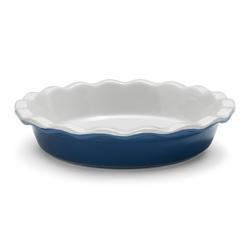
Fluted Pie Dishes bring a shaped profile to the baking vessel, while a pastry wheel adds a decorative cut to exposed strips, borders or pastry accents. These details can complement each other without every part of the pie needing elaborate decoration. A fluted pastry wheel also makes a thoughtful gift for someone who enjoys baking from scratch, learning to make pasta or bringing homemade pastries to a gathering. Paired with a favorite recipe or a practical pastry board, it supports an activity the recipient already enjoys. For a first kitchen or an established baking drawer, the most useful choice is one that feels comfortable, cleans thoroughly and suits the doughs its owner likes to make.